

The Overlooked Mistake You'll Want To Avoid When Planting Peonies
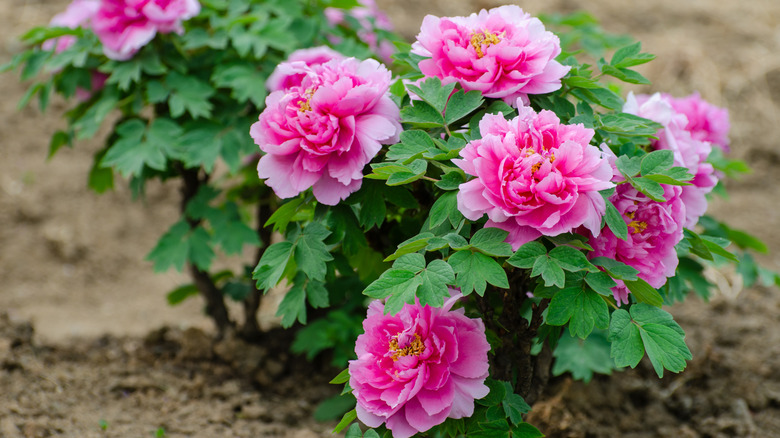
When it comes to flower gardens, there are a few staples that stand out for their beautiful, romantic blooms: Dahlias, roses, and, of course, peonies (Paeonia spp.). If roses are considered the queen of the flower garden, peonies are definitely the princess. Known for their large, colorful, multi-petaled blooms, peonies are true showstoppers in the garden. Sadly, the one thing they are most loved for, their large showy blooms, is the very thing that causes the most frustration among gardeners – droopy flowers. There's a reason your peonies keep falling over, and the solution is simple – you need to stake them early in the season.
There are a few mistakes everyone makes when growing peonies, but one of the biggest ones is not giving them proper support before they get too big. It's an easy mistake to make. Not staking peonies can not only cause droopy plants, but it can also promote disease and breakage. Often, in the early spring, we notice the reddish stalks coming up and think, "There's plenty of time to stake them." A couple of days go by, you go out to the garden, and the dang things are already full height and showing buds. This is why timing your staking properly is so important. Trying to stake peonies when they are filled out and already in bloom is difficult and can end up damaging their stems or disturbing your peony plant's growth. The best time to stake peonies is when they are under a foot tall so that they don't flop over with the first heavy spring rain.
Tips for staking your peonies early in the season for thriving plants

The peony variety that needs staking is considered an herbaceous perennial and grows best in USDA Hardiness Zones 3 through 8. The flowers on these types of peonies are usually very large and heavy, especially the double and bomb type blooms. To prevent droopy peonies, you can choose from a variety of staking methods. The key is to have your support method ready to go once you start seeing peony stalks emerge from the soil. You can use specially made peony rings, tomato rings, peony cages, or the corralling method to help support your plants.
If you are using peony rings, cages, or tomato rings, simply center your cage over the cluster of new stalks and push it into the soil. The stalks should grow up through the rings and will be supported by the structure as it blooms, preventing the stalks from falling over. Check your plant as it grows to make sure the stalks are growing up through the center of the support.
If you choose to use the corralling method, you will need to put up to six tall support stakes around your plant and use a strong twine looped around each stake and pulled tight. Place twine about ⅓ and then again ⅔ of the way up each stake to provide enough support for your peony stalks. Check your supports frequently to make sure the twine is tight and all of your plants are supported. With this method you can adjust the support if needed. Once the peony fills out, your support will be hidden within the plant, and you'll have beautiful, upright flowers to admire.