

Never Use A Power Strip With A Smart Plug — Here's Why
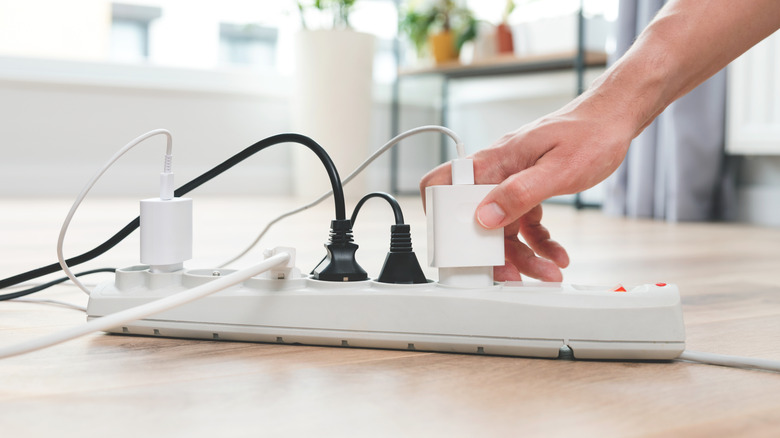
There are plenty of good reasons to use features like voice assistants and smart dimmers to streamline your everyday routines, especially since devices like smart plugs can even make your utility bills more affordable. With that being said, there are a few hidden dangers when using these devices, and when it comes to smart plugs specifically, manufacturers have issued warnings to never plug a power strip into a smart plug.
Many electrical devices are UL listed, which means they have been tested for safety. For power strips, also known as relocatable power taps, the UL listing states that they shouldn't be plugged into anything other than a branch circuit inside your home, meaning a permanent wall outlet. In other words, power strips should never be daisy chained from a smart plug, another power strip, or even an extension cord. Daisy chaining is when cords and surge protectors are interconnected, and it can be a significant safety problem when it causes equipment to overload. Overloaded circuits heat up, and the resistance can cause your equipment to malfunction, get destroyed, or cause a fire.
There are several items you should avoid plugging into a power strip, including an electric heater. But it's even worse to plug an electric heater into a power strip that's been daisy chained to a 10 amp smart plug.
Discover what you should do instead of daisy chaining a power strip on a smart plug
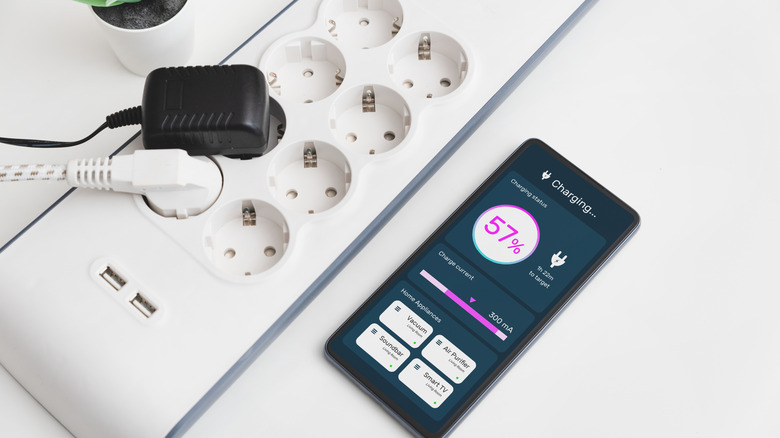
As long as you don't overload it, there's nothing wrong with plugging a smart plug into a power strip, but if you use them the other way around, it can cause problems with overheating or equipment malfunction. Overheated electrical devices exhibit common warning signs, such as tripping the breaker or the power strip reset button. You may smell smoke or see discolored outlets or frayed cords. Sometimes cords even feel warm to the touch. And even worse, the danger can be compounded because power strips are often tucked behind furniture or used in low-traffic areas where you don't notice them heating up.
The good news is that whether you rent or own, you have safer options. The easiest and least expensive solution would be to use multiple smart plugs on different outlets instead of daisy-chaining a power strip into one. Another idea, if you need the advantage of multiple outlets that a power strip affords, is to consider upgrading to a smart power strip for your home. Also, if any of the devices you're powering are lights, you could consider using smart bulbs.
While options like these are better for renters, homeowners have even more choices when they're looking to upgrade with smart devices. Whether it's smart outlets or upgrading your home's electrical panel with smart breakers, there are many safer ways to automate your home than plugging a power strip into a smart plug.