

The One Place In Your House You Should Never Paint And Why
We may receive a commission on purchases made from links.
When it comes to giving an outdated room a fresh look, most homeowners will head to their nearest hardware store to grab paintbrushes and paint swatches. Painting a fresh coat over existing, fading colors or completely changing a room's color altogether can help rejuvenate an otherwise dated space in your home. Cost-effective and relatively easy to do, giving areas in your home a fresh coat of paint is one of many home upgrades that don't involve remodeling that can help modernize your home. Not all spaces are ideal for painting, however.
There are a few spots and objects you should take extra precaution with or just completely avoid painting over altogether — specifically, areas that retain a lot of moisture and humidity. Bathrooms tend to see a lot of water usage and temperature changes, making them prime breeding grounds for mildew and eventually mold. For this reason, homeowners should take extra precautions when painting bathroom walls, and if considering rejuvenating an old or chipped bathtub with a coat of paint, find an alternate makeover solution.
While bathtubs typically have a lifespan of up to 30 years — dependent on use and material — they can see a lot of wear and tear. Cracks and chips in the surface of the tub can be unsightly, but painting over them to hide the wear can cause more damage than it's worth, including ruining the finish. Paint alone also can't withstand all the exposure it will get to moisture.
How to properly refinish a bathtub
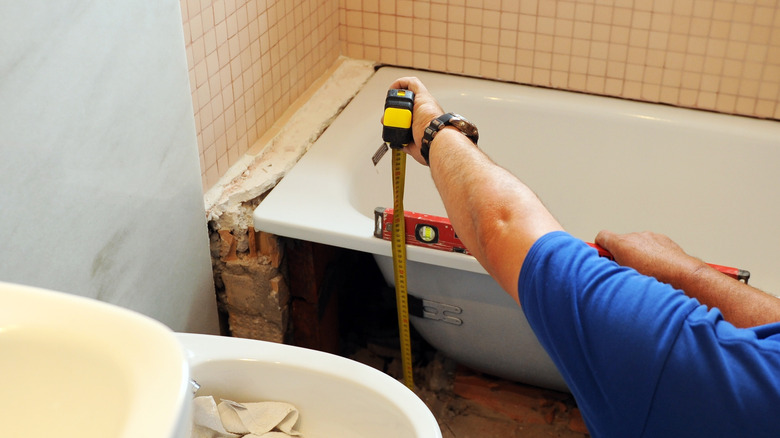
To prevent mold from entering your home and still get a bathtub that looks as good as new without breaking the bank, reglazing or refinishing it can be a viable solution. Refinishing your bathtub involves removing and replacing existing caulk on the edges of your tub, patching up any worn spots in your tub, scuffing up the surface to make it easier for paint to stick, and applying a durable epoxy paint to seal the new color in and protect it from chipping.
Reglazing your bathtub is simply the final step to the refinishing process that ensures your tub looks shiny and glossy while also keeping it heat- and water-resistant. Most home project stores sell DIY reglazing and refinishing kits, like this Rust-Oleum Tub & Tile Refinishing Kit, which includes the special acrylic epoxy paint. Other necessary items, like sanding tools and a utility knife or scraper to remove old caulk, are not included.
If a DIY approach is too daunting, hiring a professional to rejuvenate your bathtub may be a worthwhile option. Professional bathtub refinishing may run you anywhere from $300 to $700 for standard jobs, which is ultimately cheaper than replacing your bathtub altogether. It also spares you the stress of finding the best and right bathtub style for your bathroom to replace your old one with. Contracted bathtub refinishers can make your tub look brand new after thoroughly prepping it for a new coat of paint. Proper prep work for refinishing tubs typically includes sanding, resurfacing, cleaning, and removing caulk from the existing bathtub. The entire process can take up to two days, allowing adequate time for the tub to be prepped, painted, cured, and dried.