

The Perennial Plant Family You Can Grow In Pots That Butterflies Will Flock To
Wait — don't give up on starting your own pollinator-friendly garden just yet. When you're working with a smaller space (think patios, apartment balconies, or similar situations), creating a garden that pollinators can't resist may feel like a dream that's impossible to make into a reality. However, utilizing a container garden offers the perfect solution for maximizing small outdoor spaces — and with this eye-catching genus that thrives in pots, you can have the best of both worlds.
If you want to make the most out of a small backyard while providing habitat that butterflies and other pollinators adore, look no further than goldenrod (Solidago). This genus is a part of the Asteraceae family (you may recognize this as the daisy family, you plant taxonomy enthusiasts) and contains over 100 species. An overall durable and easy-to-grow plant, goldenrod thrives when planted in container gardens. In fact, it can be quite a spreader when added directly to your landscaping, making it a good candidate for containers. Along with being a good plant for beginners thanks to its easy-going, container-friendly care, goldenrod species are also quite the hit among pollinators and wildlife. They attract not only butterflies but also bees and songbirds, all while holding up to any grazing from visiting deer.
While goldenrod may seem like a hit on paper, learning how to properly care for this plant is essential for success. This is especially true if you want to grow it as a perennial for pollinator appeal year after year.
How to grow goldenrods in a container
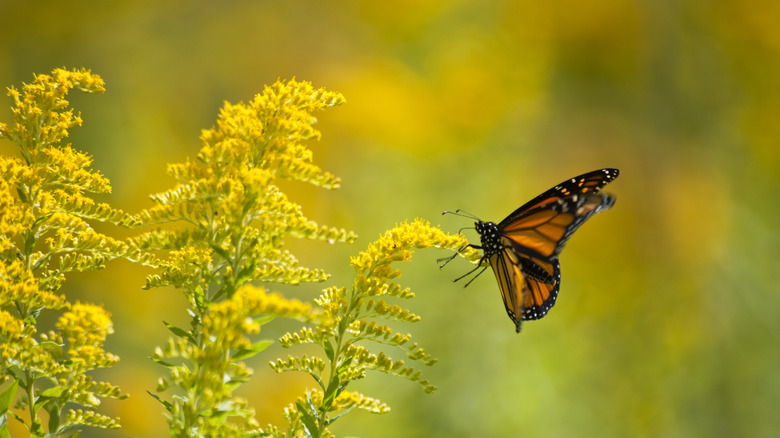
The first step in growing any perennial plant is to learn more about its USDA growing zone. These are the areas where a plant typically survives the average winter, meaning that it's often a safe choice if you want a plant that returns every year. Of course, if you are growing goldenrod in a container, such as a butterfly-attracting flower pot, you have a little bit more flexibility, as you can easily move the plant indoors to overwinter. Overall, however, goldenrod tends to be hardy in zones 2 through 8 — just make sure to double-check the exact species you end up choosing for any variations. This also extends to other care requirements, such as sunlight and water.
On the topic of sunlight, those sunshine-yellow flowers that appear in the summer and fall can take quite a bit of light to successfully shine. As a result, position your goldenrods where they can receive full sun each day. This means at least six hours of bright light. If your back patio faces north, you may wish to choose a shade-loving plant to attract pollinators, as your outdoor space likely doesn't provide enough light for these flowers to thrive.
Goldenrods grow well in a drought-tolerant garden, since they're able to handle the occasional dry spell. However, this also means that they're forgiving of the occasional missed watering. They do require well-draining soil, and you won't want to overwater them.