

How To Grow Beets In Pots For A Big, Nutritious Harvest
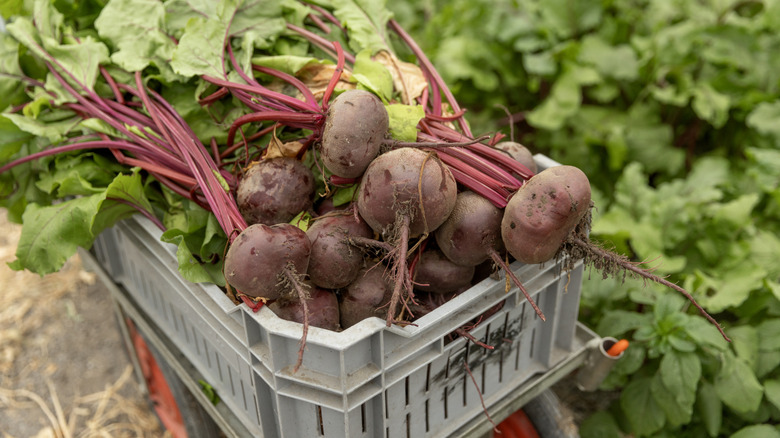
Want the satisfaction of growing a little produce at home without the backbreaking hassle of tilling an entire garden plot? Try growing beets (Beta vulgaris) in a garden pot! Beets are super forgiving plants that yield delicious earthy roots and nutritious leafy greens. Talk about a perfect vegetable to grow if you're a lazy gardener. Ditching traditional garden beds to grow beets in a container, whether it's outside or inside your home, is a great alternative — especially if you don't have much garden space.
In addition to saving a few bucks at the store, growing beets in a container makes it easier to control and monitor issues like soil quality and pests. By elevating your garden, you also save your back and give the beets a more tailored space to grow in.
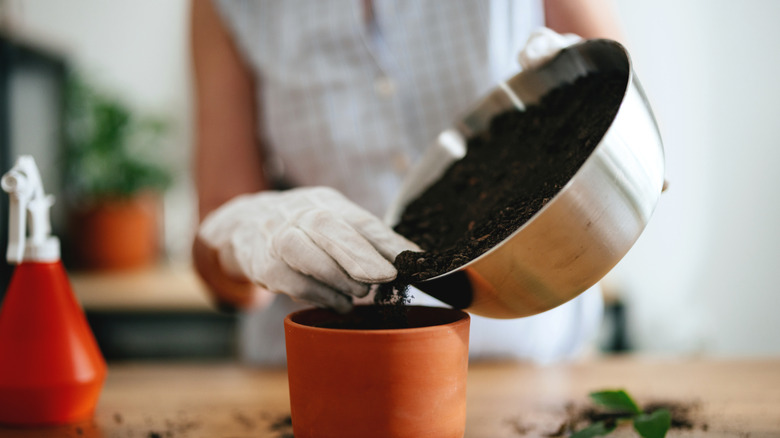
To get started, choose the right container for these beets. As they require enough room for taproots to grow, they need a pot that's at least 10 to 12 inches deep. Also, make sure the pot has good drainage holes to prevent the soil from getting waterlogged, which leads to root rot. Choosing a quality pot material helps. Terracotta is a superb pick as it's porous, and it won't allow moisture to linger for too long, which will help prevent the soggy root issue. Once you choose your pot, go ahead and fill it with a loose, well-draining planting soil. Then, plant your seeds roughly 1 inch deep and apart from each other.
How to get your beet seedlings to thrive in an outdoor pot
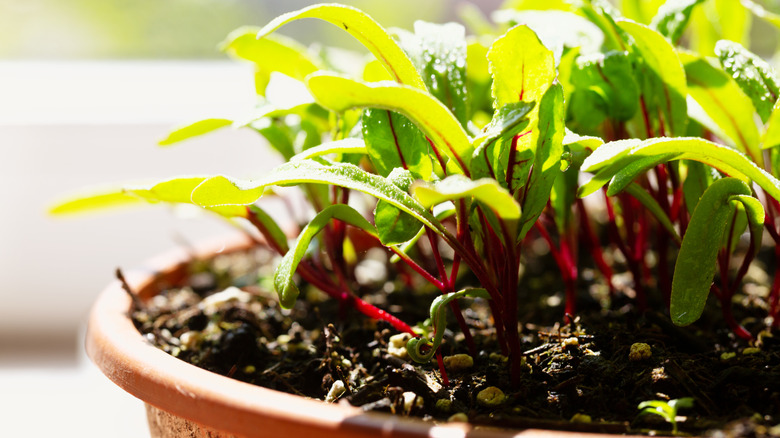
Growing beets in outdoor containers is a better approach, versus growing them inside. This way they can still get plenty of sun and experience natural weather cycles. Place your pots in a location that gets about seven hours of full sun each day. A particularly windy day may likely dry out the soil faster, so make sure to regularly check the soil and water the veggies. Keep the soil damp but not soggy.
While planting something in a pot rather than a garden bed helps you avoid ground-based pests, you'll still need to keep an eye out for pests like flea beetles and aphids on the greens. Patience pays off when it comes to the harvest, which will be sometime around a month and a half after you plant them. Visually, harvesting beets happens once the visible root shoulders push up above the soil line, and the roots reach roughly the size of a baseball – unless you planted one of these giant beet varieties. To harvest, lightly loosen the potting soil around each beet before pulling it out.
How to set up and enjoy an indoor beet harvest
Whether you lack the outdoor space or simply want to garden year-round, you can easily grow beets inside with the right setup. The biggest hurdle is making sure there's enough light. Beets are sun-loving root vegetables, and your sunniest windowsill probably won't offer enough sun exposure to help them grow quality roots. So, to ensure success, add supplementary light. Choose a full-spectrum LED grow light with a color temperature between 5000K and 6500K to mimic natural daylight. Position the light a few inches above the seedlings and adjust the height as they grow. Beets will require around 12 to 14 hours of artificial light every day. This setup makes it easier for indoor beets to get the energy they need.
Growing a plant indoors also means tweaking your watering routine. Unlike outdoor potted plants, the lack of regular evaporating wind means your soil holds moisture a little longer. Check it occasionally using the finger test to ensure your beets aren't sitting in soggy dirt. Maintain a daytime ambient temperature between 60 and 70 degrees Fahrenheit, and about 50 to 60 degrees Fahrenheit during the night to keep the seedlings happy and healthy. Harvest usually comes 50 to 70 days after initial planting, similar to outdoor beets. Whether you choose to set your pots on a sunny patio or under an indoor grow light, growing beets in containers is an easy and rewarding way to bring fresh produce straight to your kitchen.