

The Vintage Blanket You Can Find At The Thrift Store That Makes Stunning Wall Decor

Wall tapestries have been used for thousands of years around the world in order to add both visual decoration and physical warmth to a space. In addition, the tapestry weave has also often been used to craft blankets depicting any number of different designs and subjects. So, if you are a frequent visitor to the thrift store, you may have become used to seeing a few of these vintage blankets sitting on the shelves waiting to be reclaimed. Tapestry blankets often have fringed edges and always show a woven pattern (weft) sitting atop a hidden base layer called the warp. It is also sometimes called a double-weave blanket.
While you may have passed them by on previous visits because you aren't in need of any more blankets, have you considered that these charming tapestry blankets can actually be used as wall decor instead? Broad textiles are great for decorating a large blank wall without making it look cluttered because, rather than a bunch of smaller items, the blanket itself fills up the space, and its inherent texture effectively adds visual interest to the flat surface. And, thrifting vintage woven blankets is a great way to find a piece that is not only kinder on your wallet but also comes with its own sense of history. However, bringing home textiles from the thrift store can be risky due to the dirt, residue, or even bed bugs that could be hiding within the material. So, let's have a look at how to choose and clean a tapestry blanket from your local thrift store, then how to hang it in your home.
Thrifting the right vintage tapestry blanket
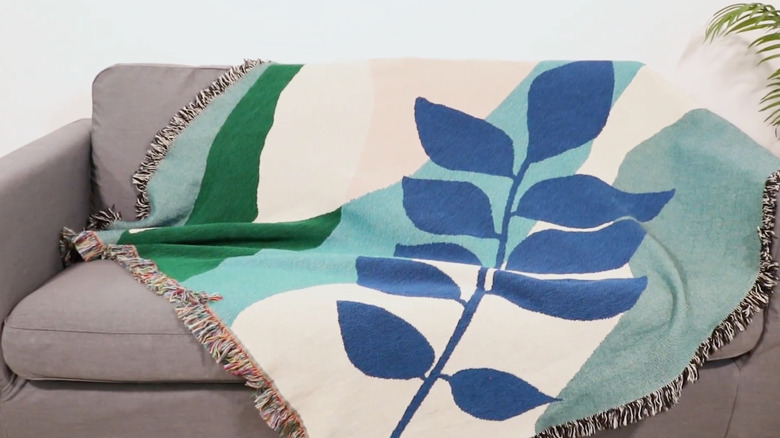
When you visit your local thrift store or antique shop, the first thing to look for is a tapestry blanket in a design you like. There are plenty of styles available — including wildlife portraits, floral designs, and even faux medieval scenes — so make sure to consider the color scheme and motifs to find one that will work with your existing decor. Once you find one you like, check the blanket very carefully for any dark spots, as this could be a sign of bed bug droppings. Additionally, look for the tan or dark brown bugs themselves. Then, when you bring home your new blanket, keep it quarantined in a garage or shed for a few days as this will allow you to further inspect it and avoid bringing home bed bugs. You can also use a very light steamer on the blanket, testing one small portion first to make sure it doesn't damage the fabric, because heat is helpful for killing bed bugs.
If the blanket is acrylic or cotton, you should then clean it and remove any dust, residue, or light stains. With many woven blankets that are in good shape, you can place them in the washing machine in cold water on a gentle or handwash-specific setting. If your vintage blanket is a more delicate material like wool or is more threadbare and you are worried about it coming apart in the machine's spin, you may want to gently wash it by hand in cold water instead. To dry, lay the blanket on a flat surface out of direct sunlight to prevent fading. Once your new thrifted blanket is clean and dry, you can then begin thinking about how to hang it in a safe and visually appealing way.
How to hang a tapestry blanket
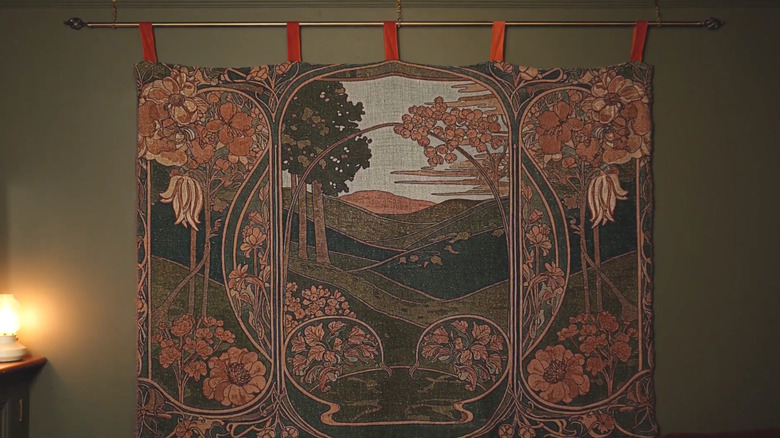
There are a few different ways to hang a tapestry blanket, allowing you to choose one which suits your home's needs and the weight of your vintage blanket. For example, if you need a renter-friendly design hack, you could try hanging the blanket with removable adhesive strips. This works best with lighter blankets, though the more strips you use, the better the hold will likely be. If you want the blanket to have a draped look, you could also try attaching a magnet to the wall using adhesive tape, then placing another magnet over the blanket. This prevents holes in either the blanket or wall and allows the fabric to drape in between each magnet. Again, this option works best for vintage blankets that are lightweight.
Alternatively, if you are able to put some holes in your walls or have a heavier vintage blanket, you could use a dowel rod solution. This involves mounting a horizontal dowel rod to the wall using brackets, then hanging the blanket over the rod. If you want a more rustic look, you could even swap the dowel rod for a branch or railroad tie, provided it is thick enough to hold the blanket. This is a good option if you have more than one vintage tapestry blanket and you would like to be able to switch them out whenever you like. You could even consider sewing some loops to the top side of the blanket to slide over the dowel rod so that the whole blanket is visible.