

The Unique Oriole-Attracting Bird Feeder You Can Find On Amazon For $20
We may receive a commission on purchases made from links.
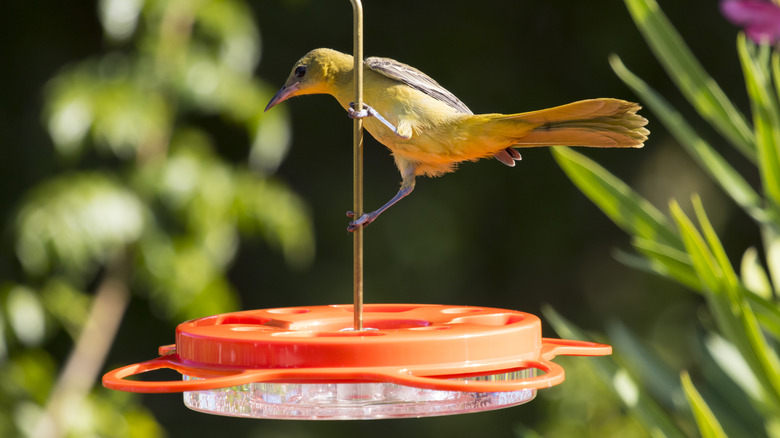
The spring season brings with it a whole lot of goodies: ephemerals are in full bloom, forsythias are putting on a blazing display, and colorful butterflies happily flutter around. But the best part — one that many bird enthusiasts look forward to — is the return of migrant orioles, as they make way to yards displaying their favorite food. If you're the type who also puts out hummingbird feeders, you'll know how messy it can get when orioles try to get to sugar water and fail miserably, wasting all of it because the tiny ports can't support their weight. For this reason, and of course to cater to their seasonal food needs, many opt to put out dedicated feeders for these birds. One such example is the Forup Oriole Bird Feeder for Outdoors.
Available on Amazon for $20, this uniquely designed feeder gets many things right about attracting orioles. For a start, it's painted a bright orange, a color these birds can't help but notice. Plus, it has dedicated pegs to hold up orange slices, a favorite fruit of the orioles, though they're just as beholden to dark-colored berries. It also comes fitted with glass jars for grape jelly, another food they stock up on to restore their energy after a long migration.
Pros and cons of Forup's unique oriole-attracting bird feeder
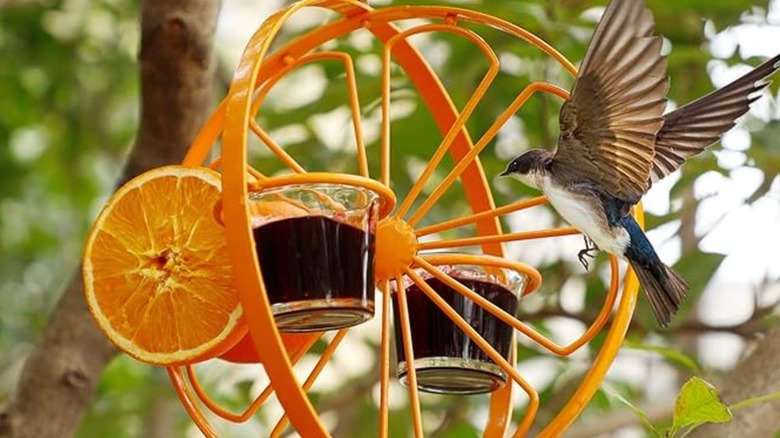
Having an average star rating of 4.4 after being reviewed over 500 times, Forup's bird feeder has a durable construction, boasting powder-coated metal and glass, which are some of the strongest bird feeder materials against mold. It has an open design, with a circular ring encasing a flower design that swings along in the breeze. This also makes it easy to clean, which is important to minimize the risk of spreading diseases to birds. The collapsible design also ensures it's not a space hog and can be easily stowed away in the winter, though it's pretty enough to be kept up as a garden ornament.
Verified purchasers state that the pegs are strong enough to hold fruit wedges, and the two glass jars make it possible to feed multiple orioles at the same time. Although this bird feeder lacks a specific perch, which orioles generally require since they can't hover while feeding, they seem to balance well on the edges of the glass jar. It seems like you may also be able to extend this feeder's utility into summer and fall for any resident orioles. They seem to switch to nectar after spring and then completely to an insect-rich diet during the breeding season. You can swap out grape jelly in the glass jars for sugar water or mealworms accordingly. However, one major con with this birdfeeder is that you have no way to replace the glass jars if they're broken or are carted away by hungry animals.
Tips to ensure orioles use your feeder
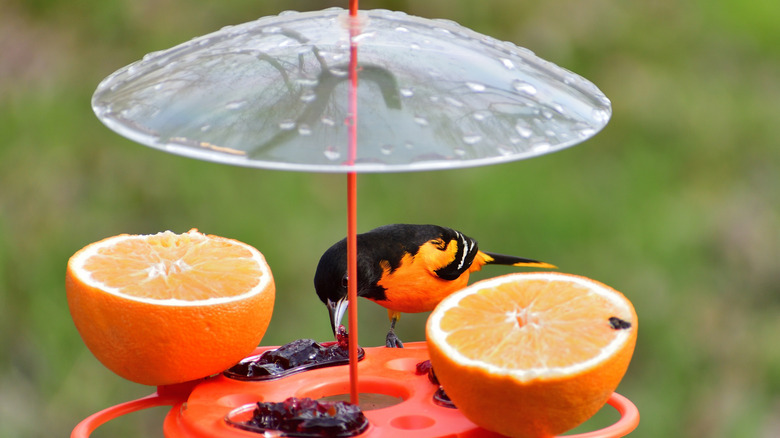
Even if your bird feeder offers everything that orioles like, they may not use it if the feeder isn't up on time. Essentially, the feeders should be set out one week before these birds frequent your area. If you keep tabs on Migration Watch, you'd know that April (for the south) to May (if in the north) is the time to start if you want to attract orioles this spring. If you're late to the party, you have little chance of drawing them in, as they might already be fixated on certain territories.
Forup's bird feeder lacks an ant moat. While this won't be a problem if ants or bees aren't clambering along for grape jelly or sugar water, you may need a moat if they have a history of infesting bird feeders in your area. Other crucial things to consider before feeding birds fresh fruits and jelly are that they may go bad or dry out quickly in the heat. So, you may want to move the feeder to a shaded spot and also replace the fruit slices every day. Moreover, to stave off bacterial growth, clean the glass jars and refill them every three days (or sooner) if they smell rotten. Also, taper off on grape jelly in summer, lest it grows sticky and soils plumage. To ensure orioles quickly spot your feeders, hang them about 6 feet high, next to trees and shrubs. Who knows, this may even encourage them to nest in your yard.