

Don't Forget This Crucial Step When Adding A Gravel Driveway To Your Home
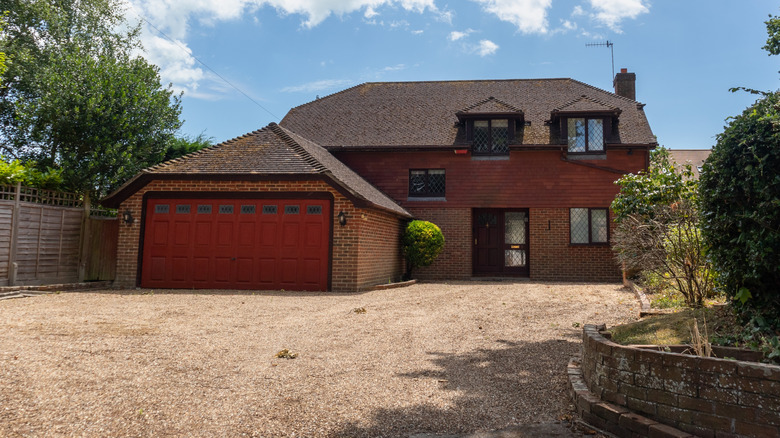
Gravel driveways are popular for affordability, aesthetics, ease of installation, and environmental reasons. Using gravel for your driveway adds a natural charm to your home. There are many different types of gravel to consider, and the variety of colors and textures available makes these driveways work with most architectural styles. While a gravel driveway is less costly and easier to install than other materials, there is a crucial step you shouldn't skip when installing a new gravel driveway. Compacting the gravel is often overlooked but can help provide a more solid surface and prevent the gravel from washing away.
Although gravel driveways are cost-effective, you need to know about their drawbacks, such as an unstable surface and the gravel shifting. A loose gravel driveway creates an unsteady surface for walking that can be a tripping hazard. Over time, wind, rain, and snow plowing in the winter can cause the gravel to wash away. Driving on the gravel can cause movement and ruts to develop, which will require adding more gravel and raking it to keep the surface well-maintained.
Compacting gravel for improved stability
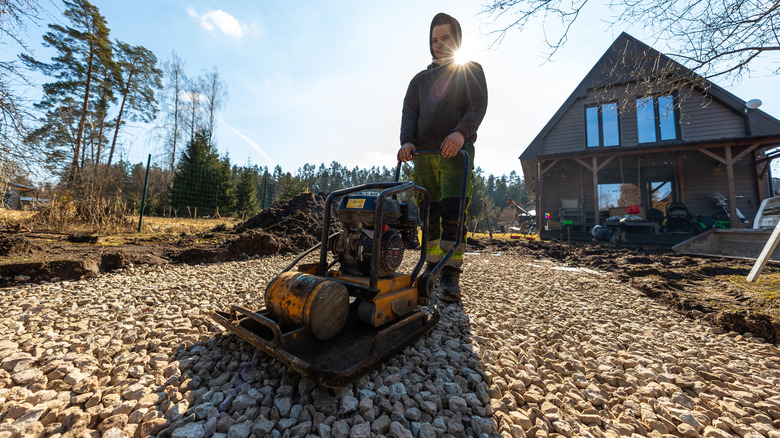
Compacting the driveway is among the best ways to keep your gravel driveway secure and locked in place. This process compresses the gravel, so the pieces lock together. The result is a solid, firm surface that holds the gravel in place and prevents movement. Compacting works best with gravel that has angular edges, such as crushed stone or road base. Round stones don't work well for compacting because there are no edges to lock together.
Compacting is a crucial step when adding a gravel driveway to improve stability and prevent gravel movement. After compaction, the driveway surface has better load-bearing capacity, drainage, and durability. The solid surface will reduce settling, sinkholes, and prevent ruts and the gravel washing away.
Prior to compacting, it is important to rake the driveway to ensure that the gravel is evenly distributed. The gravel should be lightly misted with water to help the gravel pieces settle and lock together. You can use a hand tamper or rent a plate compactor, which is more efficient, especially for larger driveways. About 4 to 6 inches of gravel should be used and compacting done in 2-inch layers with the plate compactor. If desired, you can add another layer of 2 to 3 inches of smaller decorative gravel. Run the compactor over the surface at each stage to ensure that the finished surface is flat and firm.