

What To Do If You Find A Bradford Pear Tree In Your Yard
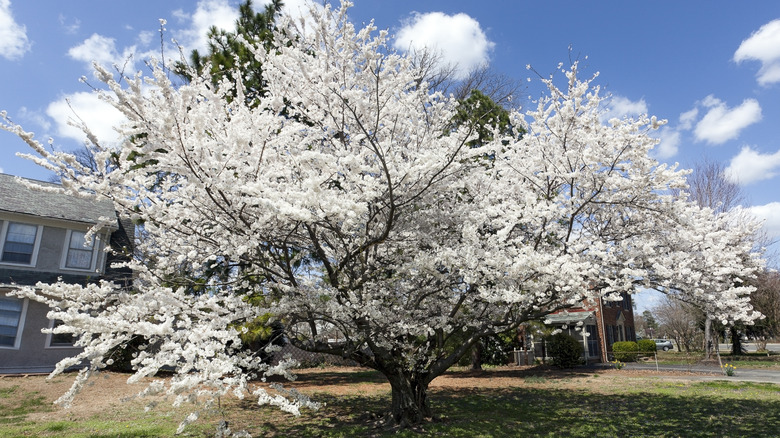
The notorious Bradford pear tree (Pyrus calleryana), or Callery pear, is a widespread species in the United States, but a very invasive one, too. Although once beloved for its very quick growth and tolerance for poor soil and pollution, the Bradford pear tree is a nuisance. Finding one in your yard, whether it is a seedling or a mature tree, is not a happy occasion. Thankfully, you have options to properly get rid of these invasive trees when you find them, including herbicides, pulling seedlings, and cutting down mature trees.
A native to East Asia, this tree was actually brought to the U.S. by the Department of Agriculture. But despite their attractive flowers in the spring, Bradford pears are also stinky trees you should avoid at all costs. Additionally, their other issues include their tendency to be short-lived and spread without limits beyond residential plantings.
However, while many people now know to avoid selecting this problematic tree for their yards, it doesn't mean that there are not still many across yards in America. Make sure you know how to identify an invasive plant like the Bradford pear. Keep your eyes out for smaller trees with alternate leaves that bloom with white flowers early in spring and feature upright-growing branches. You might also see smaller seedlings, especially very thorny ones. These seedlings are the result of cross-pollination due to the introduction of new cultivars that are able to breed with Bradford pears. They may also be shoots from neighboring pear trees.
How to remove Bradford pear trees effectively
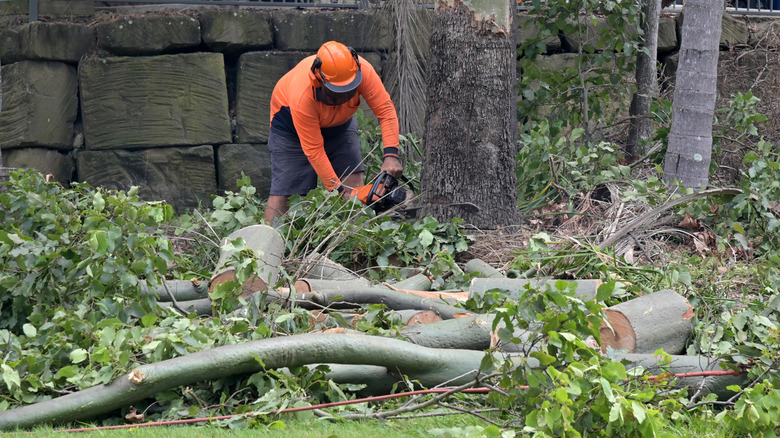
The small seedlings that you find sprouting in your yard are the easiest to control, but focus on removing all of them. The easiest option for removal is to pull all of the seedlings you can see. Then double-check that you don't leave root pieces behind, which will allow the plant to continue to grow. Another option is to mow over small seedlings to keep them from flowering. However, this method may not be totally effective. Herbicides may be your surest way to get rid of Bradford pear seedlings growing en masse in your yard.
You don't need any signs that tree removal is the right decision for your yard when it comes to the Bradford pear. If you realize you have a mature one growing on your property, the best thing to do is to get rid of it. But cutting down the tree is only the first step. You also need to grind out the parts of the root you can find, and plan to apply an appropriate herbicide to the stump afterwards to prevent resprouting. To treat tree stumps, use undiluted herbicide.
Two other methods work well for medium to large Bradford pear tree removal. For trees less than 6 inches in diameter, use a process called basal bark treatment. Around the entire tree base, apply an oil-based herbicide in a 12-inch-wide band to kill the tree. Larger trees can be girdled instead of completely cut down, in a method also referred to as "hack and squirt." By cutting into the tree and applying chemicals, the roots are quickly starved, killing the tree where it stands.