

Don't Toss An Old Muffin Tin, There's A Great Way To Reuse It For The Garden
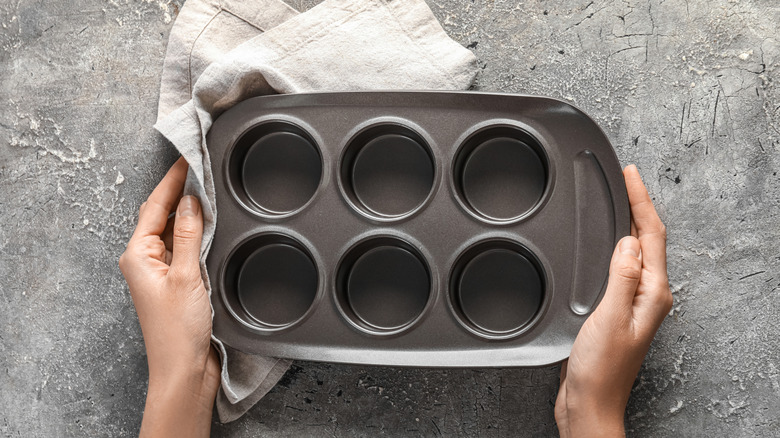
If you've recently de-cluttered your kitchen, you may be left with a few various dishes and pans you can no longer use. Maybe they're burnt, broken, or simply not getting enough use to keep them around. Before you toss these into the trash or a donation pile, there's one piece you may want to keep around as a DIY gardening tool. Old muffin tins may not need to be stuffed underneath your kitchen cabinets anymore; instead, you can use them as a free alternative for easy seedling trays, also known as cell trays. They can serve myriad home and garden purposes, like creating an up-cycled succulent garden, or, in this case, starting seeds indoors to protect them before the transplant process. You can use either metal tins, or the disposable kind made of aluminum foil.
Starting your own seedling tray and germinating seeds may sound like an overwhelming process, but you don't have to be an expert gardener to begin. Not only do these trays allow you to get a head start on your gardening, but they are a much more affordable option than buying already-grown seedlings from a nursery. An old muffin tin is an excellent alternative to the standard seedling trays you can buy from a store. Depending on the size of the tray you have, you may have to adjust it slightly, like adding a drainage hole to each cup. Note that this process of germination is different from using a muffin tin to propagate your plants, which usually involves planting cuttings from other plants.
How to make your own seedling starter tray from a muffin tin
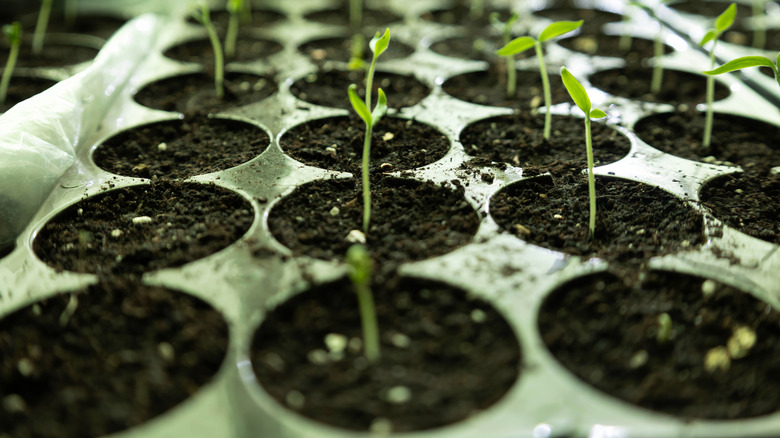
You can select your seeds of choice based on the size and depth of your muffin tin. If you have one of the tighter designs with 18 or 24 compartments, you will need to choose smaller plants, like herbs. Don't worry if your muffin tray is rusty. Rust is typically not harmful to plants, so you don't need to worry about removing rust from your tray before adding your plants. If you want, you can always add a fresh coat of paint for a cleaner aesthetic.
It's recommended to add drainage holes to your DIY seedling trays. Without proper drainage holes, your seeds may become vulnerable to waterlogged roots or root rot, with water pooling at the bottom of the cup. While you can use a pair of scissors for disposable aluminum foil tins, this may be a more intricate chore for a metal tin. You can use a thin drill bit to puncture small holes in the bottom of each compartment.
Before adding the seeds, you can add muffin liners, also with drainage holes, to each compartment. It's not necessary, but it can help keep your soil in place. Depending on the type of seeds you select, you may need to soak them in water overnight before adding them to your DIY seedling tray. Next, add loose, well-draining soil and your seeds of choice. Since you're working with tiny seeds, you may want to add a marker to each container to ensure you know where each one lives.