

What Is The WiFi On A Fridge Really Used For?
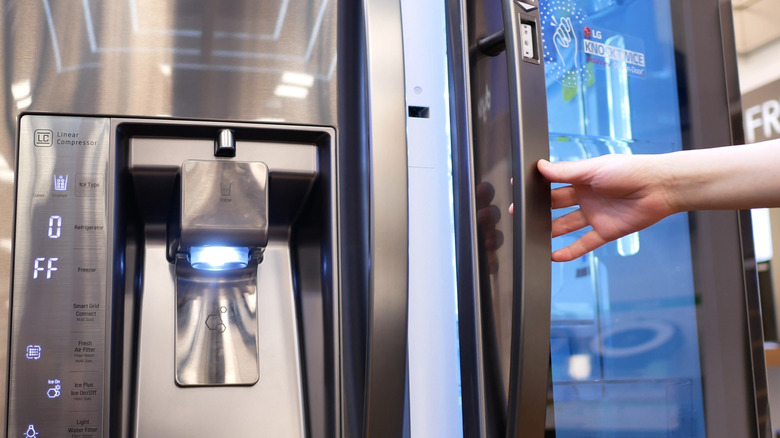
It seems like these days we are being urged to have everything in our lives connected to WiFi. Our washing machines, coffee makers, crock pots, and even our refrigerators are now capable of being connected to the internet. This has a lot of homeowners asking, "Why?" What exactly is the WiFi on our refrigerators used for, and is it necessary? The WiFi on modern refrigerators is primarily used for monitoring refrigerator performance, maintenance issues, temperature, inventory, integration with other smart home devices, and even to let you know if the door has been left open, all from your cellphone or connected device. But even though many homeowners are excited about making their house a smart home, some of us are asking if it's necessary.
Your smart refrigerator uses WiFi to connect to your home network. The majority of smart refrigerators come with an app you can download to your phone or tablet that allows you to connect to it via the integrated WiFi. This provides a way for you to monitor your appliance while you are away from home, for instance, while you are at the grocery store or on vacation. There may also be added features that use the refrigerator's WiFi like a touchscreen that can stream entertainment, suggest recipes, manage food inventory, or serve as a calendar organizer. Some smart refrigerators may also have internal cameras that can send info to you via the WiFi to your fridge's app. While there are many advantages to having a WiFi-enabled smart refrigerator for many homeowners, some believe their privacy might be compromised by this smart home device.
Your fridge WiFi helps you monitor your fridge. But is it really necessary?
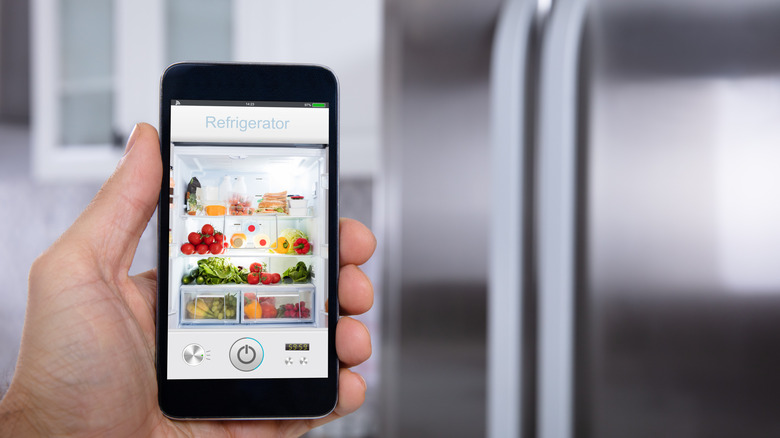
The WiFi on your smart fridge is the means by which connectivity happens between it, and you, the user. But because the WiFi is connected to the internet by default, it can do more than let you know your milk has expired and you need to add it to the grocery list. It can also communicate with the manufacturer as well as third-party companies. Consumer Reports recently conducted a study of how secure WiFi-connected smart appliances are, and stated, "[Based] on our findings, you should be more concerned about manufacturers spying on you, not hackers." They discovered that many of the major appliance brands were "talking" to your WiFi-enabled smart appliances. It may not seem like a big deal. But what if you received an advertisement for a dieting app because your refrigerator sent a note to a third-party company that you ate an entire container of ice cream at 3:00 in the morning? Some experts hypothesize that we're not far off from financial manipulation of our smart appliance data: like insurance companies increasing rates because they have been informed by our smart devices that our diet is too high in fatty meat and refined sugar. It's a similar concern people have about smart toilets: health information being shared without our knowledge.
It's a question that comes up frequently in this new age of AI, smart homes, and life spent almost entirely online: how much security are we willing to give up for convenience? While WiFi-enabled smart refrigerators can help make life easier and are, in general, pretty amazing, it's worth understanding what we are exposing about our lives as well as our personal data.