

Gardener Builds An Epic Raised Garden Entirely From Concrete Blocks
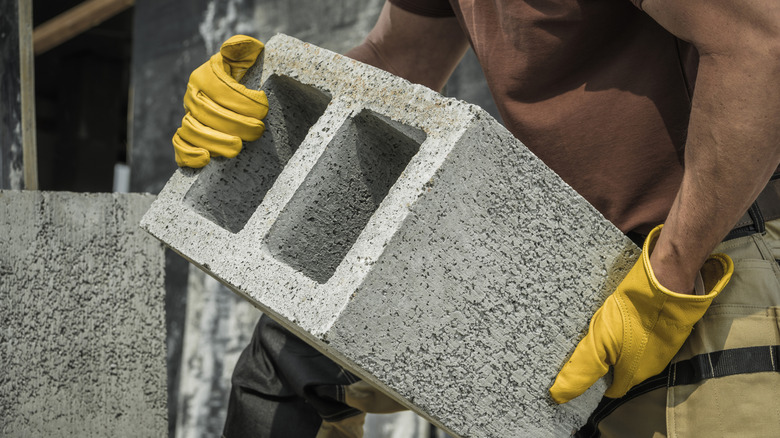
With a bit of time and effort, it's completely possible to build affordable DIY alternatives to raised garden beds all on your own. You don't need anything fancy to pull this off in most cases — just simple materials you can pick up at any home improvement store. Some common materials used for DIY garden beds include wood, galvanized metal, and concrete cinder blocks. Each of these options are suitable for crafting a beautiful garden, but there's something particularly tempting about building your garden bed with concrete blocks. For starters, this material is supremely durable and long-lasting. It's also fairly cost-effective and easy to build taller raised beds with concrete blocks.
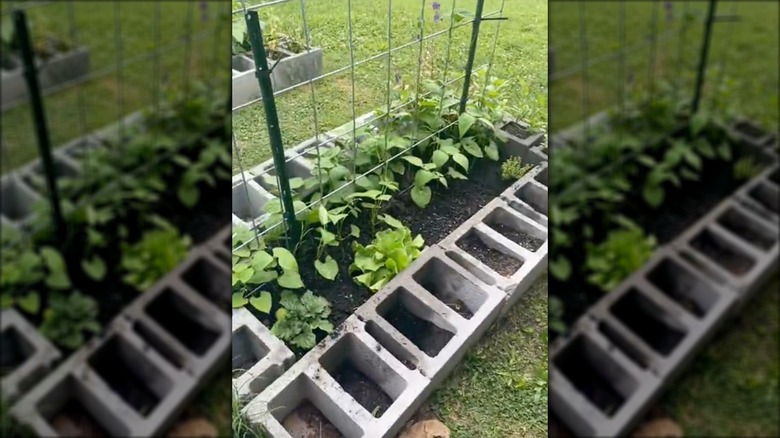
TikTok user @bmaj87 crafted an absolutely stunning raised garden bed using concrete blocks. The sprawling garden is configured in a "U" shape, featuring a higher section and a section closer to the ground. Alongside the beds brimming with thriving plants, there are also smaller plants growing from the gaps in the concrete blocks on the border. If you want to recreate this DIY, all you'll need is concrete blocks, gravel, sand, a level, and construction adhesive. Once you have your structure built, you'll also need soil, and, of course, seeds and starter to start your raised garden bed.
How to use your concrete block garden bed
Your first order of business is determining how many blocks you'll need for your project. For a 3½-foot by 10-foot garden bed, for example, you'll need about 19 cement blocks. Double or triple this number if you're hoping to build a taller bed. You can track down concrete blocks at big-box home goods stores such as Lowe's or Home Depot. You may be able to find some on Facebook Marketplace or Nextdoor for a deal, too. Once you have your blocks, remove the grass where you're planning to build your raised garden bed. Level the area with layers of gravel and sand so your bed is even. You can take this block by block, adding layers underneath as you notice an uneven spot. Use a level to help keep your walls precisely straight. Once you get this foundational layer down, the rest of the structure will be a breeze to complete. Simply stack the blocks to your desired height.
Once you get to the last layer, you can either leave it as-is or add cap blocks to cover the block cores. Reinforce the walls with construction adhesive to cement everything together. For a more stylistic option, spruce up your wall by fortifying it with QuikWall surface bonding cement. Not only will this help keep the blocks cemented together, but it can also give the blocks a more refined look. For an even more polished finish, add on a layer of patio paint. Once your garden bed is dry, you're free to fill it with soil and get to gardening. So, what do you plant in your raised bed? For herbs, basil, chives, and oregano are top choices; if you want veggies, go for arugula and kale, beets, and carrots.