

Give Tomato Plants A Major Nutrient Boost With DIY Fertilizer Made From A Kitchen Scrap
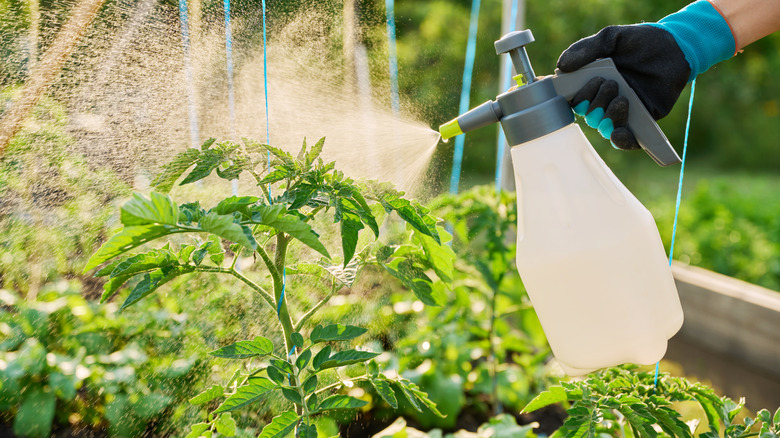
Tomatoes are heavy feeders that need a significant amount of nutrients to maintain healthy growth. Key nutrients that tomatoes generally need to be boosted throughout their growing cycles include nitrogen, phosphorus, potassium, and zinc. It is best to periodically test your soil to determine your tomatoes' fertilizer needs before applying any additives to the soil. The good news is, you don't have to go out and purchase chemical agents or expensive fertilizer to keep your tomato soil packed with these essential nutrients. When a soil test shows a decline in nutrients such as calcium, phosphorus, or potassium around your tomato plants, you can turn to your kitchen for help. Onion scraps can be used to make a DIY tomato fertilizer that can help your plants thrive.
Onion scrap fertilizer is not a complete replacement for fertilizer, but with the right application, onion scraps can provide enough of a boost to reduce the use of synthetic fertilizers and have the potential to improve overall soil health. A 2022 study in the International Journal of Science & Engineering Development Research shows that using liquid onion peel fertilizer adds nutrients to the soil, including vitamin B6, calcium, magnesium, phosphorus, vitamin C, and potassium, which can boost plant growth in general. Onion peels have also been shown to reduce the risk of diseases and pests in some plants.
How to make tomato fertilizer from onion peels
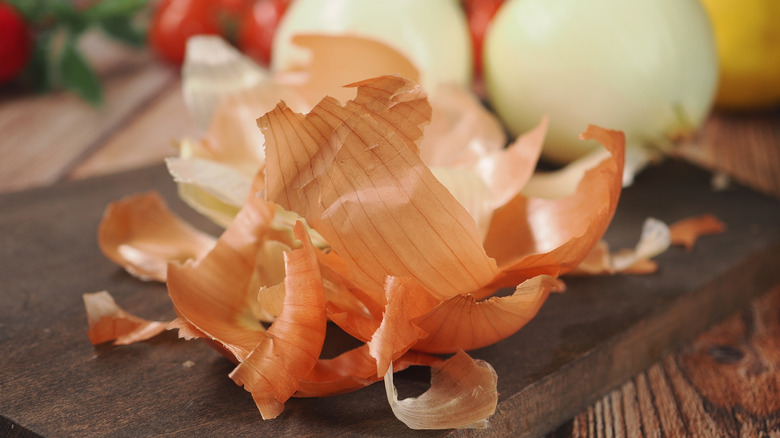
Onion peels are a food scrap that can be used as fertilizer in your garden in a few different ways. When it comes to choosing the right method for your tomatoes, consider personal preference, the growing stage when you apply the fertilizer, and the desired result. Onion peels can be ground down into a powder, or distilled into a liquid fertilizer. Instead of simply burying onion scraps in the garden, grinding onion peels into a fine powder acts as a fertilizer that can be mixed directly into the soil at the base of your tomato plants. You can accomplish this by cooking them in the oven at 200 degrees until brittle, then putting them through a coffee grinder. By grinding the peels, they break down faster in the soil, providing more immediate benefits to your tomato plants.
The most effective method, though, is to make a liquid onion peel fertilizer or onion peel "tea" for your tomato plants. This method uses dried peels soaked in 1 quart of water in a closed container for about 2 days. Strain the liquid to separate the peels and apply a dilution of about 1 part onion water to 4 parts water, and apply it directly to the soil. Any DIY fertilizer tea you make to nourish your garden, including onion peel "tea," can be added when you transplant seedlings and every 3 weeks after.
Boosting nutrients for your tomatos with onion peels in early stages of growing
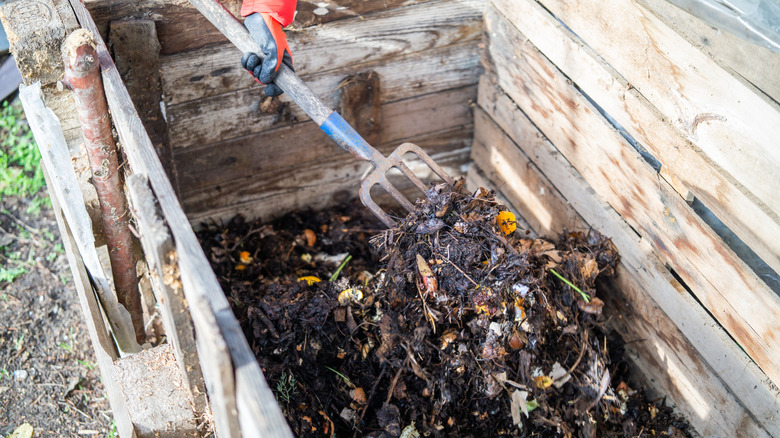
Depending on the results of your soil test, you may want to add that boost of nutrients early in the growing phase through compost. Tomatoes can benefit from a healthy dose of compost, which can be added as a soil ammendment before planting, especially if you're dealing with sandy or clay soil. Compost is also particularly helpful for prepare soil in raised garden beds.
Adding onion peels to compost is perhaps the simplest way to incorporate nutrients from onions into your soil, but it will also take the longest for the nutrients to break down and be ready to fertilize, making it ideal for the early stages of growth. Compost is often applied a few weeks before planting tomatoes in the ground. To compost your onion peels, chop them up and add them to a compost pile. The exact nutrients your compost will add to the soil will depend on the other scraps you include in the mixture.