

It's Not Your Fault: Why Your Plants Are Dropping Leaves In The Spring
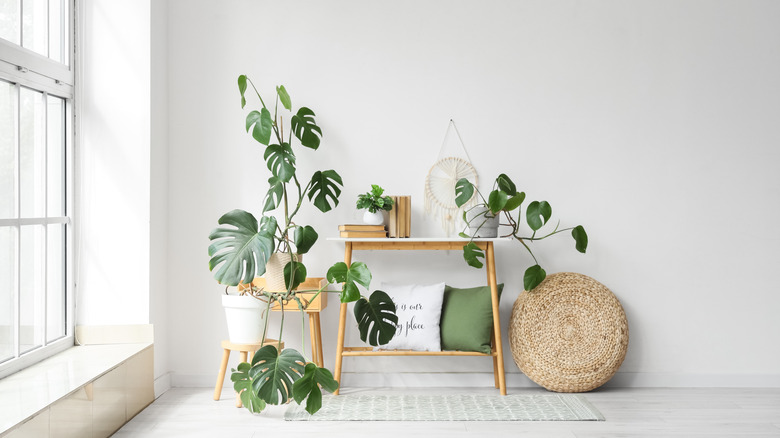
As we settle into spring, you might notice dropped leaves littering the area around your houseplants. It's a troubling sight to see. But don't panic! You're likely not to blame. This transitional time can just be a little rough on our precious plants. When spring arrives and conditions shift, houseplants might not adjust right away, sending them into shock. More sensitive plants, such as crotons and fiddle leaf figs, can be even more prone to leaf drop due to shock.
Things you might assume would help your plant thrive may inadvertently cause it to start dropping leaves at the beginning of spring. For example, the sudden increase in sunlight during the spring can send the plant into a state of shock. This can be especially dramatic if you move your houseplant to a new window or move it outside. Even if you don't move your plant, other environmental changes in your home can send your plant into shock, too. The sudden uptick in air conditioning and fan usage near your plants can potentially cause them to drop their leaves. Moving the affected plant away from the window or cool air can help it bounce back.
Sometimes, your houseplants' changing leaves are trying to warn you that they need more water. After a long winter of dormancy, your plants are ready to start actively growing again. Naturally, they're going to need more water at this point. If you've fallen into a rhythm with watering your plants on a winter schedule, dropping leaves may indicate it's time to increase your watering frequency.
How to keep your houseplants healthy in the spring
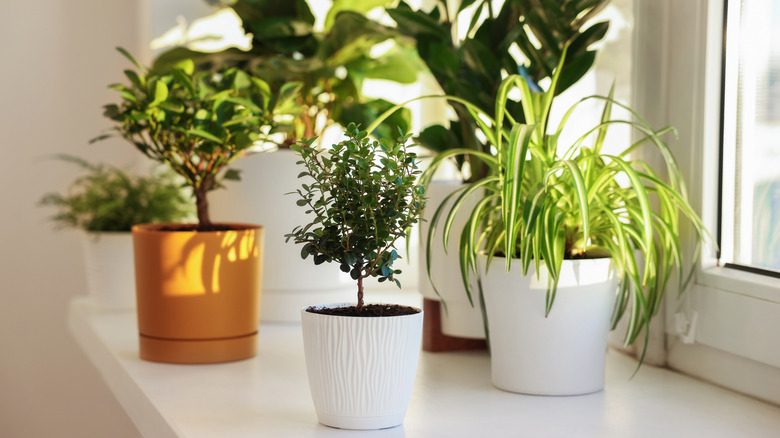
To stop leaf dropping in its tracks, it's vital to adjust your care for your plant's spring needs. Start by carefully adjusting your watering schedule. If the fallen leaves are brown and crispy, this is a key sign that your plant is thirsty. Shift to a weekly watering schedule for most plants. Succulents still don't need as much water, but it's a good rule of thumb to deeply water them every 2 or 3 weeks in the growing season. This is also a great time to feed your plants. Just be sure to hold off on fertilizer until you notice new growth.
If you notice a lack of new growth or roots poking out of the bottom of your plant's drainage hole, it might be time to repot your plant. Spring is an excellent time to check off this task. Since your plant is actively growing at this time, it will easily grow into its new pot once you transplant it.
If you make the proper spring adjustment and care for your plant diligently, but it still seems a little worse for wear, there might be another underlying problem to address. Other common houseplant issues you should know about are pests, a lack of humidity, or issues with the minerals in tap water. It's important to know the signs of a more severe issue and recognize when it's time to say goodbye to your dying houseplant. If you notice mushy, yellow lower leaves, foul-smelling soil, or mushy stems, the plant might be past the point of no return.