

Turn A Nursery Pot Into A Safe Sanctuary For The Bumblebees In Your Yard
We may receive a commission on purchases made from links.
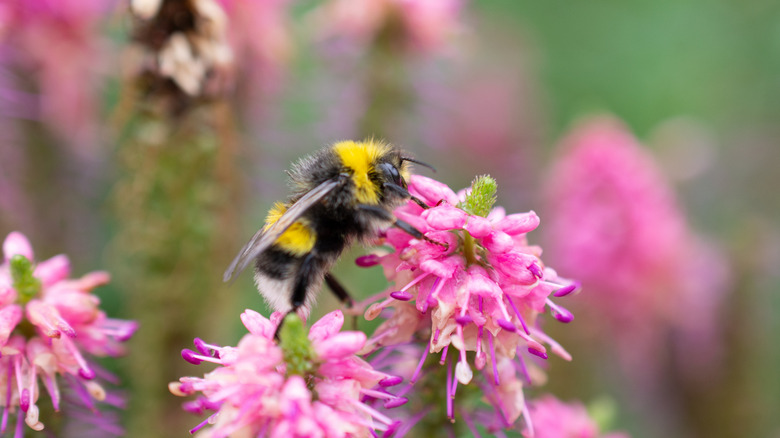
While there are many types of beneficial bees you want in your garden, the tips for attracting them differ. Not all bees feed on the same flowers or build their nests in the same places. Solitary bees, for example, will happily inhabit a regular bug hotel, whereas honey bees live in hives and only visit your garden for pollen and nectar. Want to attract bumblebees in particular? They nest at or below ground level in quiet, sheltered spots in the garden. This is why you'll often find bumblebees — queen bumblebees, to be exact — taking over burrows abandoned by mice or voles, or nesting in thick grass. You can create the ideal nesting site for bumblebees with an upturned plastic nursery pot filled with straw and a pipe for an entrance tunnel.
This bumblebee nest project by Small Woods Association on YouTube is almost guaranteed to bring more of these big fluffy bees to your garden. It's also a clever way to reuse plastic nursery pots to attract pollinators. It works because it mimics the natural conditions bumblebees look for when creating a nest. Before getting started on this project, you'll need to gather some very specific supplies. You will, of course, need a plastic nursery pot with a saucer (or an old ceramic plate or a roof tile). Get a roll of Dodobeya Chicken Wire or some small pieces of dry, untreated wood, some stones or wine corks, and an 11-inch to 24-inch length of hose, like this JoyTube Food Grade Silicon Tubing. You also need to choose the right site for your makeshift nest. Install it in early spring in a shady, pesticide-free area with lots of food sources and away from foot traffic.
How to set your bumblebee house so that it actually works
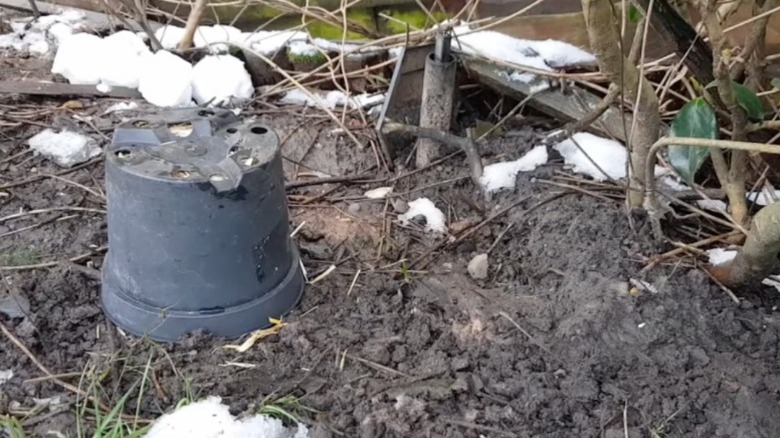
First, drill some holes into the base of the hose — the side that will sit on the soil. This ensures that any water that finds its way into the bumblebee house can easily drain out. Lay the pierced pipe on the ground in your chosen site. Bumblebees need a dry spot to nest. In fact, if the nest gets damp, they won't stick around. To ensure the house stays extra dry, place pieces of wood or chicken wire over one end of the pipe, making sure the pipe pokes through and isn't blocked.
Fill the nursery pot with straw before flipping it upside down on top of your hose and wood or chicken wire arrangement. Bury the base in soil so it is secure. To create some airflow inside the pot, arrange the stones and corks — it's a creative way to reuse wine corks around the garden — on the planter base (between the ridges) and place the saucer (or plate or roof tile) on top of them. The idea is to let air in and keep rain out, so you want to cover the nest without blocking all the drainage holes.
There needs to be an obvious entrance to the nest for bumblebees to find, and the other end of the hose serves this purpose. Bury the majority of the hose under soil, leaving the far end open and above ground. This creates a safe path from the outside into the nest area. While it's tempting to check on or adjust the house regularly, bumblebees are sensitive and less likely to settle if disturbed. Think of this project as something you build and then leave alone as a passive feature in your garden.