

What Does The 'Fan' Setting Mean On A Thermostat?
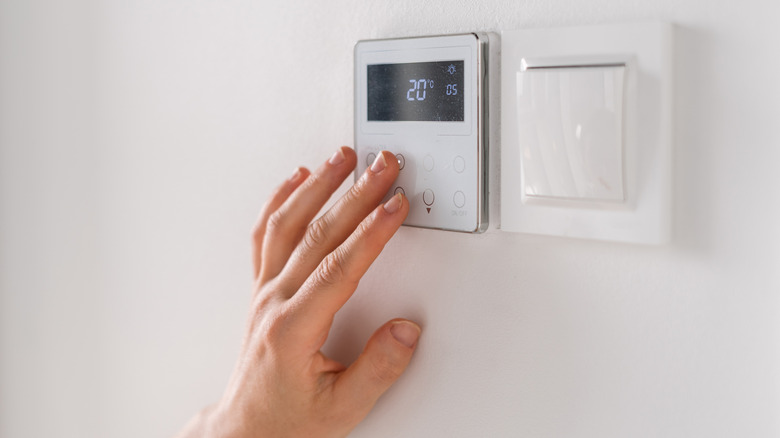
With the amount of electronics and appliances found in every home, it can be difficult to learn and know exactly what every possible setting on each one can be used for. Microwaves, ovens, and even refrigerators often have new settings that are left untouched because users don't know what they do outside of their basic functions. Even laundry machine settings feature lingo on their varying wash and dry cycles that seems foreign to homeowners who just want their clothes and linens cleaned and dried. Among the more common head-scratching switches and settings is the "fan" mode on your thermostat, so what exactly does it do? A setting switch found between the more heavily used modes, heating or cooling, this typically overlooked thermostat setting is mainly intended to help regulate and circulate air flow in your home.
Whether your thermostat is analog or smart, the "fan" mode can be easily activated using a toggle switch or a button. When selected, you're given options on how and when to run the HVAC's fan. While "on" is self-explanatory, the "auto" setting gives the thermostat authority to run the fan only when and if the system is already running. Depending on if you choose to run the fan continuously or have it automatically kick into gear, this thermostat setting can benefit your home, your HVAC system, and your bank account if utilized correctly and efficiently.
Pros and cons to using your thermostat's fan setting

While it really is up to personal preference, running your thermostat's fan on "auto" mode can provide the best bang for your buck while making your home more comfortable. On "auto," the fan will only blow when the system is already at work. By keeping the system off when it isn't in use, the "auto" fan setting can also help reduce your energy costs at home. If you choose to have your HVAC's fan running automatically throughout the day, you will start seeing a noticeable change in the air quality of your home. With air constantly flowing through the filters of your system, fresh, cleaner air will be readily moving throughout your house. Likewise, as the air is being pushed through your filters, it can help reduce any airborne allergens, making seasonal allergies a little more bearable. For wonky weather in spring, switching your thermostat's fan setting to "on" can help regulate the temperature in your space by evening out inconsistent spots of warmth or chill caused by unpredictable weather. Having the fan running can also reduce odors in your home since it helps circulate air, preventing it from sitting still and stagnant.
If you do choose to constantly run your fan throughout the day by toggling it to "on," you will see the aforementioned benefits, however, do keep in mind there are some cons to using this setting. By having your fan running 24/7, you can expect to see higher energy bills. Running your thermostat fan all day can also be taxing on your HVAC system as a whole, increasing the possibility for wear and tear, which can lead to frequent repairs and tune-ups.