

Attract Butterflies All Season Long With A Nonstop Blooming Flower
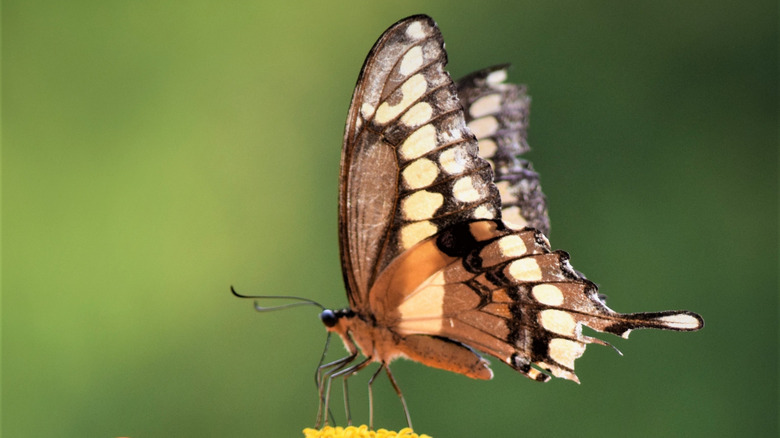
Butterflies are beautiful and important pollinators that add biodiversity to the garden. In my work as professional gardener, clients often ask me to plant more flowers that will attract butterflies and other pollinators such as bees and hummingbirds. Having a variety of flowering plants, in beds or containers, is a surefire way to attract many butterflies to your yard. Floss flower is one attractive, long-blooming purple flower that is a pollinator-friendly choice.
Some butterflies are known to feed on specific flowers at different points in their life cycles: Monarch butterflies, for example, only eat milkweed plants such as common milkweed (Asclepias syriaca) and butterfly weed (Asclepias tuberosa) while they're in the caterpillar stage. But adult monarch butterflies also eat nectar from a variety of flowers to fuel their long migration flights, and this is where late-blooming floss flowers come into play. Monarchs have been seen to visit floss flowers in droves, as have grey hairstreak butterflies. These flowers provide abundant nectar, and the bright color also attracts butterflies. Other pollinator magnets include Joe Pye weed, goldenrod, and various asters (Symphyotrichum spp.), all of which look great planted with floss flowers.
There are different varieties of floss flower (also called blue mistflower), and there's sometimes a bit of confusion over which ones are the true butterfly magnets. Floss flower hybrids (like Ageratum 'Artist Blue', which has purple buds and periwinkle blue flowers) are the shorter plants sold in nurseries that are commonly chosen for container plantings and bedding plants. A good choice for butterflies is a common perennial variety: Ageratum houstonianum, which is perennial in cold zones, and relatively low maintenance.
The best floss flower to plant
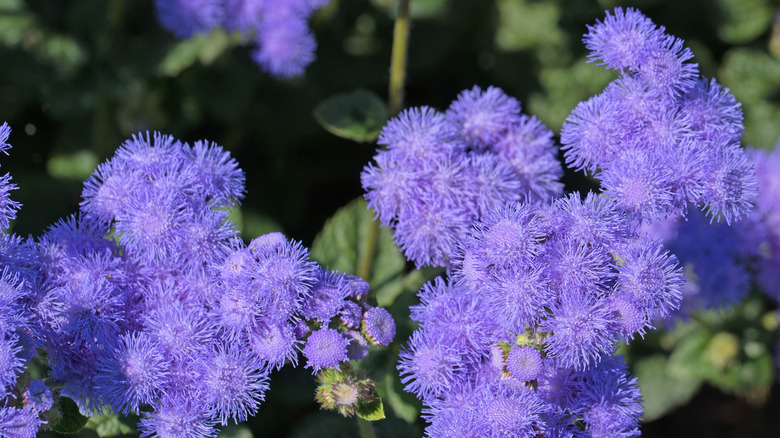
Maybe you've planted hybrid ageratum in containers or beds and wished for these attractive fuzzy purple flowers to come back as perennials? Alas, these hybrids are only winter hardy in USDA zones 9a to 10b. If you want perennial floss flowers, there are several varieties. The most common is Ageratum houstonianum, which is cold hardy in USDA zones 2a to 11b.
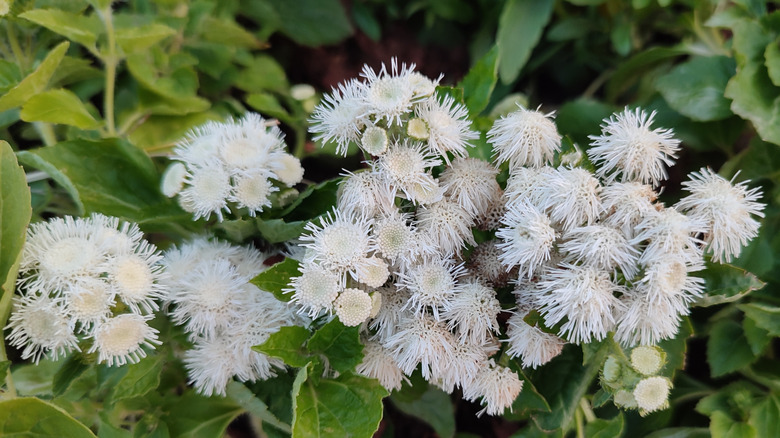
This flower offers lovely late-season color in shades of vivid purple (really more of a periwinkle blue for you color nerds out there) or white. I have found that it spreads rather assertively in northern gardens, but I've also seen it in gardens where there are just a few small patches for color. The flowers are small but numerous on each stem, and also come in white. The plants usually grow 2 to 3 feet tall. They're a good choice to fill in large areas where you need late summer color, such as along a fence or driveway.
This perennial ageratum emerges a bit late, usually pushing up its leaves in May. The flowers appear in late summer, lasting for weeks from August through October and even into November. This long blooming period makes it a valuable food source for migrating butterflies and one of the best flowers for a pollinator garden. There's even a new variety of ageratum for sale known as 'Monarch Magic,' which growers claim these insects can't resist. Floss flowers look great alongside brightly-colored zinnias in late summer, and they provide cool blue shades next to the warm colors of chrysanthemums. The white variety adds brightness to the partial shade bed.
Care and maintenance of floss flowers
Once planted in the garden, perennial floss flowers establish themselves quickly. I grow these in my own gardens and in clients' gardens for their easy color. Ageratum houstonianum is sometimes the name on the shorter annual hybrids you find for sale, so be sure you're getting the taller, perennial variety for year-after-year color. Perennials that provide garden color from late summer through fall are precious to me as a professional gardener, because this is when so many flowers start to fade from view.
These fuss-free flowers bloom in partial shade to full sun, and thrive in well-drained soil, but also grow in clay soils. They're fairly drought-tolerant and need no fertilizer or mid-season deadheading. Once the flowers start to fade in late autumn, they turn a dull brown, and the plants tend to droop, so they're not worth keeping intact for winter interest. I cut them back at the end of the season to keep the seeds from spreading and keep the garden neat.
This plant tends to spread quite willfully in the garden, especially in full sun. I have hesitated to call this plant invasive, because it's very easy to remove and control. The roots are very shallow and easy to pull or dig up. Sometimes in spring, I will dig up the patch and remove some of the roots to keep the clumps under control. The roots are slender and white, easy to identify and remove. If I find these flowers are being a bit too vigorous in summer, I divide and replant the clumps, and pot the extras to give away.