

Turn Vintage Dish Towels Into An Upcycled Storage Solution
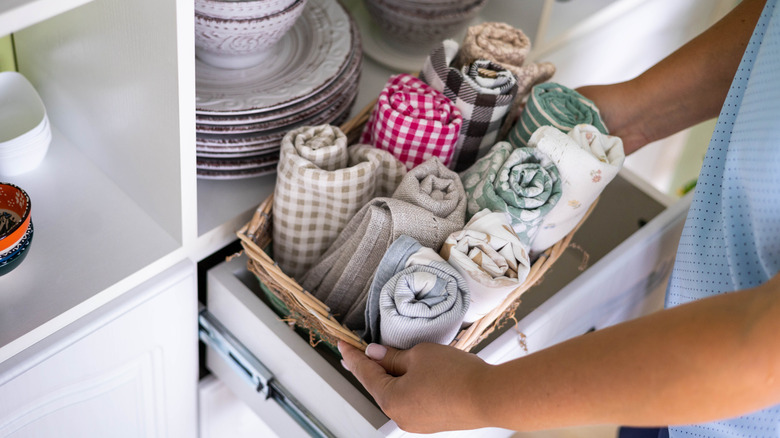
If you need more storage around the house but don't want another boring bin or ugly tote taking up space, using material you already have to make your own container can be a fun and unique storage solution. Not only can it help to keep you organized, but it also adds a bit of fashionable decor to any room. There seems to be no limit to the creative ways you can repurpose things, like learning how to upcycle lace curtains to create decorative storage solutions. But today, we're going for a bit of an old-school flair by using vintage dish towels to make easy storage pouches.
These vintage dish towels transform into zippered pouches that can be used to store anything from makeup and hair accessories to crafting and art supplies. They are simple to make and only require a few steps. There are a ton of vintage tea towels you should be keeping an eye out for this year, but really, any that you have on hand or spot at a thrift store will do. You'll also need a pair of scissors, a sewing machine or a simple needle and thread, and a zipper. Optionally, you can use fusible interfacing as a liner for the storage pouch, especially if your vintage tea towels are a bit worn. This will make sure the pouch is sturdy and holds up with use. You'll need an iron to properly apply this material to your dish towel.
How to upcycle a vintage dish towel into a zippered pouch
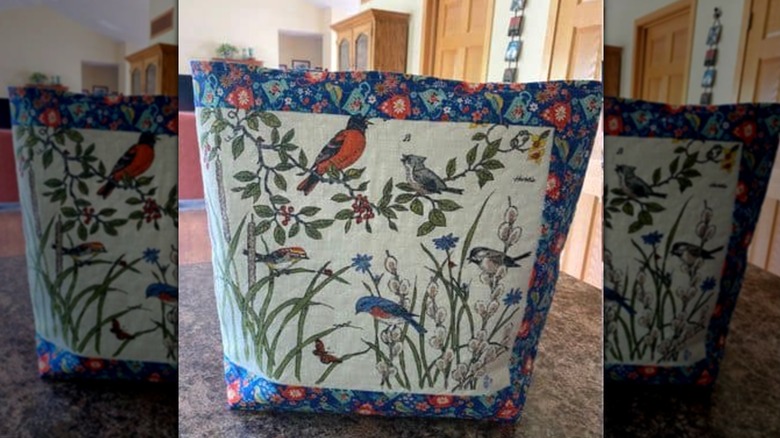
There are a ton of smart ways to organize your home in an eco-friendly manner, and upcycling things like vintage dish towels into a storage pouch is definitely one of them. However, one thing to consider is how worn older items are. If your towel is a bit thin, we'll start by adding a layer of fusible interfacing. To do that, measure the towel and cut a piece of interfacing to the same size. Lay the towel face down on a flat work surface, like an ironing board or table. Place the interfacing glue-side down on top of the dish towel. Lay an extra piece of material over the towel and interfacing to protect the iron from any glue that might spill out from the edges of the interfacing. Use an iron across the whole surface area of the interfacing and towel to melt the glue, adhering the two together. Set the piece of protective fabric aside and allow the dish towel with interfacing to cool completely.
Cut the dish towel in half width-wise. Flip one piece over so it's face down and lay the zipper, also face down, across the top of the material. Sew along the raw edges to attach one side of the zipper to one half of the towel. Lay the second piece of the dish towel face down and the back side of the other half of the zipper together, being sure to move the first portion of the dish towel out of the way. Sew along the raw edges. Unzip the zipper, fold the outer facing parts of the dish towel together, then sew along the three raw edges. Turn the whole thing inside out through the open zipper.