

The Crucial Lawn Care Step That Starts In May For Healthy Grass All Season Long
We may receive a commission on purchases made from links.
While they may be luscious and green over the summer months, our lawns take a hammering during winter. In some cases, they're exposed to subzero temperatures in towns and cities across the U.S. While many plants will die in these conditions, many of the grass species that we use in our lawns are adapted to survive, even if they appear on the surface to be dead. During winter, turfgrass enters a state of dormancy, pulling the handbrake on growth as it conserves energy. It's basically battening down the hatches to wait out the cold weather, especially if it's a warm-season grass like Bermudagrass. There are plenty of simple tips for preparing your lawn for the winter months, but when May arrives, there's one key step that you can take that will help to ensure you have healthy grass all season long. It's called scarification, and it's something you should know how to do if you're serious about your lawn.
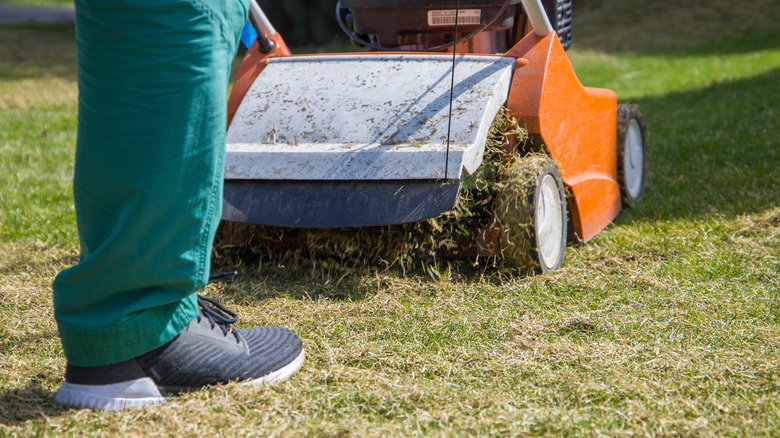
Scarifying is the process of intentionally tearing into the soil to remove dead grass, thatch, and other debris that has built up in your lawn. While it may appear to be backbreaking work in your garden, it doesn't have to be if you have the right garden tools. The simplest tool for the job is a scarifier, a machine that looks a bit like a push mower but comes with spinning blades that penetrate the lawn and loosen the thatch. You can either rent or buy a lawn scarifier, like this YARDCARE 2-in1 Electric Dethatcher and Scarifier, but if you're looking to save money on your lawn, you can also use a garden rake — just be prepared for a workout.
Why May is a key time to scarify your lawn
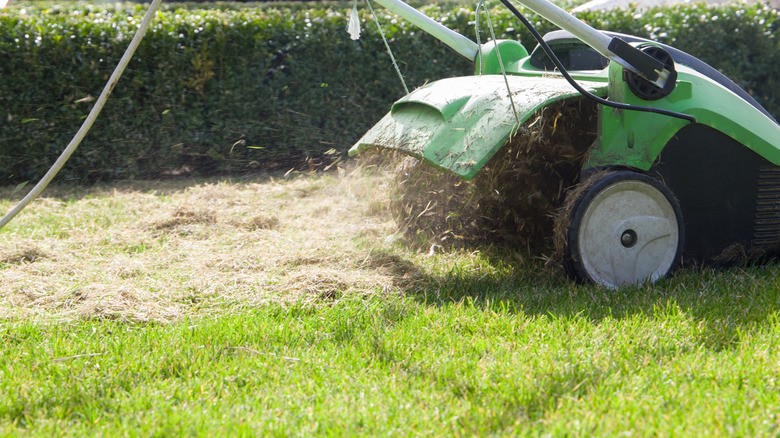
May is an important time of the year for your lawn, especially for warm-season grasses. It's when the grass enters its growth phase after the dormant winter months, during which time it'll be looking for oxygen, water, and vital nutrients to feed the root zone. In May, the soil in your yard will have warmed enough to encourage active root development, and this is when you'll want to make sure that you're giving your lawn every opportunity to grow. If your lawn is compacted with dead grass, thatch, or other organic material, it will be starved of these important elements and won't reach its full potential.
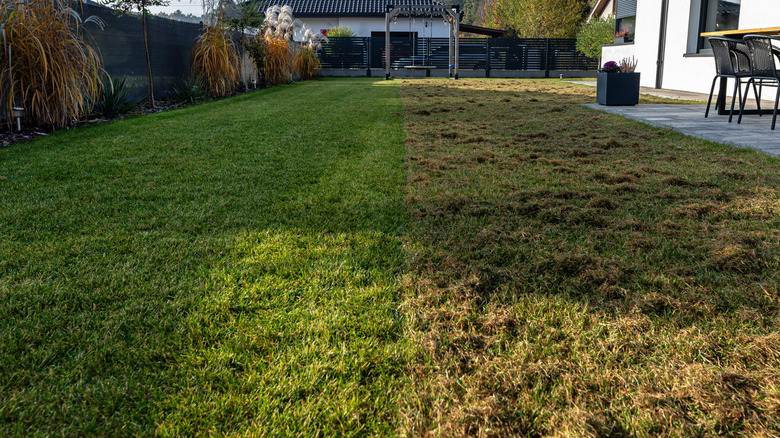
This is where scarification comes into play. By removing the materials that have surrounded the grass over the winter months, you'll be opening up the area and enabling it to effectively produce flowering stems. This is known as "going to seed," which means it's ramping up for its reproductive phase. By targeting May to scarify your lawn, you'll catch the grass during its peak growth spurt. This is also the time of year when many weeds like dandelion start viciously competing for space in your lawn. With scarifying, you'll be giving your grass added strength to compete against these lawn invaders. However, you should identify annual and perennial weeds and remove perennial weeds from your lawn before you start the scarifying process, or else you could inadvertently chop them up and spread their rhizomes.
Dos and don'ts of scarifying your lawn
Now that you know that May is a great time to scarify your lawn, there are other things you should know about scarification. One of the most important things to do is to check the weather forecast before you get going. It's best to aim for a day when the soil is moist but the grass blades themselves are dry. The reason this is important is that when the ground is too dry, the scarifier might struggle to penetrate the thatch. As it moves along, it could end up ripping out your healthy grass as well. On the flipside, if the soil is too wet, you'll churn the lawn into a muddy mess, and you won't get the aeration you're after. The length of your lawn is also important. To enable the scarifier to get right into the thatch layer, you'll need to first mow the lawn to a shorter height than you normally would, about 1-2 days before scarifying. This allows the blades to reach the debris without being hindered by long, lush top growth.
A key lawn scarifying mistake some people make is setting the scarifier blade to cut too deep into the grass. You'll want to aim for no more than 1/2 inch deep so that you remove the thatch without damaging the grass root system. The same logic applies if you're using a rake. Choose a wide-toothed rake and gently comb out the thatch in sweeping motions, being careful not to rip the grass. Once you're done, make sure you remove the thatch and debris that the scarifier has dislodged so your lawn can breathe.