

Should You Use Fabric Softener? Consumer Reports Finally Settles The Debate
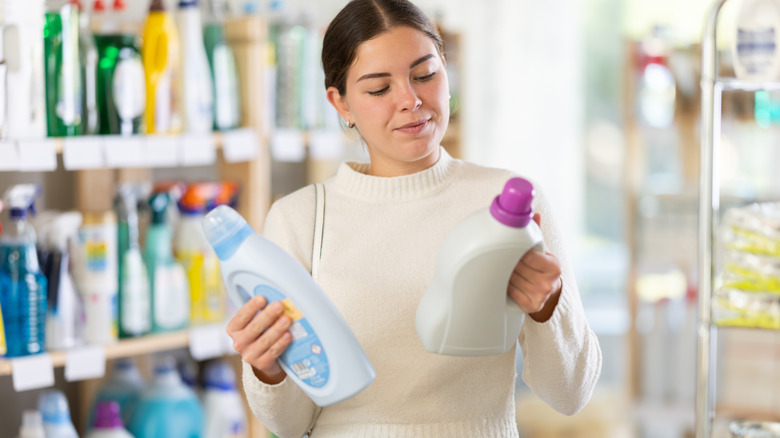
When shopping for laundry detergent, it's hard not to notice the dozens of bottles down the aisle, promising clothes that smell like flowers and static-free laundry. You might pick up a bottle when you're out, but do you really need it? Fabric softener is not the most expensive product ever, but the costs build up over time, and why buy something if it's unnecessary? There's a lot of conflicting information on the internet about it, making it difficult to know for sure. Thankfully, Consumer Reports finally ended the debate, stating that these bottles are not worth buying for most people.
There are some exceptions, according to Consumer Reports. For example, if your clothes are "clingy or very dingy" or you really love the scent of fabric softener. However, in general, fabric softener just isn't necessary. And even in these instances — minus wanting it for the scent — you probably only need to use it on occasion, saving you money. Plus, there are likely alternatives that can do a better job. The very best way to wash white clothes to stop them from getting dingy, for instance, doesn't involve fabric softener, but tricks like warm water, baking soda, and pre-treating stains immediately.
It's not just fabric softener, either. All of these types of products are unnecessary, including scent boosters, static guards, and dryer sheets. However, it's not just because they aren't needed that you should reconsider using them. They can also be risky to use frequently.
Fabric softener isn't just unnecessary, it's detrimental
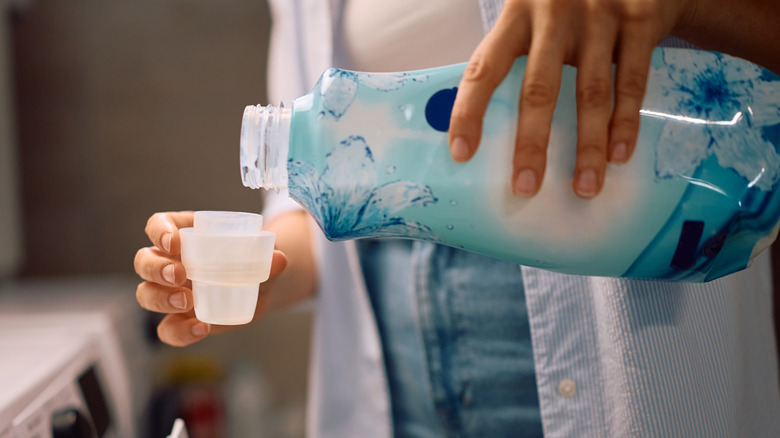
There are actually some pretty big downsides to adding fabric softeners to your laundry loads, which is another reason why you shouldn't use them. According to Consumer Reports, if you have sensitive skin or allergies, using these products can lead to rashes. There is also the problem of what they do to your machine and clothes. Fabric softeners work by adding a thin coating to your laundry, which is what makes them feel softer and prevents static. But this coating can reduce flame resistance and water-absorbing abilities, so you may notice that your towels don't dry your skin as well as they used to after a few loads. Additionally, it can build up in your washer, causing clogs and musty-smelling mold. Thankfully, if you already have a few bottles lying around, there are some brilliant ways to use fabric softener outside the laundry room to avoid wasting anything, like dusting your blinds.
Though it may take time to get used to having laundry that doesn't smell like flowers, quitting the fabric softener is better for your laundry in the long run. Consumer Reports suggests trying scented laundry detergent so your laundry still comes out with that fresh smell. If static is an issue, you can use reusable dryer balls, which help to prevent cling and last for a long time. DIYing your own fabric softener with common cleaning ingredients is another option that can ensure your clothes stay soft.