

The Ornamental Tree That Birds And Pollinators Love And Has Year-Round Interest
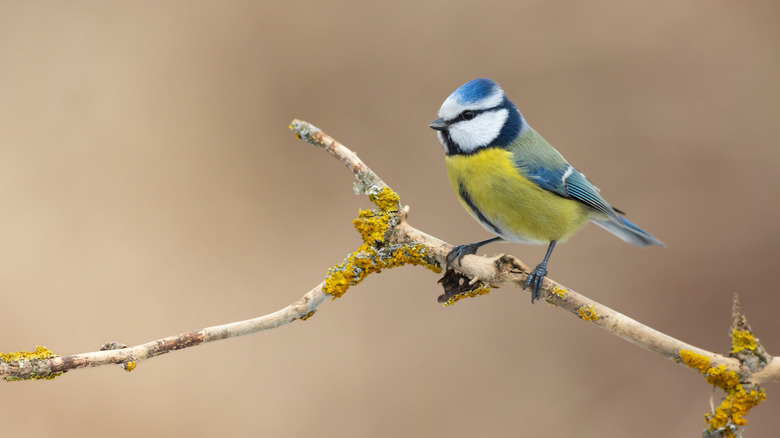
Birds and pollinators are a healthy part of any backyard ecosystem, especially for yards with gardens or living landscape features. Of course, it's well known that certain fruit trees will turn your yard into a bird and butterfly wonderland, but what about ornamental trees? Ornamental trees create visual impact in your landscape, and may attract pollinators, but they aren't generally grown for fruit or nut production. However, just because gardeners don't harvest from these trees doesn't mean they are any less appealing to local wildlife. Pollinators love one such ornamental tree known for the year-round interest it brings to your yard: the corkscrew hazel.
Corkscrew hazel (Corylus avellana 'Contorta'), also known as Harry Lauder's walking stick, is known for the amazing display of twisted branches that make a statement in the winter, followed by large, golden catkins (or flower clusters) that dangle from the branches as spring emerges. In the summer, it is filled with green foliage, and in the fall, it produces nuts. While commonly grown as an ornamental tree, the corkscrew hazel is technically a deciduous shrub that grows 8 to 10 feet tall in USDA hardiness zones 4 to 8. Homeowners aren't the only ones who enjoy the many seasons of interest that the corkscrew hazel has to offer. Birds and pollinators love it too! The twisted branches and dense foliage provide the perfect housing for birds in the summer and fall, and the nuts provide nutritious treats. In the late winter and early spring, the flowers attract early-season pollinators to your yard.
Birds and pollinators that are attracted to the corkscrew hazel tree
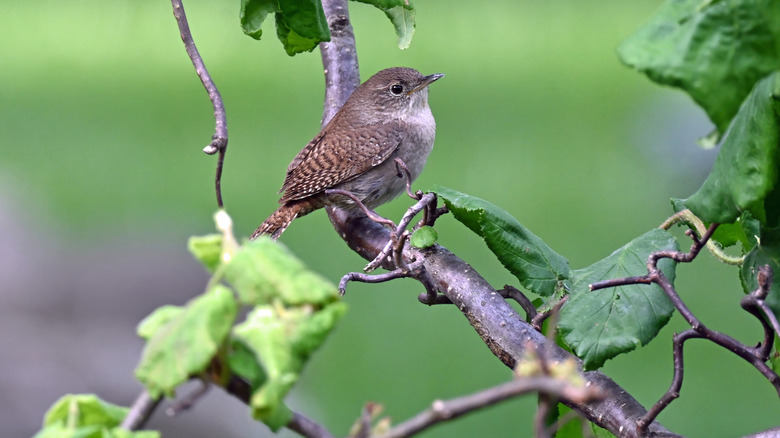
Some hazel trees are known for being the type of shrub you'll want to plant to keep your backyard smelling good, but this variety has a different appeal. Corckscrew hazel provides a wide range of benefits for local wildlife, making it an attractive feature for birds and pollinators alike. Homeowners frequently share videos of birds using the twisted tangle of branches for nests, including bushtits, wrens, and robins. But the branches aren't the only thing that makes the corkscrew hazel an ideal home for birds. The dense foliage in the summer provides enough cover for birds that prefer to nest on the ground, such as nightingale, nightjar, yellowhammer, and willow warbler.
Aside from nesting, the corkscrew hazel produces flowers in the spring and nuts in the fall that attract foraging pollinators and animals. Homeowners report a wide range of species flocking to collect food from their branches, including pigeons, nuthatches, and woodpeckers. Corkscrew hazel plants also provide food for caterpillars, butterflies, and moths, which is great for pollinating the rest of your yard or garden. Some other varieties include the nut tree tussock and large emerald moth. In addition, bees are generally attracted to the catkins in the spring.
How to care for your corkscrew hazel tree for year-round interest
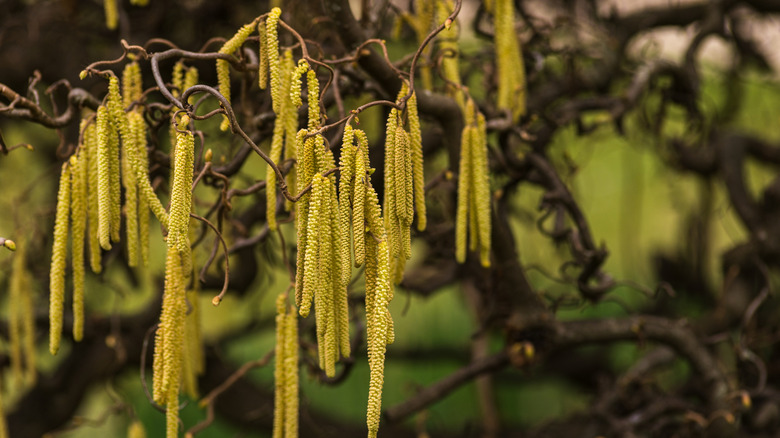
While native plants are perfect for bringing birds to your yard, with the right care, non-native plants like the corkscrew hazel can be just as inviting (as long as they are not considered invasive). You can grow corkscrew hazel in a wide variety of landscapes as a border plant, but it is widely used as a centerpiece to create year-round interest in a garden. It can be grown in containers or along pathways in larger landscapes due to its short growth.
Corkscrew hazel can perform well in full sun or partial shade, as long as you provide it with well-draining soil that is rich with organic matter. Choose a spot that is partially protected from wind, especially if you are in a cooler climate. Plant your tree in the ground between November and March for the best results. Soak the root ball before planting. When it is time to put the tree in the ground, make sure the top of the root ball is level with the top of the soil. Cover securely and water well.
When it comes to pruning, be selective. You do not want to cut the top of branches for shaping. Instead, cut any damaged or diseased branches all the way back to a side branch. If you choose to prune, do it when the plant is dormant in the winter before new growth starts. The plant naturally grows with twisted, crooked branches, but on occasion, a straight stem sprouts. Remove straight stems as soon as you notice them at the base to prevent unhealthy growth. You will also want to prune suckers. Otherwise, you can leave it alone and watch the magic happen.