

The Ornamental Grass That Gives Garden & Driveway Borders A Soft Pink Touch
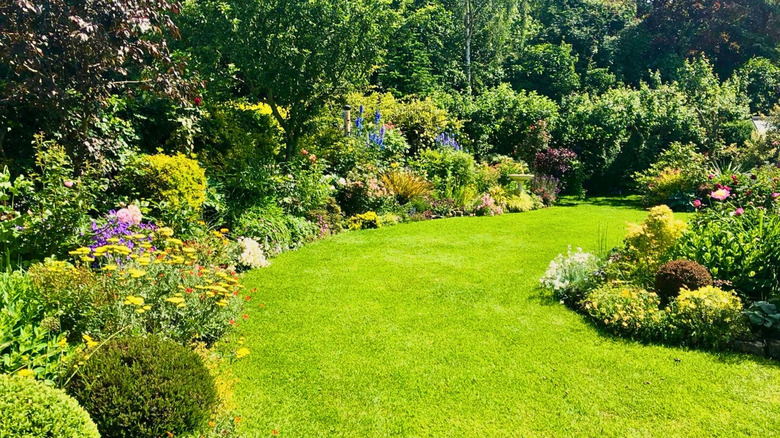
For many people, options like the fast-growing flower Virginia stock are the usual go-to choices for adding a splash of color to the borders around your home. However, as vibrant and eye-catching as a bounty of blooms can be, they're not without work, especially since most flower species require deadheading to keep those brilliant blooms front and center.
Fortunately, while not entirely hands-free, purple love grass (Eragrostis spectabilis), also known as tumble grass, thrives when added to your borders, and its soft pink accents provide color without the hassle of pruning and deadheading. This stunning ornamental grass is a staple in meadows across central and eastern North America. It grows in dense but well-behaved tufts, making it perfect for adding texture and visual appeal to your garden and driveway borders. While it may not sport traditional show-stopping flowers, purple love grass is anything but bland. Instead, it offers a soft pink touch to your garden during the summer and fall thanks to its colorful seedheads. It can grow up to 18 inches in height and doesn't require mowing (although you can do so if you wish to curate a specific appearance).
Overall, purple love grass is a low-maintenance perennial plant that's easy to grow. This gives you the ability to cultivate visually appealing borders that boost curb appeal without a large time commitment. And because it's so hardy, this ornamental grass is forgiving of mistakes, making it a perfect plant for beginner gardeners.
How to grow purple love grass
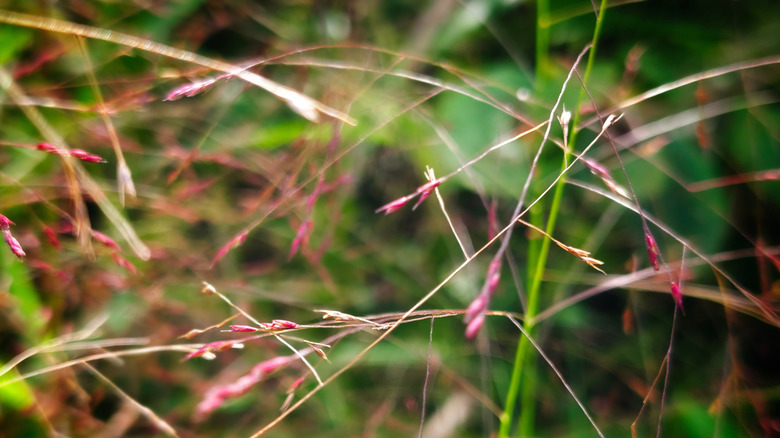
Purple love grass holds up well to poor soil, salt, and hot, dry conditions. As a result, it's versatile throughout your yard, whether lining the borders of your garden or adding visual depth around your driveway. However, one limiting factor is sunlight, as purple love grass needs full sun each day for the best growth. This means you'll want to pick a spot that receives at least six hours of direct sunlight. Because of this, using it as a border in shady areas, such as north-facing garden beds, may not be possible.
As a perennial, purple love grass returns year after year in your yard. However, it's only winter hardy in USDA Zones 5 through 9. If you allow it to maintain those colorful seedheads, however, it does readily reseed, taking out some of the hassle of ensuring your yard's borders stay dense and vibrant each year. Just keep in mind that purple love grass isn't evergreen. Instead, it does go through a dormant period during the winter, so you may wish to combine it with either evergreen ornamental grasses or winter-blooming plants for borders that sport year-round appeal.
Purple love grass isn't only viable as a border plant, although it thrives in these locations. You can also use it when creating a wildlife-friendly garden, as it attracts small mammals and songbirds who are interested in its seeds.