

The Compact Zinnia Variety With Colorful Flowers That Makes A Great Ground Cover
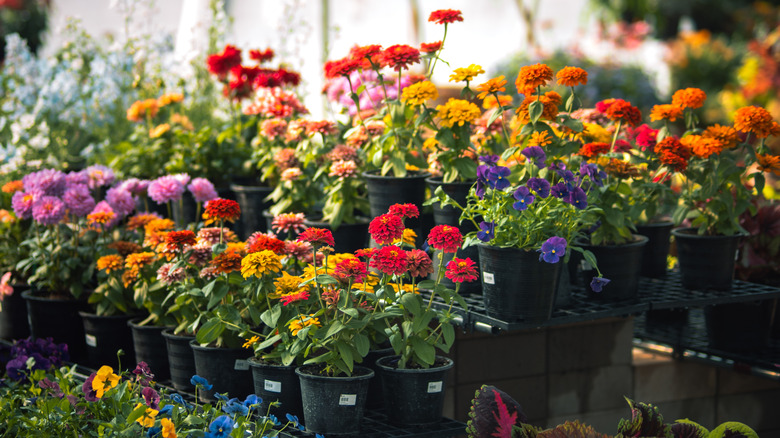
If you're a zinnia fan, you may be familiar with this plant's many different species with single or double blooms, in shades that include pink, purple, orange, and so many other delightful hues that light up the garden and attract pollinators. But there's a type you may have never grown before and it's a distinct species from the ones most commonly found for sale from seed companies. We're talking about creeping zinnias (Zinnia angustifolia), one of the types of speciality zinnias to grow for a garden full of beautiful blooms — and this flower can be used as a ground cover.
Creeping zinnias are compact annual plants that are available in just as many fabulous colors as those of the tall, upright types. You'll find these low-growing flowers in shades of orange, white, yellow, pink, red, and burgundy. Their colorful blooms are between 1 and 3 inches wide and are held on clumping plants that can grow to be just 6 inches tall, or up to 18 inches in height, depending on the variety. They have narrow leaves, and each plant has a spread of about 12 inches.
Tips for growing creeping zinnia flowers as a ground cover
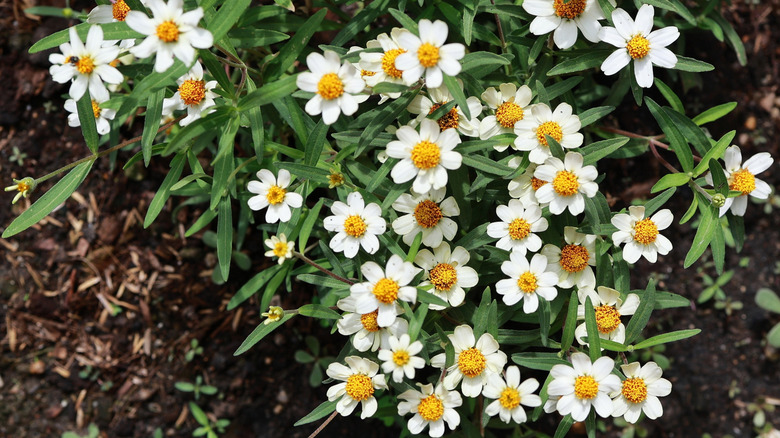
If you'd like to use creeping zinnias as a colorful ground cover, make sure to plant them in full sun where they will flourish. These compact annuals are fairly adaptable to different soil types, but make sure the drainage is good. You can grow and care for zinnias as annuals throughout the United states. Feel free to situate these flowers in tough locations such as near sidewalks since they are very drought- and heat-tolerant plants.
As with other annuals, you should expect a long floral display — creeping zinnias are one of the flowering ground covers that will bloom multiple times for continuous color. There are many places you can use these fast-growing, compact varieties, for instance to fill spots where perennial ground covers haven't yet spread. These clumping flowers also work beautifully as ground covers in cottage or pollinator gardens, where they'll attract butterflies, bees, and other beneficial insects.