

How To Identify Your Home's Moisture Problem Using A Simple Piece Of Tin Foil
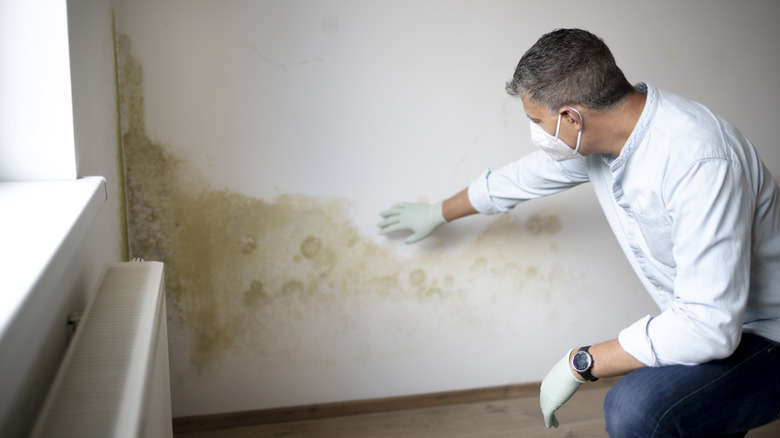
There are many important things to look for when buying a new home. From researching the best neighborhoods to touring potential dream homes, the to-do list for potential buyers is seemingly endless. And after you close, there are even more things to consider when moving into a new home.
While homes can look great on paper and seem perfect after an initial tour, taking the time to see what could be lying beneath the floorboards or in between walls can uncover hidden problems and avoid expensive repairs. Among the pricier problems to identify and fix is moisture damage. Hiring specialists to investigate potential moisture issues can rack up quite a high bill before repairs are even done. Luckily, there is a test you can conduct yourself to identify whether or not your home has a moisture problem: the Foil Strip Test, which requires only a basic piece of tin foil, some tape, and two minutes.
This simple test helps determine whether the foundation of your home has a minor or major moisture problem as well as where the problem is stemming from. The results can reveal whether a moisture problem can be remedied by simply reducing humidity in your home (usually with the help of a dehumidifier) or if more professional repair services are required. Identifying and remedying moisture damage early can save you a lot of money in the long run. If left unmaintained, more expensive problems — like mold and mildew formation, pest infestation, and structural issues — can arise.
How to conduct the Foil Strip Test
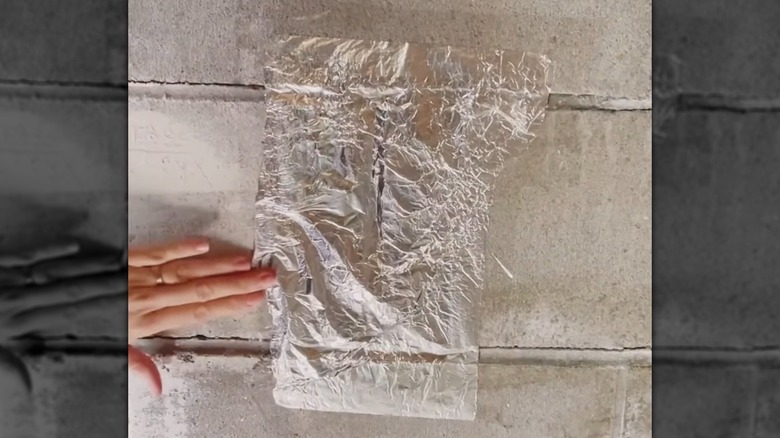
With your foil and tape in hand, head to the foundation wall you want to use as your test area. Wipe down the surface of the wall, ensuring you thoroughly dry the part of the wall where you'll conduct the Foil Strip Test. Place a square of foil onto the spot and secure it using tape. Gaffer or painters tape can be used to prevent damaging your walls, but any kind of tape will suffice for conducting this test. Just make sure you create an airtight seal so your results will not be skewed by outside air or humidity. Allow the foil to sit undisturbed for 24 to 48 hours. You can place multiple foil squares on different parts of your foundation to see how extensive the moisture damage may be.
To allow for a clear indicator that moisture is accumulating from the foundation itself, not from the natural humidity of the room, make sure the barrier is airtight so that any moisture from the surrounding air will not penetrate the foil. After giving the foil adequate time to sit, you can remove the square from the wall, and interpret the results of the foil test by seeing which side of the foil the moisture has gathered on. If condensation is present on the wall-facing side, then you likely have moisture coming from the foundation. If condensation is on the foil facing away from the wall, humidity levels are the likely culprit.
Additional outcomes from the foil test
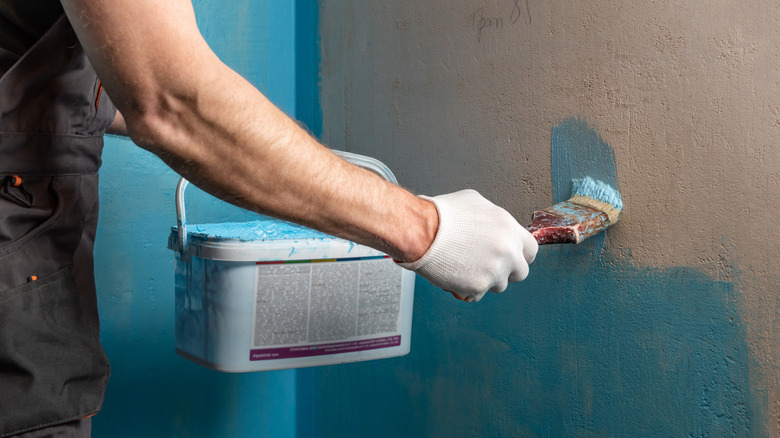
Not only will condensation found on either side of the foil help you determine the source of the moisture within your home, but additional results from this quick test can also indicate other issues. In the ideal, money-saving scenario, the wall-facing side of the foil remains dry, indicating that a normal amount of moisture (if any) is in or near your foundation. In the worst case scenario, however, you might find rust in addition to water droplets on the foil. This can indicate very concentrated amounts of condensation in your foundation. As a result, a contractor may need to be hired to further investigate the source of the water leakage and ultimately remedy it to prevent other problems. High moisture levels can be breeding grounds for mold and mildew; ignoring this is among the mistakes that attract pests to your home.
On the other hand, if you find humidity to be the source of excess moisture levels in your home, this can typically be resolved by adding a dehumidifier to the space or by allowing proper ventilation via windows or by running fans to circulate and disperse air. If your Foil Strip Test does furnish alarming results, try not to panic! As is the case with most home problems, it's always best to uncover and fix the issue before it gets worse in the long run.