

Turn A Common Kitchen Scrap Into Fertilizer & Watch Your Tomato Plants Flourish
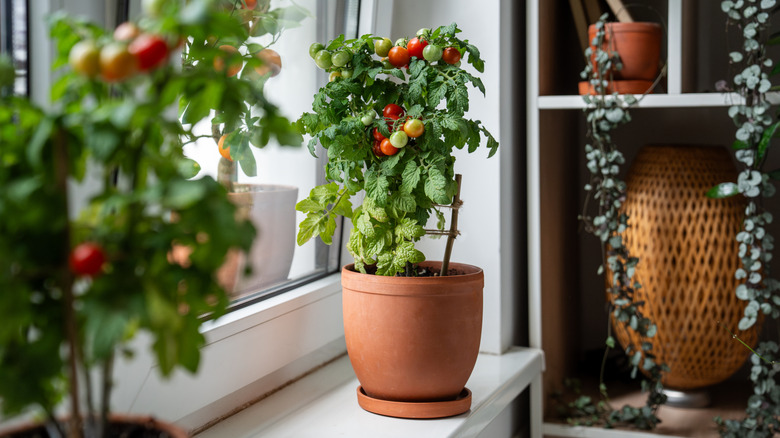
Given their easy-to-grow nature, tomatoes (Solanum lycopersicum) are typically regarded as suitable plants for novice gardeners. However, even these low-maintenance fruits can need some help from time to time in the form of fertilizer, which provides the plant with extra nutrients. There are countless options of commercial fertilizers on the market, but if you want to avoid inorganic chemicals and improve the overall quality of your soil, you may want to consider making your own fertilizer using kitchen scraps. There are plenty of DIY tomato fertilizers that will help your plants thrive, but one particularly effective option is to use garlic peels.
Thin, fragile garlic peels can be a bit of nuisance while cooking, but they are excellent for cultivating your tomato plants. Garlic peels contain nutrients that will encourage the tomatoes to grow, like potassium, phosphorus, and magnesium. Along with feeding the tomatoes, garlic peels might also help to protect the plants, since garlic naturally repels certain pests that target tomatoes like spider mites and aphids. In fact, garlic is an essential kitchen ingredient that deters insects naturally around the entire garden. Because of all these benefits, garlic (Allium sativum) is an excellent companion plant to tomatoes. But if you don't have room to add another plant to your collection, garlic peels are also an effective option.
Garlic peels can be turned into a simple fertilizer
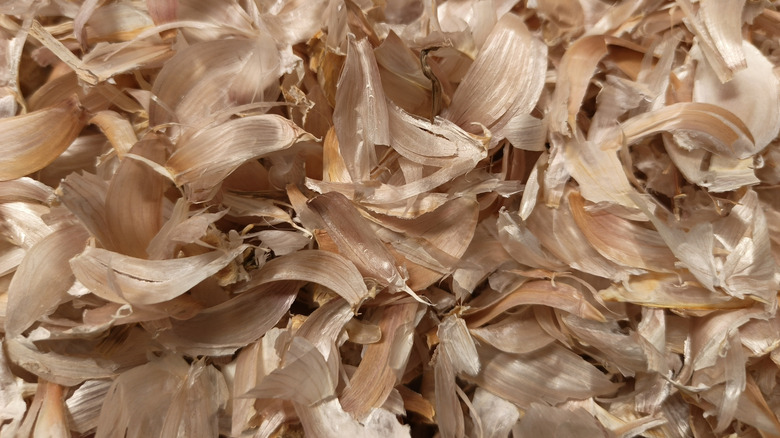
While you can add the garlic peels directly to your tomato plant's soil, they could be blown away or picked up by local wildlife. Instead, take a few extra steps to prepare the garlic peels so they can be as impactful for your plants as possible. Start by collecting all your garlic peels in a large airtight container, like a glass jar. Two bulbs' worth of peels is enough to do this hack, but you can certainly wait until you've gathered more.
Once you have enough peels in the jar, add water. Aim for about 4 cups of water (or 1 liter) per two full bulbs of garlic peels. Adding more water will make the solution more diluted. Let the mixture steep in the closed container for about one to three days. The water may turn a brownish color, but this is normal. Strain or remove all the peels before transferring the liquid to a spray bottle. Store in a cool, dry area between uses.
Garlic water can be added to the soil and roots of tomato plants about once weekly. Be sure not to get too much of the solution on the tomato leaves, flowers, or fruit, as it can damage those parts of the plant and repel pollinators. If you want to apply garlic water more directly to your tomato plant to ward off pests, be sure to add extra water to the mixture to dilute it. Once your tomatoes have had their fill, you can share the garlic water with some of your other plants and flowers — though you should avoid using it on crops that aren't friendly companions to garlic, like mint, asparagus, or parsley.