

What To Do When You Find A Thick White Web In Your Yard
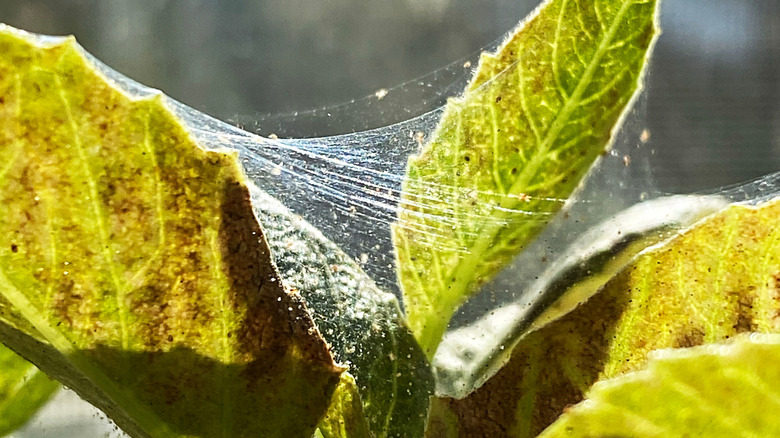
Not all plant pests are a red-alert emergency, and sometimes nature corrects course on its own. But if you find a thick white web in your yard, it's not time for a wait-and-see approach. Fine, silky webbing covering leaves and stems is an early sign of spider mites, and as the infestation grows, it can thicken into a dense web. Because they can multiply quickly, you don't have time to put this one off.
The first step when dealing with any pest is proper identification. To confirm you're dealing with spider mites (Tetranychus), you'll need to take a closer look. Hold a white piece of paper under a leaf, giving the leaf a tap to dislodge some of these tiny arachnids. They are around 1/20-inch to as small as 1/50-inch and oval-shaped, barely visible to the naked eye.
Spider mite coloration varies — they may be yellow-green, red, brown, or orange. There will be spider mite eggs on the plants, but the most obvious sign is the webbing that appears first on the undersides of leaves. It spreads to the rest of the plant without an intervention, and with a generation multiplying in as few as five days in warm weather, the time to act is now.
Learn the first steps to take when you find spider mites on your plants
Spider mites are a common indoor houseplant pest that can also be a problem outdoors, especially in warm weather. Since a single female spider mite lays up to 19 eggs per day and the eggs can reach adulthood in less than a week, the clock is already running once you notice the damage. Before you even see the webbing, spider mites have started sucking the juices from the leaves, leaving behind a stippled or speckled pattern. As the colony spreads, the leaves start to yellow and become distorted before turning brown and dying.
While spraying plants with water can make them less appealing, once you see the signs, neem oil is the natural solution that kicks spider mites to the curb. You can also use horticultural oils or insecticidal soap, taking care to treat the undersides of the leaves to get under the webbing. Apply treatments a few days apart to kill newly hatched mites until all signs of mites are gone.
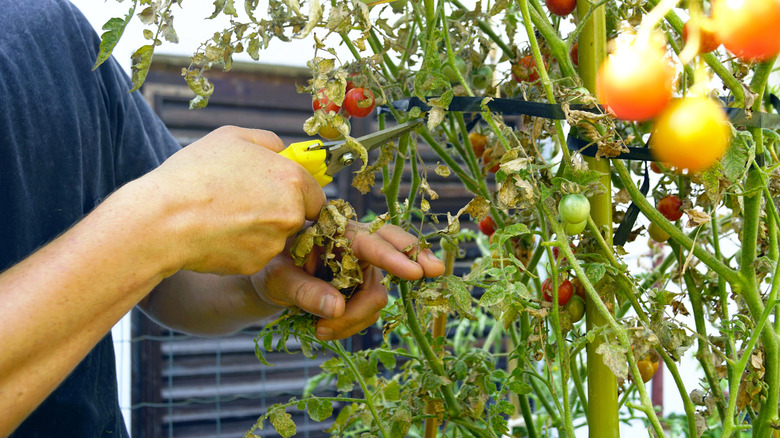
In the garden, if you can't isolate an infected plant, prune the infested parts. You may need to prune heavily or even pull the entire plant to get rid of any signs of spider mites. While pesticides are effective, they indiscriminately kill predators like ladybugs and lacewings that help control spider mite populations naturally.