

Not Hostas, Not Coral Bells: The Plant That's Great For Shaded Flower Beds
Are there pesky spots in your garden that get so much shade that anything you plant there withers and dies due to a lack of sunlight? If so, filling the spots with hostas or coral bells may be your first instinct. However, while both of these plants are well-suited for shaded beds, they need plenty of moisture to thrive, so they're not a great option if your shaded areas get a bit dry in the summer. Don't worry, though, you don't have to resort to installing flower bed decor to distract from those boring spots. In fact, barrenwort (Epimedium spp.) is perfect for packing those shade-filled areas with plenty of life and color — even if the soil is on the dry side.
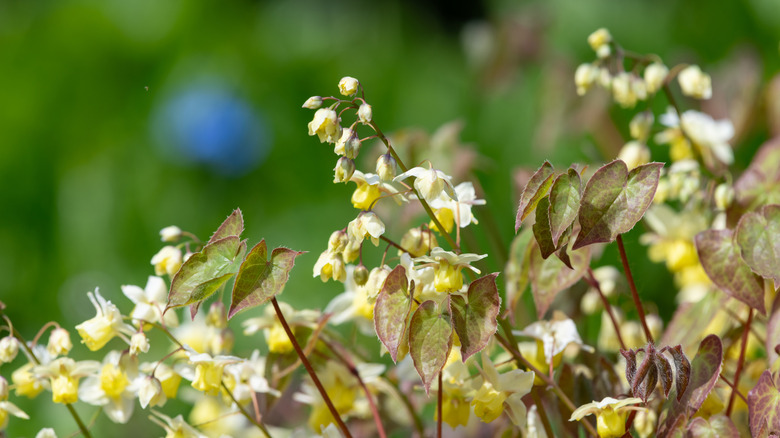
Barrenwort, also called bishop's hat due to its four-pointed blooms that resemble the religious headdress, is a low-growing, shade-tolerant plant that's native to China and the Mediterranean but is found throughout the world. It comes in a massive range of species and a wide variety of colors, so you can choose the hues you like best to brighten your yard's shadiest spots. In addition to the charming, drooping flowers that appear in late spring and early summer, many barrenwort species also have foliage that changes color throughout the year. So, your shady spots can have plenty of eye-catching color to keep visual interest high even when there are no blooms. Barrenwort has rhizomatous roots, meaning that new shoots grow out of the roots of older plants. However, these plants are not known to be aggressive growers, and they won't take over your yard.
Planting and growing barrenwort in a shaded flower bed
Luckily, barrenwort known for being relatively easy to care for, making it a good addition to a low-maintenance flower garden. These plants are hardy in USDA zones 5 to 8, and while they prefer moist, well-draining soil, they are also drought-tolerant and thrive perfectly well in a dry medium. Keep in mind, though, that if the spot does get any direct sunlight, this plant will likely need more frequent watering to thrive.
Since barrenwort only grows to about a foot in height, it is best to plant it at the front of a flower bed or around the base of other plants, where its flowers and lovely foliage will remain visible. As a bonus, you don't have to be as worried about this plant being exposed to pests at the front of a flower bed because its naturally unappealing taste makes it resistant to both rabbits and deer.
Finally, it is important to know that some barrenwort species are deciduous while others are partly or entirely evergreen. If you opt for one of the evergreen varieties — which typically come from the Mediterranean — you may need to do some pruning in spring, as their foliage can wither during the colder winter months.