

Not Landscape Fabric Or Weed Barriers: Here's A Better Solution For Gravel Driveways
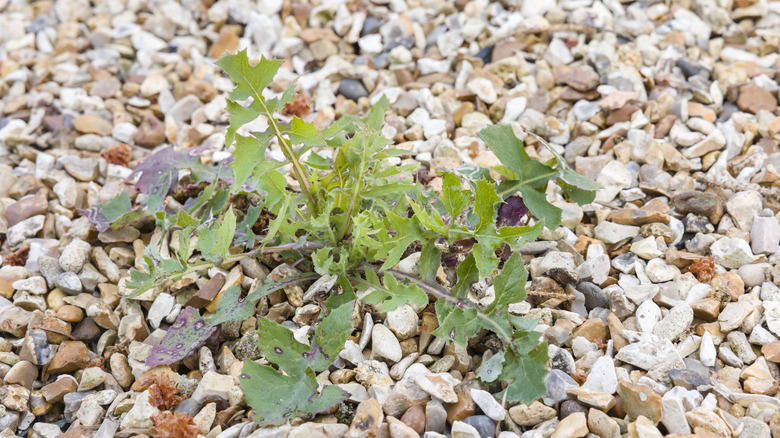
If gardening is creating the perfect growing conditions for plants, then building a gravel driveway is just the opposite. Instead of providing loose soil filled with nutrients, air, and water, keeping your gravel driveway free of weeds means eliminating these essentials. This is an important fact that landscape fabric and weed barriers ignore. The truth is, the key to a weed-free driveway is by ensuring you have a thick layer of gravel.
When it comes to choosing the best underlayment for gravel driveways, there's a lot to know. Landscape fabric isn't meant for driveways, a job that's better suited to heavy-duty geotextile fabrics, which aren't a great choice for weed suppression. The primary use of geotextile fabric is separating the gravel from the sub-grade, or natural soil. If you're building a road on heavy, clay soils, this is an important consideration to keep the ground from swallowing up your gravel. In situations with poor soils, fabric can reduce the amount of gravel you need by almost a third, but if you have a decent subgrade fabric isn't needed.
With or without fabric, weeds can grow in the small dust particles in your gravel, especially when it's not compacted or where it's thin, like at the edge of the drive. These particles, called fines, exist between the crushed stone and are what help it compact. Over time, they may collect on top of the fabric, which can impact the porosity of your gravel driveway. Worse, weed roots can grow right through fabric and get tangled up in it, making it harder to pull them.
How to build a driveway with thick gravel
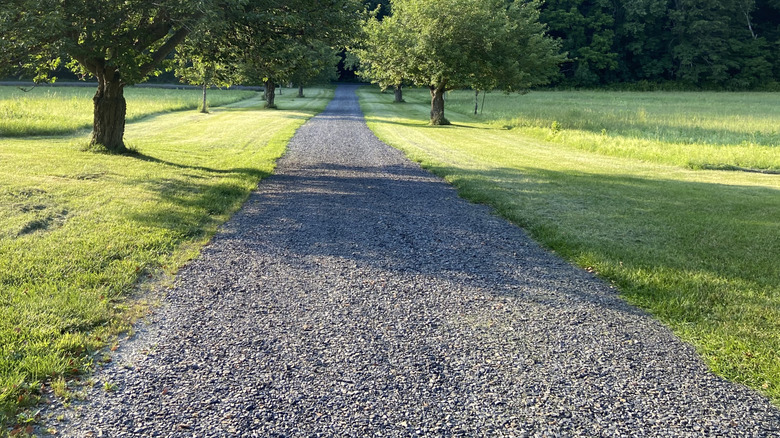
Building a gravel driveway the right way means different things depending on what you're working with. For residential driveways, a sub-base of crushed rock with a top layer of clean gravel is a good option. The key is to get the right kind of sub-base rock, which for road bases is crusher run, also called quarry process. Often, a base layer of minus crusher run between 1½ and 2 inches in size is topped with another layer that's ¾ to 1 inch in size to create the foundation.
Once the sub-base is down, you can top it off with a layer of clean 1¼ angular gravel rock. Unlike rounded pea gravel, angular rock will lock into place to keep out light and give you a firm surface that doesn't end up all over the place. Clean rock without fines doesn't hold water or have any particles for the weeds to grow, depriving them of the essentials they need to survive. Layered installation is an effective approach, adding gravel 4 to 6 inches at a time and compacting each layer before adding the next. Overall, this makes it easier to maintain your gravel driveway than if you had used fabric.