

The Pretty Pink Perennial That Is Highly Attractive To Birds And Pollinators
We may receive a commission on purchases made from links.
So you've decided to start your own pollinator garden. This is an exciting step that gives your garden a goal beyond aesthetic appeal, but it can involve some elbow grease on your end, including planning the perfect plants to include for drawing in a wide range of beneficial pollinators. Fortunately, when it comes to curating the perfect plants to bring more pollinators to your yard and garden, you have a variety of options available, including this pink-blooming perennial.
Also known as stonecrop, the Autumn Joy sedum (Hylotelephium spectabile 'Autumn Joy') gets its name from its long blooming season. It begins blooming in the summer, displaying show-stopping pink blooms that last well into autumn, ensuring that your favorite pollinators have a steady fall food source when other flowers may have switched over to fruit for the season. And, on the topic of pollinators, the Autumn Joy sedum attracts a variety, including butterflies and bees. Once its flowers have finally gone to seed in the winter, it's also a hit among birds. As a result, when you're looking to expand the relevance of your pollinator garden past spring and summer alone, Autumn Joy can be a helpful choice.
Sedums are overall considered easy to grow, which makes them a popular plant for beginner gardeners looking to attract more wildlife to their garden. However, easy doesn't mean entirely hands-free, and it's important to learn how to provide this plant with optimal care if you want to attract as many pollinators as possible.
How to grow the Autumn Joy sedum to attract pollinators
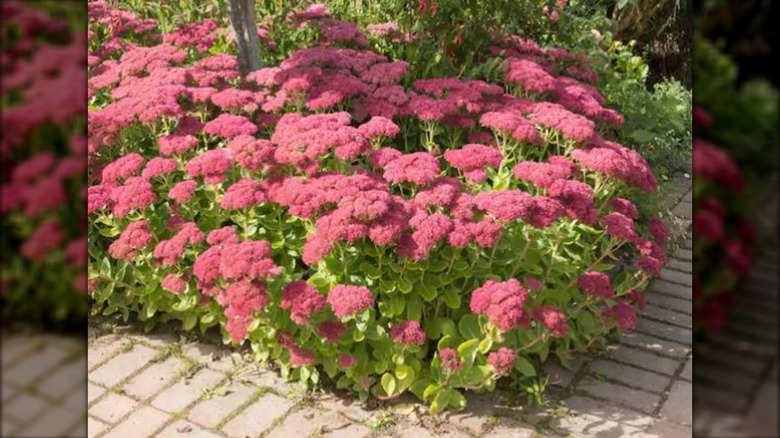
Because it's the flowers that attract pollinators to the Autumn Joy sedum, encouraging the maximum amount of blooms will often lead to the most engagement. Sunlight plays a large role in this, with Autumn Joy sedum requiring full sun for the best results. This means at least 6 hours of sunlight each day, with a south-facing location in your yard often being the best spot. In areas with hot summers, an east-facing location that provides morning sun and afternoon shade may suffice. It's important, however, to pay attention to how your plant is responding to its location, as too much shade will lead to limp, poor growth — the opposite of a pollinator magnet.
Choosing the right soil for your sedum is also important. This plant holds up well to drought, as well as poor soil. However, it does require soil that is well-draining and very dry, with sitting water being detrimental for growth. When left with excess moisture, you may find that your Autumn Joy sedum actually ends up rotting. As a result, pay close attention to usual soil conditions when choosing the right planting site; you may wish to take additional precautions to ensure the soil remains dry enough for this plant to thrive and produce flowers.
Lastly, the Autumn Joy sedum is a perennial, allowing it to attract pollinators year after year. However, to take advantage of this perk, you'll need to live in the right climate. This plant is hardy in USDA growing zone 3 all the way to 10.