

What To Do If You Find Carpenter Bee Holes In Your Deck
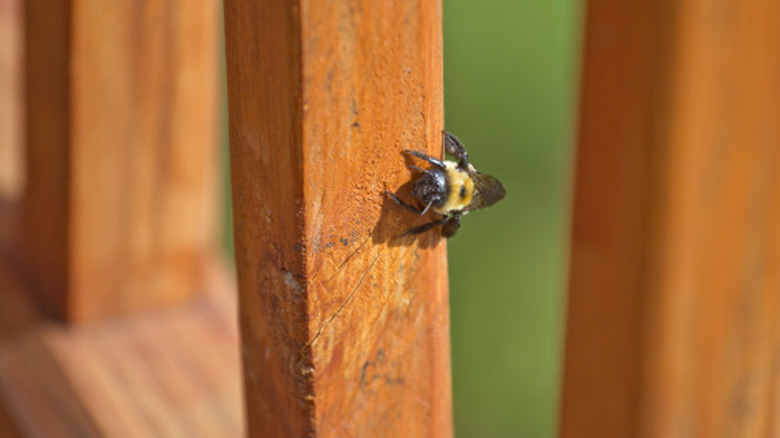
Carpenter bees are about the size of a bumblebee; the females have black faces, and the males' faces are yellow. Unlike bumblebees, however, carpenter bees are solitary creatures. These bees are often recognized by the small round holes they drill into wood. If you find carpenter bee holes in your deck, it's important to fill the holes, replace badly damaged wood, and take steps to prevent further damage.
Carpenter bees are not boring into wood to eat it. They are drilling and excavating holes to create a nest for their eggs. After the female has created the nest, she collects pollen and nectar to create pollen balls. Each egg has its own separate chamber within the nest and its own ball of pollen. When the larvae hatch, they feed on the pollen ball.
The holes created by carpenter bees look like perfectly round 1/2-inch holes from the outside. A few holes may not seem like much damage, until you look beneath the surface. Once the bee makes the initial hole, they begin tunneling sideways into the wood to create the nest. These tunnels can eventually reach 10 feet in length, as new bees return each year to reuse the nests. In addition to the damage caused by the bees, the holes can fill with water, causing rot. Plus, carpenter bees can invite woodpeckers to your yard, since they eat carpenter bee larvae. The birds make the holes even bigger, as they drill into the wood to get at the larvae.
Preventing and repairing carpenter bee damage
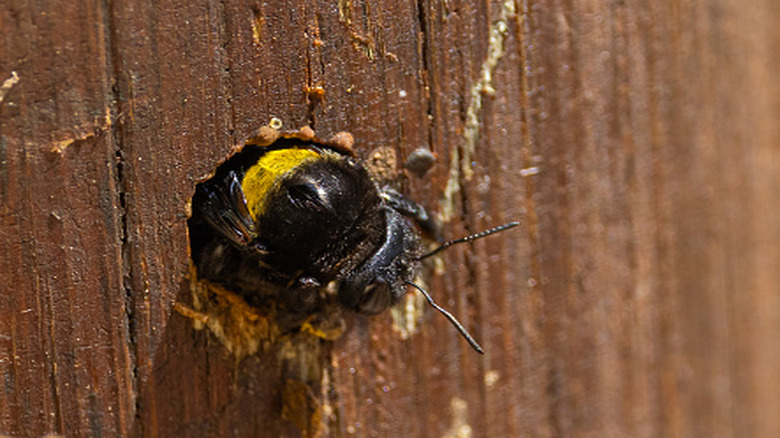
If you find carpenter bee holes in your deck, you can either take action right away, or wait until late summer when no bees are in the nest to start fixing the damage. If you want to start while the nest is active, it's important to spray an insecticide or WD-40 into the holes to make sure the bees are dead or gone. Plug the holes with wood putty to deter bees from reusing the same nesting site next year. Wood that is structurally compromised needs to be replaced.
Because bees are important pollinators, you may not want to kill them. In addition to plugging the holes, consider painting your wood deck as a simple solution that can help stop a carpenter bee infestation before it starts. Carpenter bees don't recognize painted decks as wood, which makes it more effective than staining the deck. For best results, use a sealing primer followed by two coats of exterior paint. Be sure to fill any holes in the deck boards prior to painting.
You can also make your deck less attractive to future bees by providing an alternative nesting site for them. If you removed affected boards from your deck, relocate them away from the house where future carpenter bees can use them. You could also put blocks of untreated wood in a location away from the house to lure the bees away. Another option is to buy or build a bee house in your yard for a unique and aesthetically pleasing alternative nesting site.