

The First Thing To Declutter From A Storage Unit
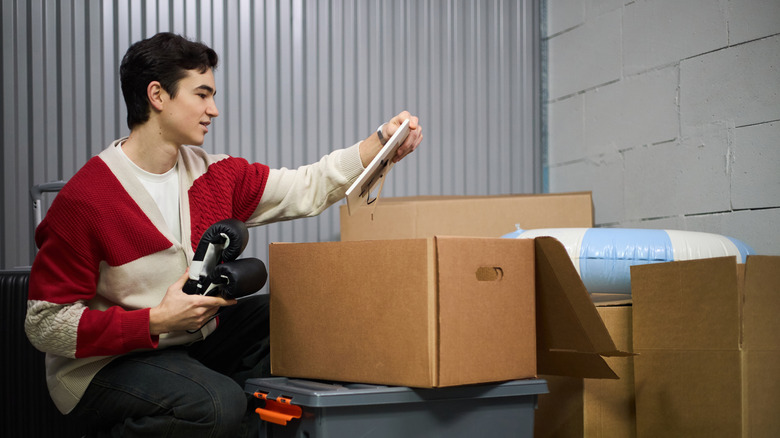
Storage units are a smart option if you need extra space, but it doesn't exempt you from having to clean it up in the future. You wouldn't want your storage unit to turn into a dump you'll soon be scared to step foot in, so a surefire and smart decluttering trick is to identify what you can clear out first. In fact, one of the mistakes people make when organizing papers is keeping them in storage for too long. Therefore, if you come across any papers or documents you do not actually need, it's time to get that stash out of storage to make room for more of your personal belongings. Paper clutter is one category worth tackling early — apart from it being a more manageable bunch, over time it can harbor damages brought by either pests or other conditions where mold and moisture can spread.
If you have stacks of old newspapers or magazines you no longer read or documents that can be considered either outdated or irrelevant today, it's time to gather them all in one box to get your decluttering process started. For this project, you may need to prepare a few extra folders, binders, or document-safe containers for storage, and some sticky notes or stickers for labeling. Having a paper shredder on hand would be useful for properly disposing of documents with sensitive or personal information. If you do not have a shredder, opt for manually cutting them using scissors or tearing them apart by hand.
How to declutter papers from your storage unit

Once you have gathered all of the paper clutter from your storage unit, start sorting them to two general piles: one for important documents and another for sentimental papers. Keep any bills, forms, tax records, legal documents, and certificates separate from the more sentimental items like postcards, photographs, notes, and artworks. Work with one pile at a time — generally, you can keep sentimental papers and photos in acid-free albums and archival boxes, whereas managing and organizing your important documents should be done with great care.
Papers that you'll need for a long time, such as personal identification, government and legal documents, and financial records should be labelled accordingly, kept in folders or binders, and stored vertically to shield them from any type of weathering or damage. For extra safety, it is best to keep digital backups. Outdated or irrelevant documents, such as paid bills or junk mail, should be disposed of immediately and properly. In case you do not have a shredder, try soaking the papers in water and bleach, then blend it to safely dispose of them and render any sensitive information unreadable. Recycling your discarded papers is also a practical and sustainable solution — take paper scraps to your local recycling center or try out creative ways to recycle paper for your home and garden.