

The Wasp-Attracting Colors You'll Probably Want To Avoid Having In Your Yard
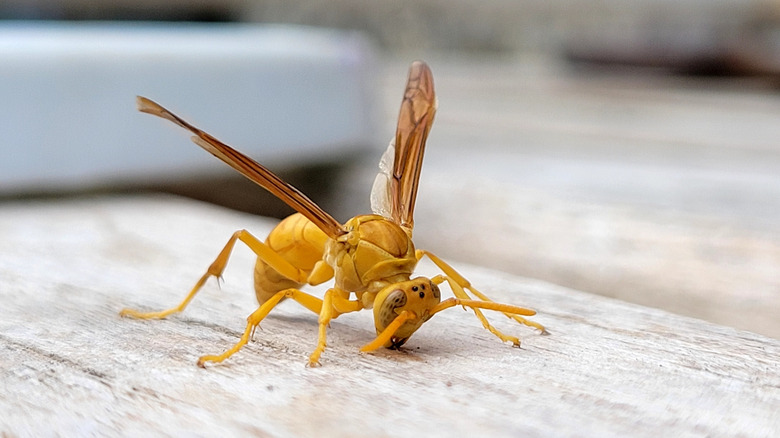
Few things ruin a relaxing afternoon in the yard faster than the sudden buzz of a wasp zipping past your ear. Whether you're hosting a barbecue, gardening, or just trying to enjoy some sunshine, wasps can quickly turn a peaceful space into a stressful one. Unlike bees, they tend to be more aggressive when they feel their nest is threatened or when food is nearby. Sugary drinks, fallen fruit, and even the scent of certain flowers can draw them in, making your yard an unintentional wasp hot spot. One often-overlooked factor that brings these unwanted guests to your yard is color. If you live in an area with heavy wasp activity, it is best to avoid planting wasp-attracting flowering plants in your garden that feature their favorite colors — and sweet smells.
The issue with having wasps in your yard is the potential for harm to humans. Everyone reacts differently to wasp stings, but they are almost always considered painful. However, some people are allergic, which can be seriously dangerous. With a few simple adjustments, you can reduce wasp activity and reclaim your outdoor space. Wasps are naturally drawn to bright, bold colors like orange or primary colors like yellow and blue. They may even be interested in floral patterns on clothes and lawn furniture that mimic the look of flowers, signaling a potential food source. On the other hand, muted and darker colors are less appealing to wasps and may even discourage them.
Remove wasp-attracting colors from your yard without removing colorful flowers
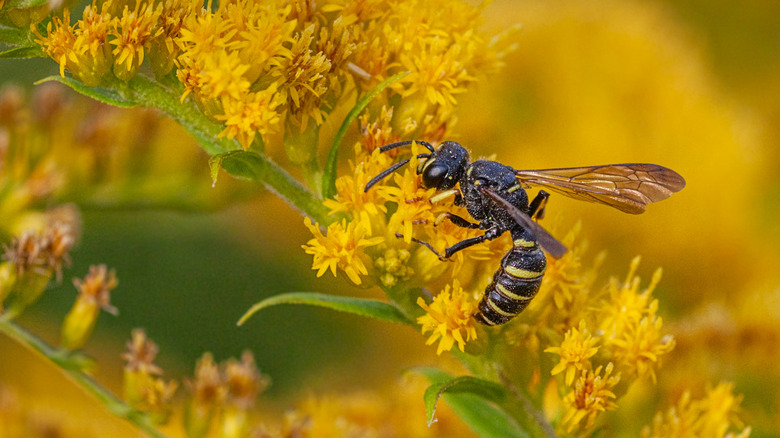
To make your yard less inviting to wasps, consider swapping out decor and clothing in bright shades of orange, yellow, or blue for a more neutral color palette of white, beige, or light pastels. This is especially important in early spring, when these pesky flying insects are most active. On the surface, removing wasp-attracting colors from your yard sounds simple. However, if you have a carefully curated flower garden full of orange-, yellow-, or blue-hued blooms, it can be hard to consider pulling out plants. Luckily, there's also a trick you can employ to avoid removing all your flowers without continuing to attract wasps to their favorite colors. That doesn't mean your garden has to be boring, but if you notice issues with wasps in your area, it might be worth the effort.
Beyond color, there is a secret weapon you can use to repel wasps: scent — or, more accurately, scents they don't enjoy. Color is a huge indicator for wasps that an area may have nectar-producing plants for them to feed on, but they are even more attracted to sweet smells. With the right selection, you can enjoy stunning plants that keep wasps out of your yard without compromising your color scheme. If you don't want wasps in your garden, avoid growing sweet-smelling plants in their favorite colors, like yellow-flowering sweet fennel. On the other hand, marigolds, geraniums, lavender, Roman chamomile, and sage may deter wasps from your garden with their strong smells, even if the blooms feature hues that wasps are typically attracted to. You can also mix some fragrant herbs, such as mint, citronella, wormwood, and basil, into your landscape. These plants have scents that may repel wasps.