

What To Do If You Find Blue Utility Markings On Your Curb
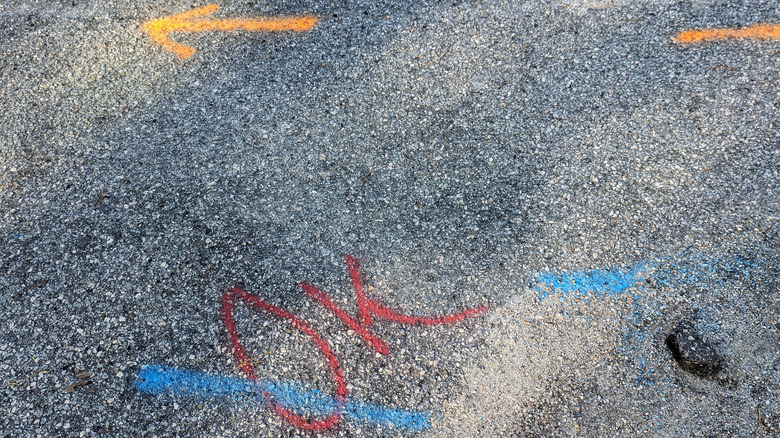
All over the world, important messages from municipal authorities show up in out-of-sight places. We walk right by them all the time. Whether it's the inspector's signature on a fire extinguisher tag, the stickers on your home's electric panel, or the signage on utility poles, these messages are meant for professionals and convey important information. In the same vein, if you find utility markings on your driveway, they are part of a coded language used by city or construction workers to identify what is running underground. Blue markings on the curb signify that potable water lines are running below the ground, and you need to leave them alone.
The blue lines, which are temporary by design, may appear on the curb, your driveway, or in the alley. Because there is a universal standard developed by the American Public Works Association (APWA) — called the APWA Uniform Color Code — a blue mark means the same thing no matter which part of the country you're in. Potable water is running underground and someone requested a utility locate before digging. If you're interested in what's being worked on, you can always call 811 to find out more about who requested the markings. You could also ask one of your neighbors or even one of the workers. In most municipalities, removing these blue marks is not allowed, especially if work crews are active in the area. Workers could strike water lines if the marks are erased.
How to read and remove blue water line markings
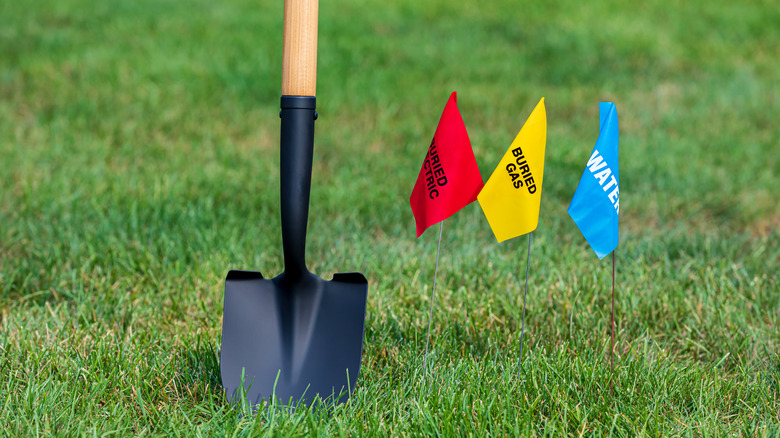
In most areas, water service lines run alongside or underneath the street, which is why markings often end up near the curb or on your driveway. If you find utility flags in your yard, they're a variation on the blue spray-painted markings. Either way, it doesn't necessarily mean anyone plans to start digging right there, but there could be a construction project nearby.
If you're the one asking to have these blue markings painted over potable water lines, it's important to know that while they indicate where the lines run, there are some limitations. For example, they don't indicate the depth of the lines, and they may not take old lines into account. Always expect — and plan for — surprises. When digging near these blue markings (or blue flags), allow for a tolerance zone of a couple of feet on each side. The exact location of the line might be a little off from the markings. It's an extra precaution that ensures lines aren't damaged.
Although utility markings can be aesthetically annoying, keep in mind that utility companies have easements that give them legal access to mark lines. It doesn't matter whether you find painted markings or flags, or red markings on the pavement outside your home or blue ones on your driveway — you should always leave utility markings alone until you get official confirmation that they're no longer needed. After that, cleanup can usually be done with a power washer. The marks are made using water-soluble paint, which is biodegradable, environmentally safe, and designed to last 30 days or less.