

12 Low-Maintenance Ground Covers You Can Easily Grow From Seed
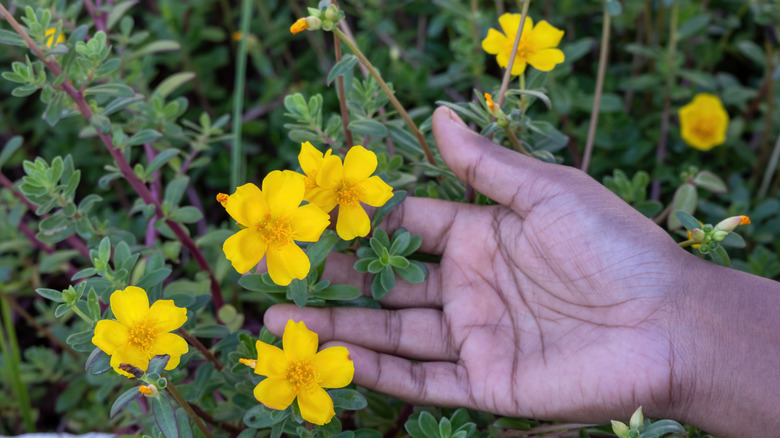
As a master gardener and permaculturalist, I genuinely believe that ground covers are wildly underutilised in the home garden. Whether you have a neat formal garden, a super-contemporary hardscaped modern space in an urban yard, a wonderfully quaint cottage garden, or a fantastically productive kitchen or market garden full of delicious edibles, there are loads of benefits to growing low-maintenance ground covers. Well-chosen ground covers block weeds, protect bare ground from erosion, compaction, and nutrient runoff. They feed beneficial insects and attract pollinators through the whole season, and they reduce how much maintenance you need to do in terms of mulching, watering, and mowing.
Buying plugs or flats, however, can get pretty expensive, especially if you have a large space to fill. The more affordable option is to grow ground covers from seed. A packet of seeds is way cheaper than buying plugs. The trick is in learning what each particular seed needs for successful germination. Each one has its own little quirks and requires specific planting and conditions to start growing. Creeping thyme and white clover are among my favorite low-maintenance ground covers, as they are easy to grow from seed, germinate reliably, and grow quickly. They are useful for growing in place of a lawn in patchy, shady, or challenging areas, and they can withstand foot traffic.
Creeping thyme (Thymus serpyllum) quickly fills bare patches with fragrant foliage
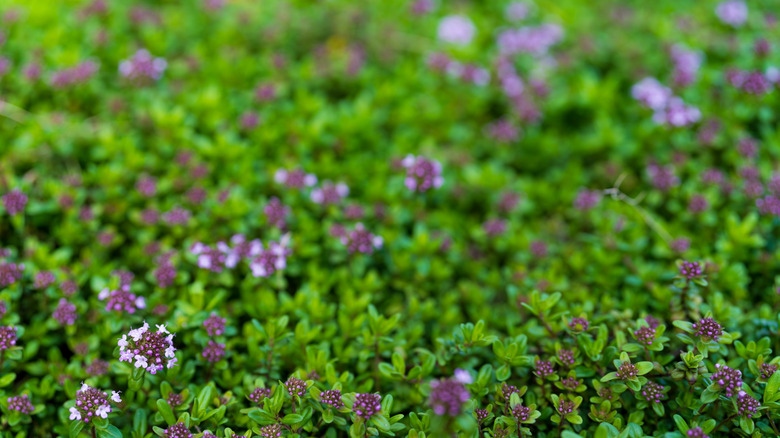
Of all the ground covers, creeping thyme is probably my favourite because it's so versatile, and it grows well with minimal maintenance in USDA Zones 4 to 9. It forms a wonderfully fragrant carpet that's 2 to 4 inches tall. It's drought-tolerant and can contend with foot traffic. Creeping thyme is also safe for kids and pets, so it's a great choice in a family yard. It has tiny pink-purple flowers that start appearing in early summer and attract bees, hoverflies, and other pollinators. One of the things I love most is that the foliage releases a warm, wonderfully herbal scent every time you brush it or walk across it. And, of course, it's edible. This ornamental species of thyme has a slightly more delicate flavor than traditional culinary thyme, and it's easy to dry and store for use in the kitchen.
Surface-sow the seeds in spring and don't cover them, because they require light to germinate. They can take up to 21 days to emerge, and, once they are big enough to handle, you can plant them out in their final positions. You'll need to give them at least one full season to knit together and really get established and start to spread before you get dense coverage.
White clover (Trifolium repens) fills in patchy lawns
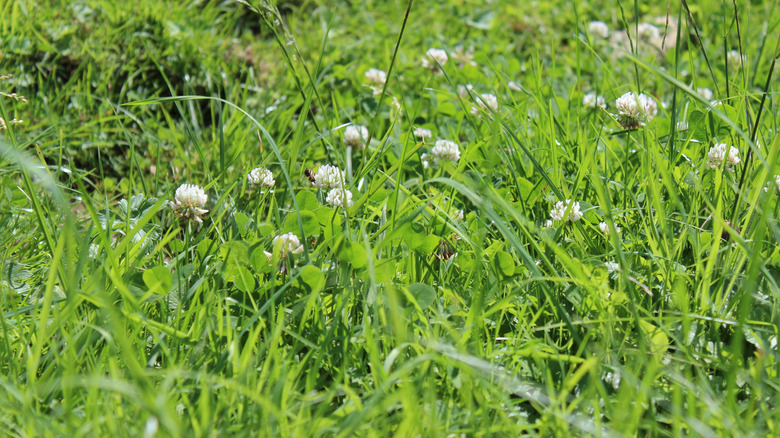
I love white clover. It's one of the most genuinely useful plants you can use to fix a tired or patchy lawn. This clever grass alternative fixes its own nitrogen. White clover plays host to rhizobia bacteria at the root level. This pulls nitrogen directly from the atmosphere into the soil and converts it into bioavailable nitrogen for the clover and the surrounding plants. That's one of the many reasons why clover lawns historically needed little to no fertilizer, and why permaculture specialists will often recommend clover mixes for those wanting to build a naturally healthy, self-sustaining lawn.
White clover grows quickly, crowds out weeds, and it can cope with poor or thin conditions where most lawn grasses struggle. White clover also copes with mowing and foot traffic, and it attracts lots of pollinators once it blooms. If you have a thin or patchy lawn, you can simply sow clover over the top of the sad areas. You're basically just over-seeding, but with clover rather than with additional grass seed. For the best results, do this in early spring. Germination is generally fast, and you can sprinkle a little high-quality compost over the area where you've sown the clover to give it a bit of a boost. One note: Clover is on invasive lists in Oregon, Kentucky, West Virginia, Michigan, and Wisconsin, so it's best to avoid planting it in these regions.
Moss phlox (Phlox subulata) is super low-maintenance
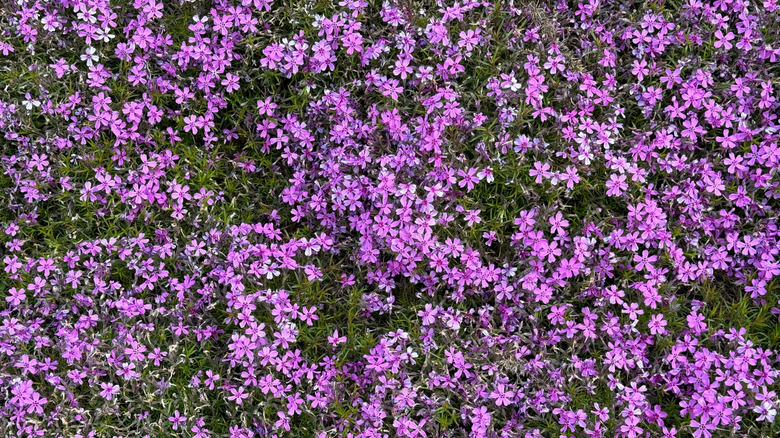
Moss phlox brings you a beautiful solid carpet of pink, purple, or white blooms in spring, after which it settles into a semi-evergreen mat of needle-like foliage. This particular ground cover looks tidy and is low maintenance — making it a good choice for low-effort formal and super-neat gardens. It doesn't need a lot of moisture, and is very good for knitting soil together and helping to combat erosion and runoff. Moss phlox is reliable in Zones 3 to 9, and will happily cascade over a retaining wall or cover a whole sunny slope.
This plant is popular because it doesn't spread terribly fast, so it won't creep into places you don't want it to very easily. Sow moss phlox in spring or fall in well-drained soil. Do note, however, that moss phlox plants grown from seed take two to three years to begin blooming, but once they're established, they are essentially permanent. You only need to give them a light trim once a year after flowering to keep them dense and tidy.
Maiden pink (Dianthus deltoides) gives pretty pink flowers from spring to fall
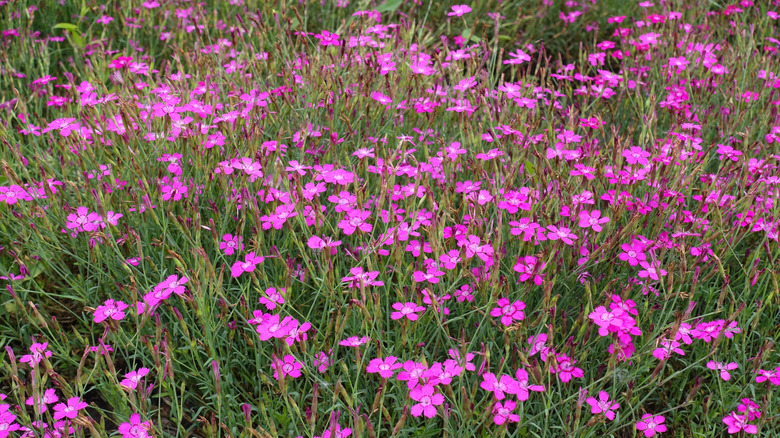
Maiden pink is a Dianthus that grows to between 6 and 8 inches tall, and gives you a mat of fragrant, fringed flowers in varying shades of pink, red, and white. It blooms from late spring through to early fall, and it's hardy in Zones 3 to 8. Once it's established, it's another one that is drought tolerant. And it doesn't self seed or spread too aggressively. This plant is a particularly good option for dry, rocky, or poor soil, and it performs well even in cracks, at the edges of stone steps, in walls, and path borders where nothing else seems to grow. It has an interesting clove-like fragrance. But this whole genus is toxic to dogs, cats, and horses, so be aware of that if you have pets who are likely to have a sneaky chomp on this plant.
Sow indoors four to six weeks before the last expected frost. Germination takes anywhere from 14 to 28 days, so it does require a little patience. To keep it looking neat, give it a light shearing or dead heading after the first flush of flowers. This also encourages a second smaller wave of blooms later in the season. Keep growth vigorous by dividing the clumps roughly every three years.
Wild strawberry (Fragaria virginiana) attracts pollinators and birds
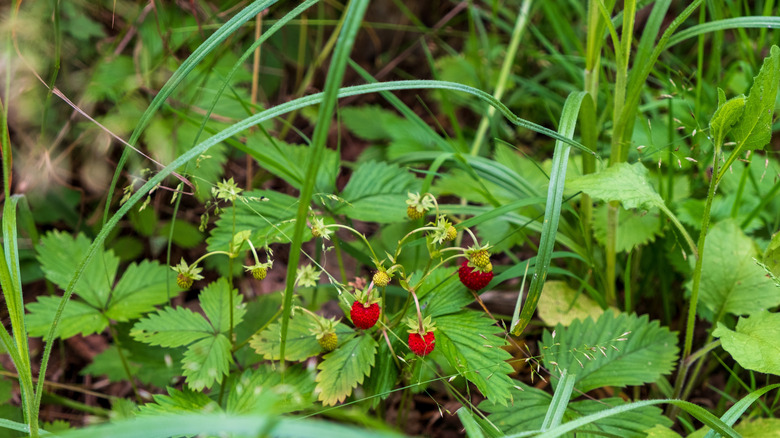
Wild strawberry is a fabulous native ground cover that spreads by stolons, just like cultivated strawberries. It also produces genuinely delicious, albeit very small, strawberries. They're much tastier than the oversized flavorless grocery store variety. This little plant handles sun to part shade happily with no maintenance in Zones 5 to 9. The berries attract ground-feeding birds and small mammals, particularly thrushes and robins, and the flowers draw early pollinators. The foliage also serves as an important larval host habitat for several native butterfly species. It's an incredibly useful plant in a wildlife-first garden. It acts as ground cover, pollinator resource, and food plant.
To grow wild strawberries from seed, you need to refrigerate the seeds in a damp medium for four to six weeks to break their dormancy. This is called cold stratification. If you skip this step, there is a good chance the seeds won't germinate. After this, sow them indoors, and then, once they're large enough to handle, place them outside in their final growing position. Wild strawberries grow in the shadiest backyard, and you'll find that they begin producing stolons in their first season. They do spread reasonably aggressively, so you'll need to keep an eye on them and cut them back if they get carried away.
Common blue violet (Viola sororia) loves shade and attracts bees
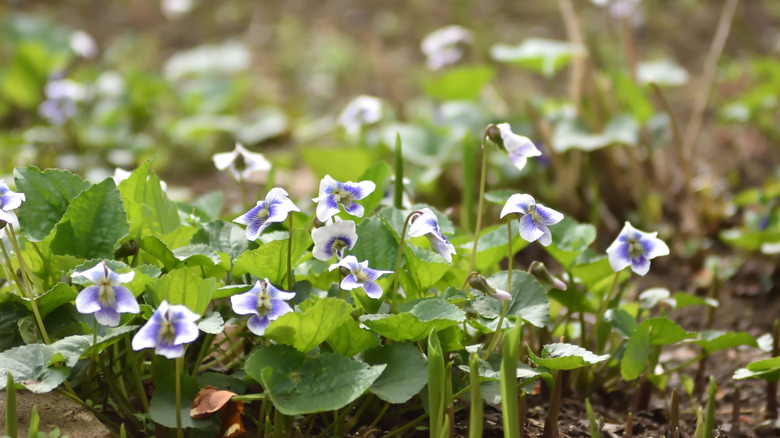
Attractive heart-shaped leaves and pretty blue-purple spring flowers spread in dense, bee-friendly mats, making the common blue violet one of the best fast-growing purple flowers for shady gardens. Common blue violets prefer partial shade and live happily in Zones 3 to 7. The flowers are abundant in spring and early summer, making a beautiful display that attracts all kinds of pollinators. Common blue violet tolerates mowing and foot traffic, so it's a smart choice for naturalized lawns. It's also a host plant for several fritillary butterfly species, including the great spangled and meadow fritillaries, whose caterpillars feed exclusively on violet foliage. If you're trying to build a native pollinator garden, the common blue violet is definitely a ground cover I'd recommend.
The flowers are also edible and have a mild flavor. They work beautifully crystallized, in sugar cookie frosting, or scattered over spring salads. The common blue violet happily fills in patchy, shady areas under trees where grass struggles. To plant this ground cover, sow seeds outdoors in fall and let winter break naturally break their dormancy. In spring you should see them start to germinate. From that point, the colonies will self-seed.
Green-and-gold (Chrysogonum virginianum) grows in dappled shade and thin soil
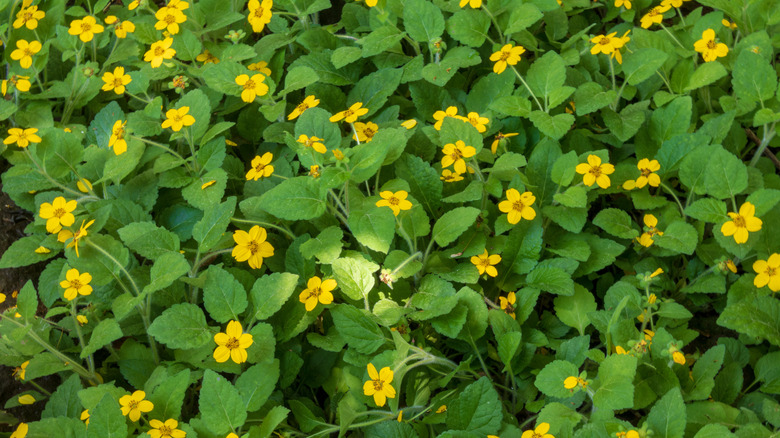
Green-and-gold is a fabulous little perennial native to the eastern U.S. and hardy in Zones 5 to 9. You'll get yellow blooms from spring into fall, and this native ground cover performs well even in thin soil and dappled shade. It's a nice, low-growing variety that fills in steadily without becoming aggressive. This is one I recommend to gardeners who have problematic dry shade areas under mature deciduous trees, as it can cope with their shallow roots and the low light beneath. Green-and-gold suppresses weeds nicely, as it forms a clean, dense mat and works well in woodland gardens.
Sow green-and-gold in a weed-free seed bed or start in pots indoors in spring or fall. Lightly press the seeds into a high-quality potting mix, but don't cover them, as they need light to germinate. Keep them warm and moist, and expect germination in about 20 to 30 days. Once they are established, these plants spread via stolons, and you can propagate them by pushing a stolon into a pot of seed compost. You may also find, where it has tried to self-seed, that there are seedlings around the base of the mature plants, and you can lift and replant these wherever you want a new mat.
Moss rose (Portulaca grandiflora) blooms even in the hell strip
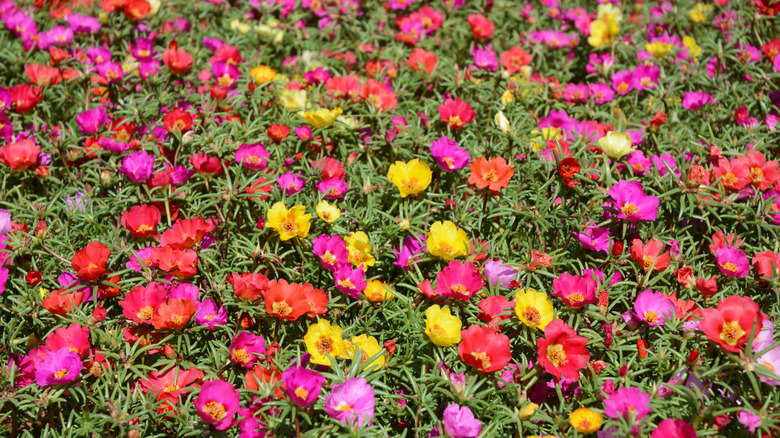
The extremely tough and resilient moss rose is a great annual for hot, sandy, and sun-blasted spots where very little else will survive. It is hardy in Zones 2 to 11. Once established, it is extremely drought-tolerant and produces large numbers of vivid blooms from summer through to the first frosts. The flowers of the moss rose are interesting in that they close at night or in overcast weather. They open again and display all of their spectacular glory in full sun, giving you vibrant crimson, orange, yellow, magenta, and white flowers. Moss rose is an excellent choice for gravel planting and hell strip planting, where you need something genuinely tough to cover the ground that will cope with the hottest weather and thin nutrient-poor soil.
They are easy to grow from seed. You simply direct sow them after the last frost in warm soil, but again don't cover them. Moss rose will go from seed to flower within six weeks of germination. However, because it's an annual, it does need reseeding each year. Luckily, it self-seeds prolifically even in rough conditions, so you will find that it creates a self-sustaining colony. It's very unlikely that you will need to reseed on a regular basis.
Sea thrift (Armeria maritima) is ideal for coastal gardens
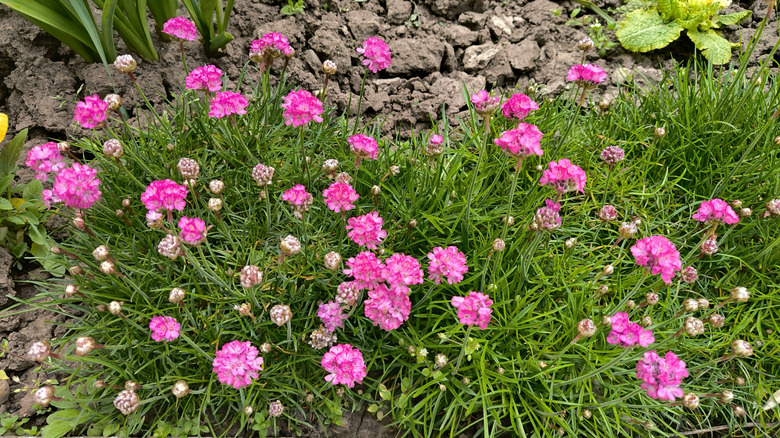
Sea thrift is a gorgeous coastal native that's another top pick for Zones 4 to 8. It produces lovely grass-like mounds that grow between 6 and 10 inches tall, and are topped with pink or white pom-pom flowers every spring. If you're struggling for suitable ground covers for coastal gardens, then grow sea thrift — it handles salt spray, wind exposure, and poor sandy soil without complaint. It's also low maintenance, as it holds its tidy mounded shape without any clipping from you. Additionally, the mounds are brilliant for holding soil in place and reducing erosion, scouring, and nutrient loss. You can plant sea thrift as an edging plant along gravel pathways, or at the front of a sunny border, or really anywhere that needs filling in where other plants are struggling. It does need good drainage and much prefers drought conditions over excessively wet ones.
Sea thrift is easy to start indoors. Just pop the seeds on moist growing media in the fridge for about three weeks, as they need cold stratification to break the dormancy and more reliably germinate. Then, sow in trays eight to 10 weeks before the last frost. You'll get leaves in their first season and flowers and leaves from the second season. During the first year, they will need some watering, depending on how dry their location is. You can also try sowing them directly in fall outdoors in their final location and they should pop up the following spring.
Roman chamomile (Chamaemelum nobile) loves the sun
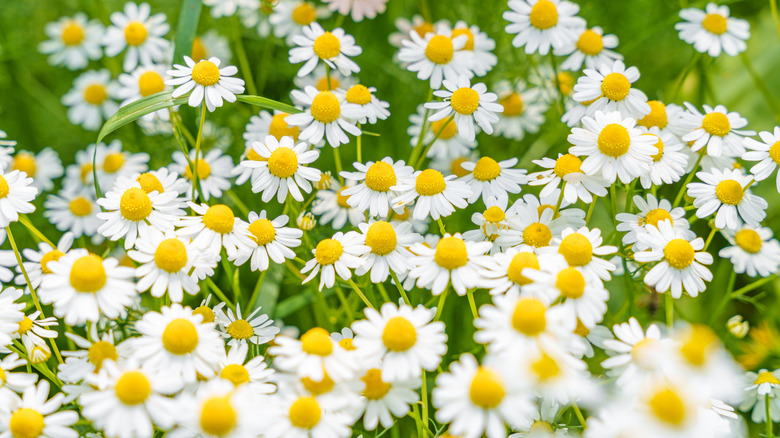
You can use Roman chamomile as a lawn substitute in Zones 4 to 9. It withstands light foot traffic, but it's not really a lawn you can play games on, so I'd only plant it in areas that don't get a lot of use, but where regular grass struggles (such as below trees or along difficult pathway edges). It releases a lovely apple fragrance when you brush against it and forms mats that block out weeds and fill in sparse lawns. The mats grow to about 3 to 6 inches high. You can deadhead it after the first flush of flowers, or even mow it. This plant works best in full sun and does require good drainage, as it doesn't like staying wet.
Roman chamomile is reasonably easy to grow from seed. You need high-quality compost and then you just gently push the seeds into the surface of the soil, spaced roughly 3 to 4 inches apart. You should see tiny seedlings within 7 to 14 days. Once all danger of frost has passed and the seedlings are big enough to handle, you can set them outside in their final positions. You can also direct sow them outdoors in their final location, but you will need to thin them out. Roman chamomile is a perennial herb that produces evergreen mats, but it does also spread by seed, so you may want to keep it in check. Once mature, you can also use the flowers and leaves in tea. However, I find Roman chamomile to be a little more bitter and generally use German chamomile in my herbal teas instead.
Rose vervain (Glandularia canadensis) produces masses of pretty pink flowers
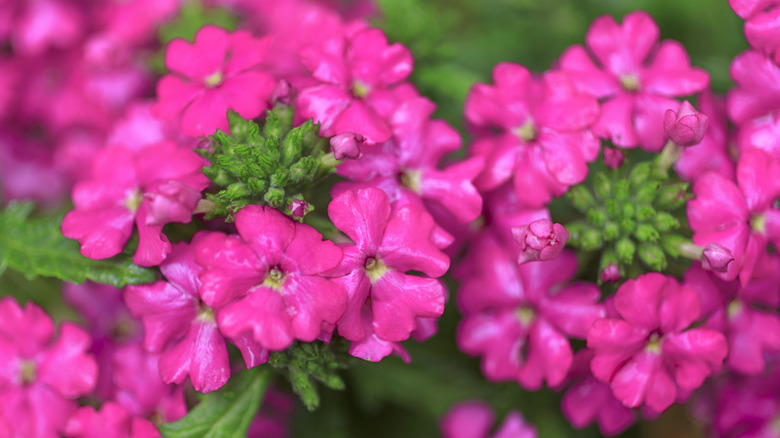
Rose vervain is a native ground cover that happily sprawls in Zones 5 to 9 and reaches 6 to 18 inches tall without any real effort from you. It's a prolific bloomer that produces rosy pink flowers from late spring all the way through to the first frosts. Unlike many drought-tolerant ground covers, which end up looking stressed and scrubby by mid-summer, rose vervain keeps on blooming and spreading as long as the conditions are warm. If you've got a dry, sunny slope that needs erosion control alongside lovely color, then rose vervain is a fantastic choice. Its roots knit together into the soil, creating a blanket that holds the soil together, while the surface is also protected from scouring, heavy rains, and runoff. The stems of the rose vervain plant root wherever they come into contact with the soil, so they create a web of anchoring points, which helps hold a bank in place far more effectively than roots or mulch alone. It's particularly popular in the South and lower Midwest, as it overwinters reliably there, then rebounds fast and aggressively in spring.
For the most reliable germination for rose vervain from seed, cold stratify it in the fridge for around 4 weeks before you sow in the spring. Once you've got an established colony of plants, they will self-seed, as well as root at stem nodes, so you won't need to re-sow any time soon. Rose vervain is also a strong choice for attracting pollinators, particularly butterflies, who are especially attracted to the large flat-topped flower clusters. While no maintenance is generally required, if you want to encourage the plant to re-bloom, deadhead it after the first flush of flowers dies.
Self-heal (Prunella vulgaris) copes with mowing and foot traffic
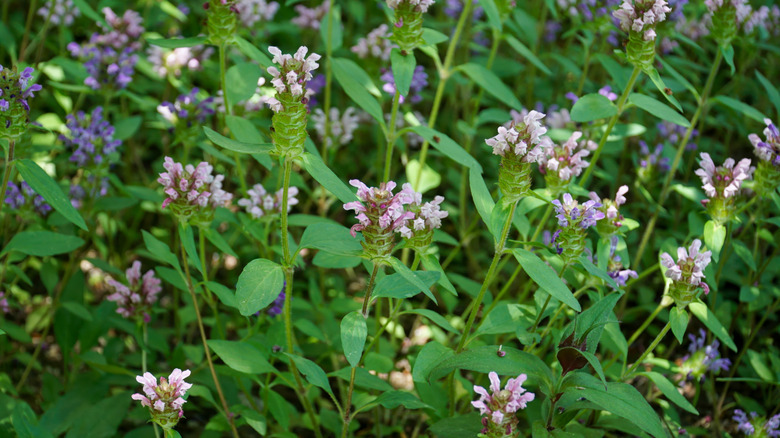
If you're in Zones 4 to 8 and are looking for a reasonably tidy ground cover to help improve or replace patches of lawn, self-heal is a really good option. It stays under 12 inches tall and will tolerate mowing and light foot traffic. It's also fairly versatile and will thrive in full sun or partial shade. Self-heal gives you violet-purple flower spikes in late spring that last all the way through fall. Bees flock to the flowers in large numbers, so this little plant is definitely one I'd recommend if you're trying to create a pollinator-friendly area. It's versatile enough that you can also plant it in places where the soil doesn't dry out fast enough for drought-loving and sun-loving ground covers like thyme. I will say, though, that self-heal will spread a bit more aggressively than some of the other ground covers on this list, so you may need to keep it in check.
Growing in a border, self-heal is ridiculously easy to germinate. All you do is broadcast the seed directly either in fall or early spring right on the ground where you want it to grow. It will germinate within a couple of weeks and spread steadily by seed and creeping stems. It will quickly fill bare ground and doesn't need any fuss or coddling.