

Turn A Pile Of Shells Into A Cute Way To Support The Bees And Butterflies In Your Yard
We may receive a commission on purchases made from links.
Given that bees are mostly known for buzzing, nectar-eating, and the occasional sting, you'd be forgiven for assuming they get most of their liquid from slurping on all those plants. As it turns out, our black-and-yellow-striped friends aren't just flying noise-makers and honey producers. They're also big-time water drinkers. That's one of the reasons why you see so many of them near your DIY bird bath, an eventuality that could lead to not only stings but also drowned bugs. And it isn't just bees that need water. Many bugs, including butterflies, do too. One enterprising DIYer, Instagrammer waldorfkluntjes, figured out a way to get liquid to the insects in their yard. They created a bug-sized water feature — a "shell tree" — made simply from a pile of mussel shells mounted on a branch. If you've been wanting to attract butterflies to your garden, along with their buzzier counterparts, this DIY might be your thing.
The materials for this are a handful of shells, a stick or dowel, and a glue gun. You may also want to keep a whittling knife on hand if you'd like a stick sans bark. If you're repurposing your shells from a beach trip, have bleach on hand to clean them with.
Bees need water to make honey. They also need it to keep their bodies hydrated. Ditto for butterflies. Unfortunately, both butterflies and bees run the risk of drowning in their water sources. This water feature could solve all of their challenges.
Putting your bug fountain together
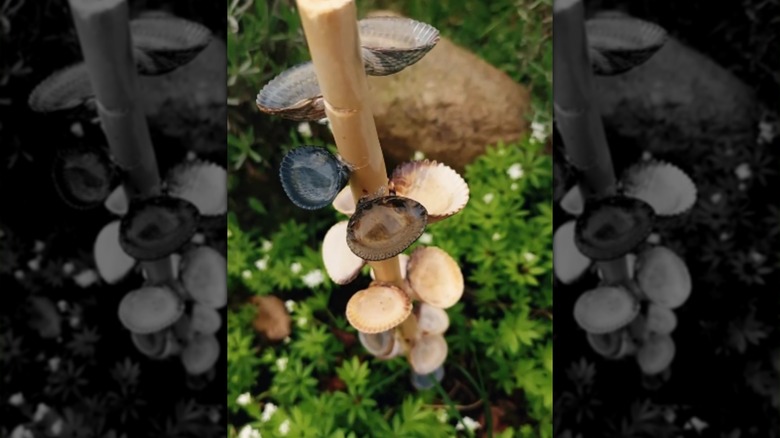
Flat, shallow mussel shells are ideal for this because there's less danger of the bugs getting trapped in the liquid and perishing due to drowning. If you have some bigger shells, like some black sand shells, you can still use them to make this budget-friendly DIY for the garden, provided that you make some modifications. If the shell is small but deep, glue a twig or a couple of toothpicks across the top to make a bridge for insects to stand on. If it's still too big, fill it with a little sand or marbles. These options give pollinators a place to land, where they can drink without fear of drowning.
Once you're ready to start, clean the shells with equal parts bleach and water. Rinse them off. Allow them to dry before you start gluing.
Next, you'll work with the stick. Use the knife to rid it of its bark. If you'd like something less labor intensive, use something like Coowayze ½-Inch Wooden Dowel Rods instead of a stick. Glue the butts of the shells to the post, varying their heights and placements. The mussel shells should look like leaves growing out of the sides of a stalk. Place the bigger shells on the bottom to avoid it becoming top-heavy. Once the glue dries, plant the water feature in the garden where pollinators gather. Don't worry if a little water drizzles down onto the mud below the shell tree. Pollinators will drink that, too.