

The High-Maintenance Houseplant That Any Collector Will Want In Their Collection
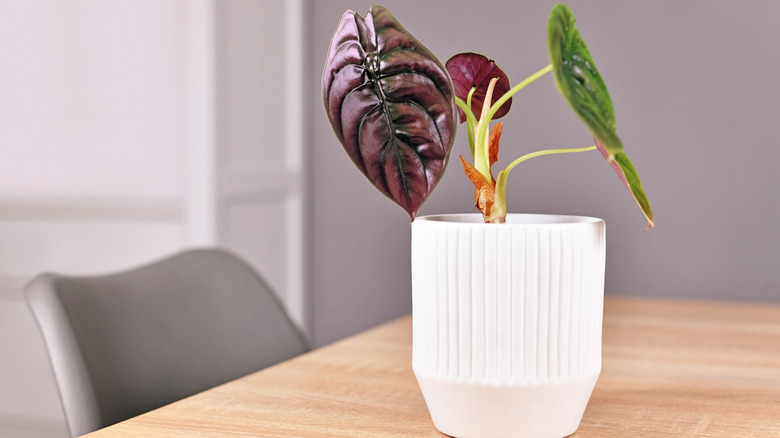
Collecting houseplants can be a casual endeavor or a dedicated hobby, driving you to seek out the rarest, most unique-looking houseplants possible. There is an abundance of plants beyond the classic pothos and monstera that the especially fervent plant collector is dying to get their hands on. One stunning beauty you'll want to bring home immediately is the Alocasia azlanii. Standing at just 12 inches tall, this striking plant features unique dark purple-black leaves that appear almost metallic in the sunlight. Originally found in Brunei on the island of Borneo, the Alocasia azlanii wasn't actually classified until 2016.
This rare houseplant has proven to be a bit finicky, which can be troubling if you've been eager to add it to your collection. While it's not necessarily the hardest houseplant to grow, it does require adequate care to thrive. For instance, it needs medium to bright light but not direct light. Too much direct sun exposure can scorch the leaves and dull this plant's beautiful color, so it's critical that you establish it in a good setting. It would do well in an east-facing room across from a window. This plant also requires lightweight, well-drained potting soil for good air flow to the roots. Avoid overwatering your Alocasia azlanii. Once a week should suffice, or whenever the top 2 inches of soil dry out. These are just a few considerations to keep in mind when caring for this plant. To really help it thrive, you'll need to be even more hands-on with its care.
How to help your precious Alocasia azlanii thrive
Water and sunlight aren't the only important factors to consider when caring for the Alocasia azlanii. For example, it can tolerate normal levels of humidity but can certainly benefit from extra humidity levels around 60 percent or above. You can achieve this by grouping it with other plants or establishing it in a terrarium. This houseplant also tends to enjoy frequent feeding. You can fertilize your Alocasia azlanii monthly during the growing season with a balanced houseplant fertilizer. Stop fertilizing in the winter and only resume when you notice new growth in spring.
Keep in mind, its sap may cause mild skin irritation, and it's toxic when ingested by people or animals. Be careful when handling this plant and keep it out of reach of children and pets. It might be best to wear gloves to prune and repot it.
You can prune older foliage at the base as they die back to encourage new growth. You'll only need to repot your plant every year or 2. Propagate your Alocasia azlanii in the growing season when it sends offsets into its soil. These small tuber-like clusters will sprout from the mother. Once you see 3-inch top growth, you can divide them. To harvest the pups, gently remove your plant from the soil and shake the soil loose. Use your hands or sterile scissors to separate them from the mother. From there, you can transplant the offsets to small pots with well-drained soil and care for them as you would your bigger Alocasia azlanii. This is a great way to make more plants to share with your plant-loving friends who would also love to add this one to their collection!