

The Ancient Growing Technique That Turns Your Garden Into An Oasis
Got a pond? You could implement a Mexican agricultural technique that dates back to the 12th century and is considered one of the world's most productive agricultural systems. So productive, in fact, that it made the Aztecs rich and successful. Clearly, it's one of the ancient techniques that deserve a place in your garden. This early example of urban horticulture centers around floating gardens called chinampas that you can replicate in your own pond for an oasis of vegetables or ornamental plants. Today, except for a few pockets in Mexico, traditional Mexican chinampas have largely declined as an agricultural system, not because of ineffectiveness, but as a result of water quality issues. Many still exist for decorative purposes .
If hugelkultur gardening and aquaponic gardening had a baby, it would probably look like a chinampa; we could almost say chinampas are floating hugelkultur, with their mounds of plant materials. If your pond lacks fish, though, you'd be relying on hydroponics-like, water-based nutrient delivery rather than aquaponics. Chinampas were designed as a way to ensure plants would always have irrigation, even in dry periods. They don't rely on irrigation by humans or rain because they get it all from the water body on which they're floating.
Create a chinampa floating garden for built-in irrigation
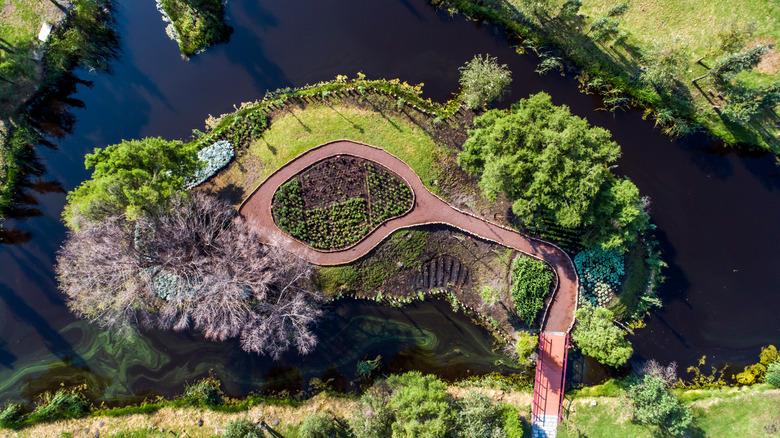
Traditional chinampas were up to 35 feet wide and 650 feet long, so you'll need to adjust yours to the size of your water body. Shallow water — about 5 feet deep — was a requirement for traditional chiampas, which were anchored in place, but depth should not be a constraint for your modern chinampa. While the Aztecs used ahuejote branches to build their chinampas, the contemporary recommendation is bamboo stalks, tying them together with twine and plugging the ends against water encroachment. You'll build this base on land and move it into the water later.
The next step is to layer materials onto the bamboo raft, starting with large, water-resistant leaves like banana leaves. Straw also makes a good base. The originators used remnants of aquatic plants. The ancients then added soil with organic matter, topped with a layer of sediment from the bottom of the water body, and the modern prescription is nearly the same. You can use compost, which is rich in organic matter, along with soil. There's no reason you can't also add sediment, as it is chock full of nutrients.
Now it's time to introduce seedlings to the chinampa. Vegetables traditionally planted included beans, peppers, squash, tomatoes, amaranth, maize, and flowers. Today, herbs and leafy greens are often in the mix. You're now ready to launch your floating garden into the water. Even though it's in the pond, check it regularly for supplemental water needs. To harvest your produce, you'll need to bring your island back to shore, but otherwise, it should need minimal care.