

The Small Tree With Pretty White Flowers That Is Highly Attractive To Butterflies
We may receive a commission on purchases made from links.
While not everyone is a fan of leaf-munching caterpillars, the butterflies they become are lovely pollinators that bring a smile to anyone's face. Unfortunately, to get beautiful butterflies, you have to put up with caterpillars. If you're looking for a plant that's important to all the life stages of this decoratively winged insect, then you should consider growing a small fruit tree with pretty white flowers — a plum tree. In spring, the trees are covered in nectar-filled flowers that butterflies can't resist, after which the plums start to form. However, that's not the only benefit of these diminutive fruit trees. The leaves of the plum tree also serve as an important food source for caterpillars.
While many flowering tree species will attract butterflies to your garden, a perk of plum trees is their small size. Though every species is different, these sturdy fruit trees rarely exceed 25 feet. You can keep them even smaller with frequent pruning. They are also easy to care for and covered in a cloud of beautiful white flowers at bloom time. Plus, depending on the species you choose, you may be able to harvest the fruit at the end of the growing season. There are dozens of plum species available in the U.S., most of which work well as ornamental pollinator plants in a backyard. However, if you want to attract and help your local butterflies specifically, it's best to stick to native (or wild) varieties.
Local butterflies are most attracted to native plums
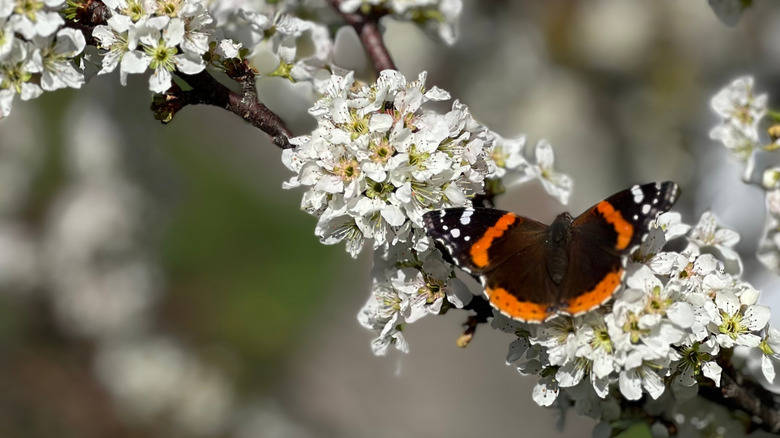
If you want to stick to native plum tree species, the American plum (Prunus americana) is a great choice. It is hardy in Zones 3 through 9 and grows between 10 and 20 feet tall. This plum species can attract all sorts of butterflies, including coral hairstreaks, eastern tiger swallowtails, and red-spotted purples. It's also an important plant for viceroy butterfly larvae. These are heat and drought-tolerant fruit trees that grow in full sun, meaning they don't require a lot of water or fussing over to thrive.
Another native option is the Chickasaw plum (Prunus angustifolia), which grows into a shrub or a small tree up to 15 feet tall. It is hardy in Zones 5 to 8. This plum is a host for caterpillars, as well as a food source for butterflies like the spring azures, Eastern tiger swallowtails, coral hairstreaks, and viceroys.
The Mexican plum (Prunus mexicana) is another shady flowering tree to plant if you want a garden full of birds and butterflies that, despite its name, is also native to the U.S. It's hardy in Zones 6 through 8. Usually, this tree grows up to 25 feet tall, but it has been known to grow to about 35 feet tall. However, with clever pruning, you can keep it closer to 15 feet tall. This tree is a host for tiger swallowtail larvae and other butterfly species. While there are other options, these three species are among the most popular wild plum trees with beautiful white flowers.
Ensuring your plum trees bloom abundantly for visiting butterflies
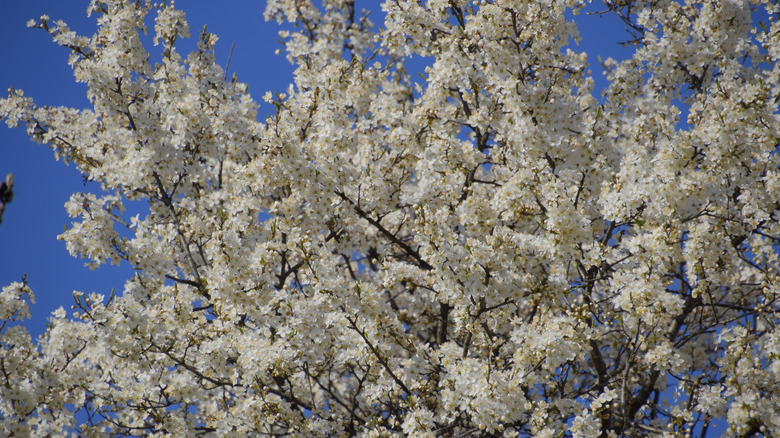
These fruit producers are not the easiest to care for — growing a plum tree in your yard as a beginner gardener can involve a bit of a learning curve. Plum trees, no matter what species you choose, all require similar growing conditions and maintenance. They need a full sun site — at least six hours a day of sunlight. They also need good airflow; they don't do well when crowded by other plants or planted too close to a wall.
When it comes to watering, plum trees prefer occasional deep soaks over regular sprinkles. They also like well-draining soil, so plant them somewhere sandy that's free from standing water. Once established, plum trees don't need much in the way of fertilization, though an application of organic, slow release fertilizer, like Down To Earth All Natural Fruit Tree Plant Food, in early spring doesn't hurt. Pruning, especially in the first few years, can help promote healthy growth, stronger limbs, and an ideal size for your plum. However, once the tree is established, you only need to prune diseased or damaged branches.
There's one important thing to be aware of when growing plum trees if you're expecting fruit. Some plum varieties are self-fertile, meaning you only need to grow one tree. Others need mates nearby to fertilize the flowers and produce fruit. Of course, if you're planting a plum tree to attract butterflies, you don't have to worry so much.