

The Vibrant Red Flower That Attracts Hummingbirds All Summer & Fall
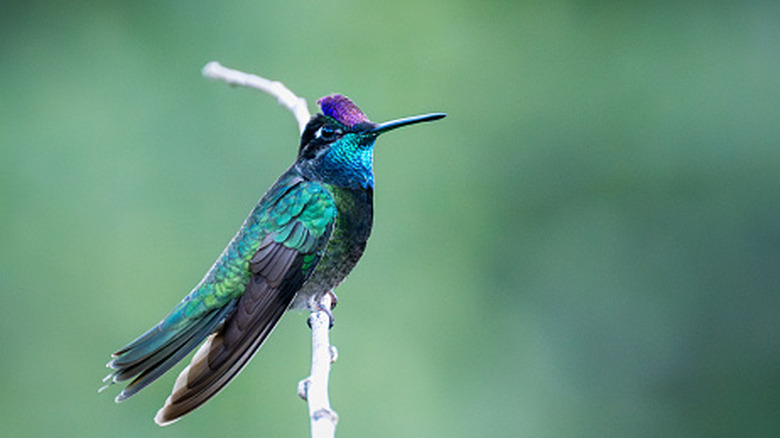
For many gardeners, few achievements are as celebrated as creating a hummingbird haven in their yard. After all, who doesn't want to encourage visits from these tiny but beautiful native birds? Learning how to start a pollinator garden may seem like a daunting task, but it doesn't have to be. All you really need to do is grow plants with nectar-filled blooms, such as the appropriately named tower of jewels (Echium wildpretii). With this approach, you will attract more hummingbirds to your yard and elevate the visual appeal of your outdoor setting.
At first glance, you may not be sure what to make of the unique tower of jewels. However, one thing's for certain: it's sure to command attention in your garden with its tall stalks of stunning red flowers. Not just from humans, either. This biennial or short-lived perennial attracts a variety of pollinators, hummingbirds included. In ideal conditions, the tower of jewels, also known as red or Tenerife bugloss, can grow up to 6 feet tall. It begins blooming in late spring and finishes in early summer — though it can bloom into mid-fall in some places. It's a wildlife magnet once it's gone to seed, too.
The tower of jewels is native to the Canary Islands, so replicating its natural environment is essential if you want it to produce abundant hummingbird-attracting flowers. Fortunately, this plant is relatively low-maintenance. The less time you spend caring for it, the more time you have to enjoy the hummingbirds it attracts.
How to grow the tower of jewels to attract hummingbirds to your garden
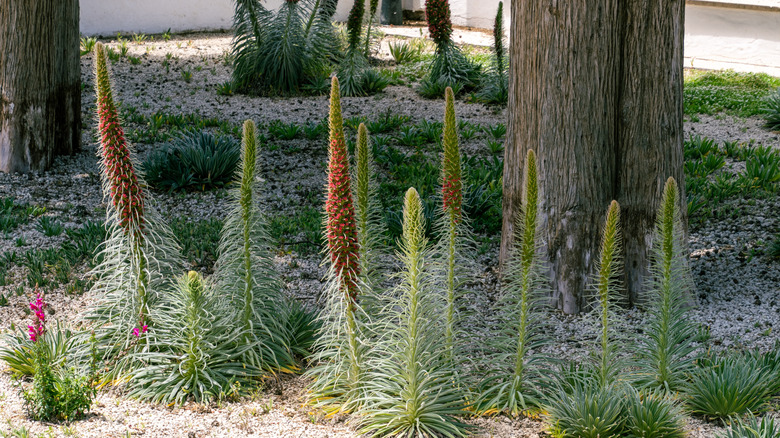
There are three main factors to keep in mind when growing tower of jewels to attract hummingbirds: what its USDA growing zone is (and which one you are in); the amount of sunlight it receives; and how much water it needs. The tower of jewels is only winter hardy in Zones 9 and 10; it requires certain temperatures to thrive outdoors. With such a small range, coupled with the fact that it's biennial, most gardeners will have to grow the plant in a large container. That way, you can overwinter your tower of jewels indoors.
The tower of jewels flowers best when planted in a full sun location. If your aim is to create an all-you-can-eat buffet for visiting hummingbirds, pick a spot without any shade — somewhere that receives at least six hours of sunlight a day. South-facing spots are optimal and north-facing sites should be avoided. Hopefully, that means you can show off this stunning plant to human visitors, too. Don't expect any flowers in the first year; this plant blooms in its second year.
If you're looking for plants that someone new to cultivating pollinator gardens can grow easily, don't be put off by the tower of jewels' unique appearance. Far from being off-limits to amateurs, this hardy plant does well in drought-like conditions. In fact, it prefers them. This means it will survive even if you forget to water on schedule. If you plant it in well-draining soil and don't let it dry out completely, it will thrive.