

Why There's Simply No Need To Splurge On A Touch-Free Soap Dispensers
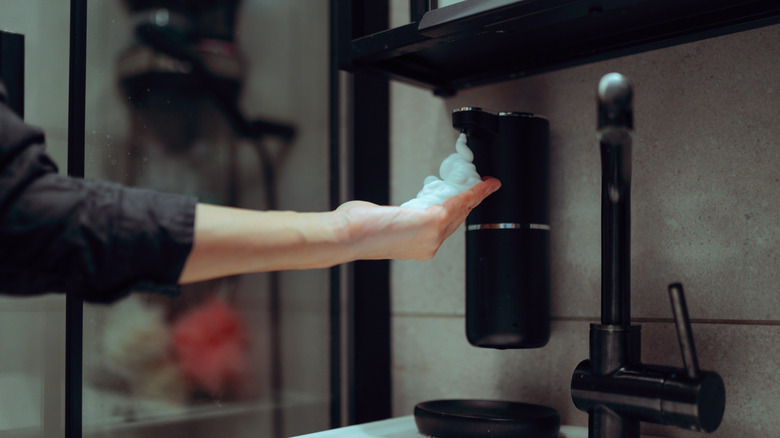
Some home upgrades — such as the microwave, dishwasher, or refrigerator — have vastly improved housework and maintenance. However, not every new invention is essential to daily life for each household. For instance, automatic or touch-free soap dispensers have become popular over recent years in public spaces such as restaurants and event centers. But while these can be helpful in places that see a lot of traffic and are important for those with limited mobility, are they really necessary in the majority of private homes?
Let's think about it. Touch-free dispensers limit the number of surfaces that multiple people touch. However, this is less useful in private homes where the residents already share plenty of other surfaces. In addition, you typically touch a dispenser before washing your hands, meaning that, theoretically, the bacteria transferred to your hands from the dispenser will be washed off. There are also some practical issues with automatic dispensers, such as the price tag and how much wall space they require to be properly installed. So, if you're trying to make the most of a small bathroom, a touch-free soap dispenser likely isn't the best option for you.
Touch-free dispensers can also struggle with malfunctioning sensors, meaning the soap either comes out at the wrong time — making it hard to maintain a cleaner bathroom — or not at all. And, believe it or not, these dispensers can end up being more high-maintenance than their non-touch-free counterparts.
Avoid automatic dispenser issues by improving manual options
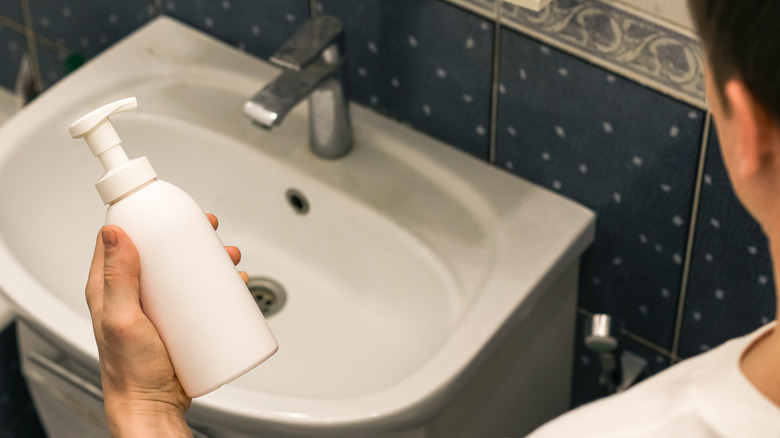
One of the main issues you can encounter with touch-free soap dispensers is clogging. The tiny dispensing hole in the machine is typically hidden from view, often meaning it's hard to know when it is becoming full of residue. When the dispenser does become clogged, it can affect how the soap comes out and will likely need cleaning or maintenance to fix the issue.
So, if you were interested in trying an automatic dispenser purely because you're sick of cleaning out your manual one, this may not actually be the better option. Instead, try diluting your soap with a little water so that it comes out of the manual dispenser without sticking to the tube, and make a habit of wiping down the outside with a cloth.
On the other hand, you may have been intrigued by the idea of a touchless dispenser because they dispense a fixed amount, reducing waste and saving you money. However, the initial cost of the dispenser itself tends to be significantly higher than that of manual dispensers, so it can take a while for you to recoup that in saved soap. Additionally, automatic dispensers rely on batteries or outlets to run, which may add to your overall electricity bill. To reduce soap waste without buying an automatic dispenser, you could pivot to bars of soap instead. These are often more affordable and tend to last longer because it is harder to overuse them compared to manual dispensers. You could even DIY whimsical soap for your bathroom for a customized scent and lovely countertop accessory.