

27 Spring-Flowering Shrubs That Should Be Pruned Immediately After Blooming
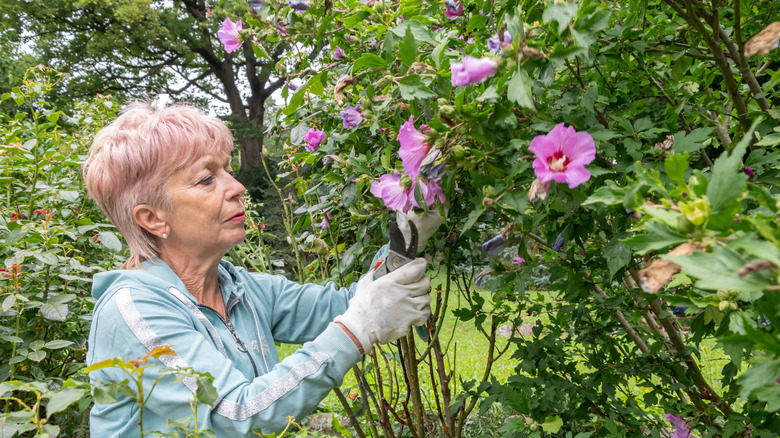
Pruning your shrubs is perhaps the least exciting part of gardening (though it may still beat weeding). But when it's done at the right time and with the proper technique, it can produce great results. Pruning lets you reshape your prized beauties, control their height or spread, improve flowering quality, and enhance their overall appearance.
Certain spring-flowering shrubs – such as lilacs, forsythia, azaleas, mock orange, viburnums, and witch alder, to name a few — benefit most when pruned immediately after blooming. That's because, after their show is over, they refocus their energy into setting new buds on their stems. Giving them more time to develop wood and buds — along with successful overwintering — helps ensure blooms the following spring. In other words, shrubs producing on "old wood" or "previous year wood" are best pruned following their flowering, so you can continually enjoy their best display year after year.
Before stepping out in the garden, make sure you have the right tools. Hand pruners are ideal for thin stems (under ½ inch wide), but you may have to size up to loppers or pruning saws for thicker branches. Also, ensure they're clean and sterile. Please bear in mind that the following is part of routine maintenance. If you're trying to rejuvenate a neglected or overgrown shrub, you'll either have to spread this activity over multiple years to avoid over-stressing it or wait until it's dormant, though you may lose flowers for a couple of years.
Common lilac
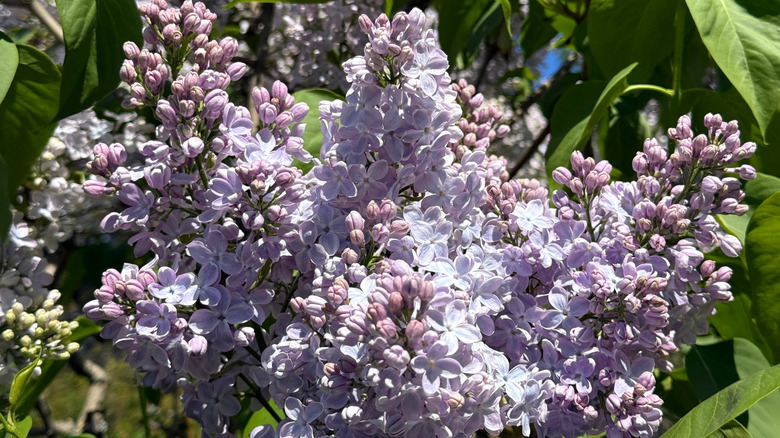
Some French or common lilacs (Syringa vulgaris) and their cultivars may take more than five years to bloom. Once they do, you should prune them annually. The best time to prune your lilacs is right after they stop flowering in late spring, or within two weeks of it, if time-strapped. This gives them sufficient time to develop next season's buds. Also, cut back old, diseased, decaying, crossing, or dead stems to the base to open the shrub and make space for new flowering branches. Don't forget to remove suckers for a tidy look.
Flowering quince
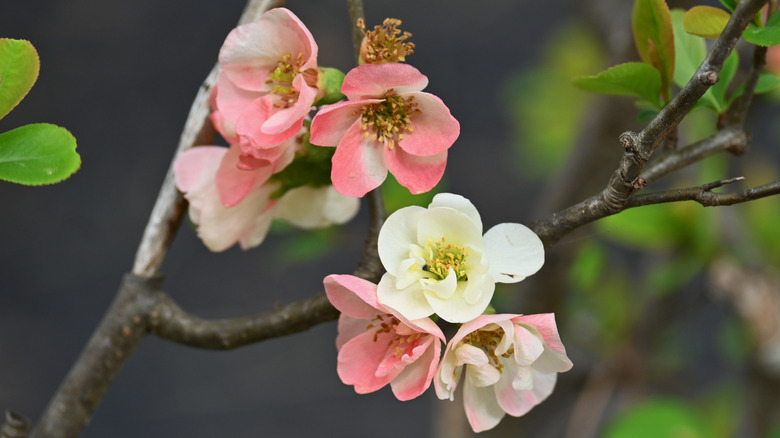
Planted in gardens for red, coral, white, or peach blooms that begin appearing in winter, flowering quince (Chaenomeles speciosa) is another shrub that benefits from pruning right after its flowers terminate in early spring. It can grow unruly because of its suckering habit and become leggy if left unpruned. Cutting off suckers prevents it from turning weedy, while trimming out one-third of the old growth helps keep it shapely and at a manageable height, without sacrificing next year's flowers. Wear gloves since the branches are covered in thorns. Also, note that you may lose some fruit in the process.
Bridal wreath spirea
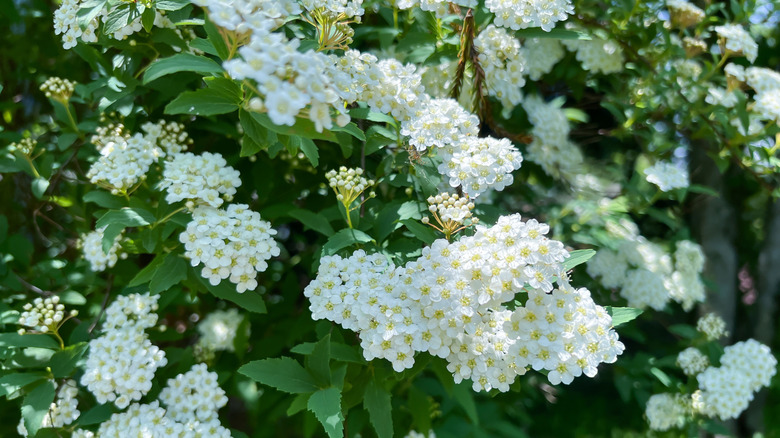
Used as an accent in foundation beds and borders for the eye-catching spring display of white blooms atop leafless branches, bridal wreath spirea (Spiraea prunifolia) requires some pruning afterwards. This is done to remove suckers growing at its base and prevent unruly spreading. Another reason, albeit hotly debated, is to deal with legginess. Left unpruned over several years, it assumes a weeping form that some gardeners find graceful. However, if you don't want the flowering spurs touching the ground, trim out the stems detracting from its shape by no more than one-third before it enters its bud development phase.
Azaleas and rhododendrons
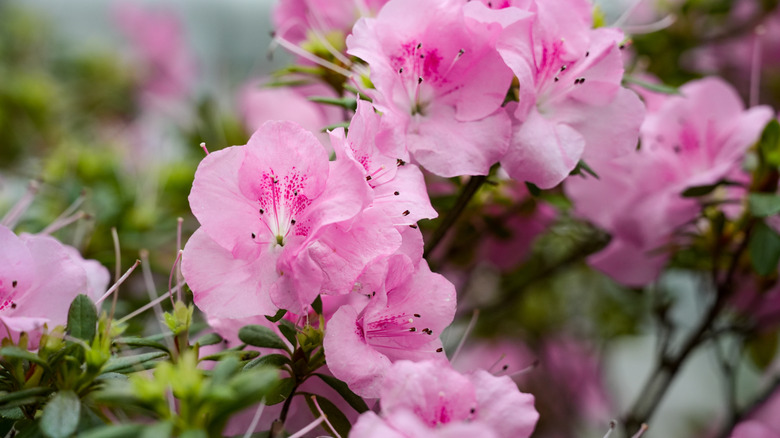
Azaleas and rhododendrons (Rhododendron spp.) finish developing new buds by mid- to late summer. Pruning or shearing them (if grown as hedges) immediately after flowering or within six weeks of it ensures you can thin, shape, or clean them up without worrying about removing new flowering trusses or affecting cold hardiness. Start by removing dead flower stalks, followed by decaying or diseased wood until you reach healthy tissue. Thin out interior or crossing branches that may be overcrowding the plant, and trim out old or errant growth to a lateral branch or a dormant bud.
Deutzia
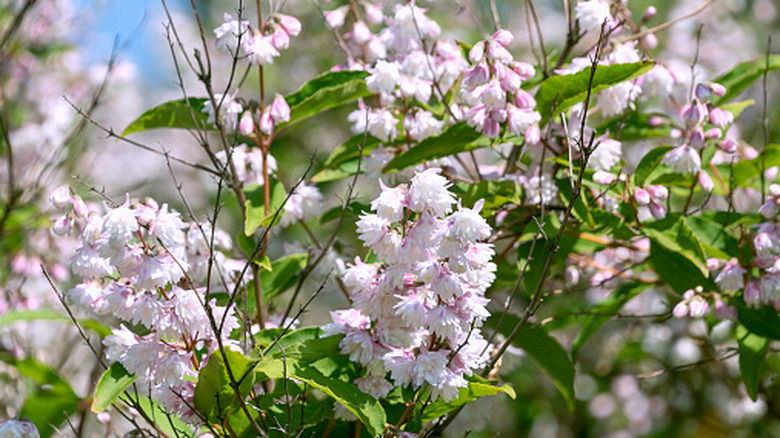
Deutzia (Deutzia spp.) is planted for its spectacular display of white or pink blooms that draw in hummingbirds. But to control its height and shape, remove old and spent flowering stems right after the last blooms fade. However, don't cut off more than one-third of the total growth. Depending on your requirements and varieties, you may undertake pruning every year (think D. gracilis) or every alternate year. Timing may vary from late spring to early summer (when the final wave ends), though you should prune within a month of the last bloom.
Mock orange
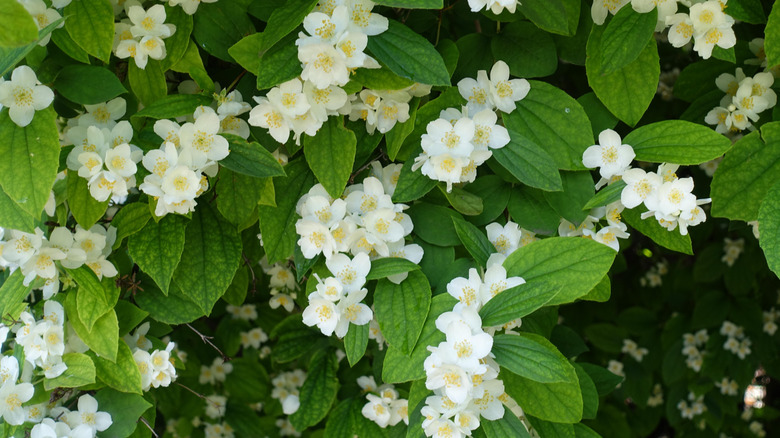
Mock orange (Philadelphus coronarius) is a highly fragrant, drought-tolerant shrub that produces white flowers in late spring, continuing into early summer. If it isn't pruned, the shrub grows leggy and sparse, taking away much from its true form. So, to maximize flowering and maintain a bushy mound, you must cut the oldest growth down to the soil after flowering terminates. Don't cut off more than one-third to one-half of the plant in one pruning cycle. Also, remove any crowded interior stems, though they often die on their own due to a lack of sunlight.
Japanese kerria
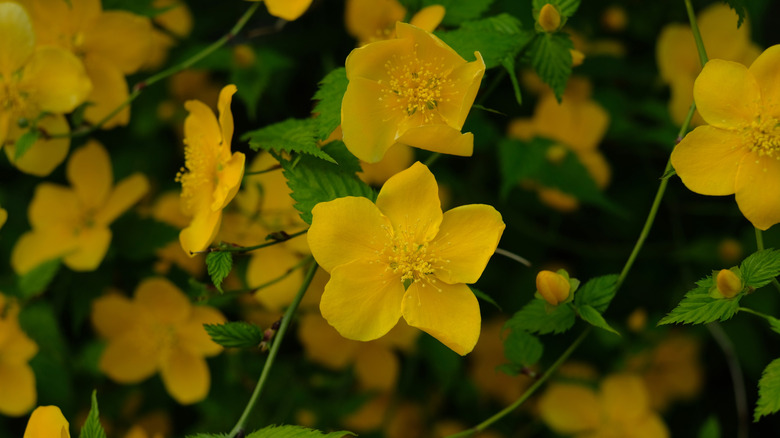
Also called Japanese yellow rose, Japanese kerria (Kerria japonica) is a yellow-flowering shrub that thrives in partial shade, especially in woodlots. It typically blooms in mid- to late spring, though a sudden drop in temperature can delay flowering. Still, since it can grow sparse, especially around the base with time, you must prune it. After all flowers have faded, trim the spent stems back to the ground or to a healthy side branch. This will encourage new growth from the base, giving the shrub a fuller appearance and, hopefully, more blooms next year.
Viburnum
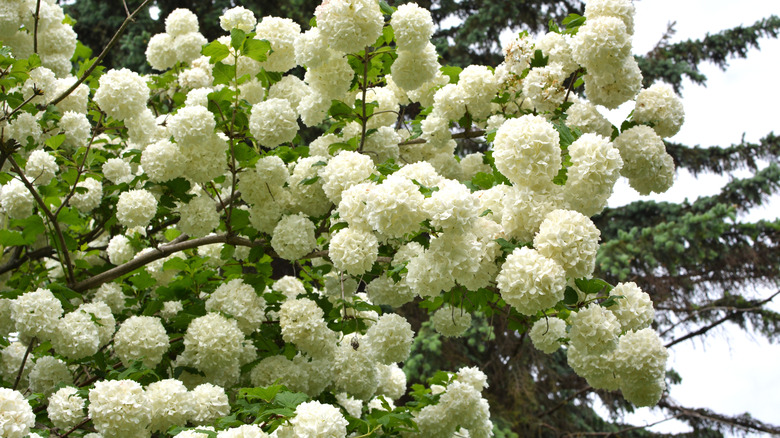
With viburnums, you'll need some discernment, since not every variety requires pruning. However, should you find the shrub outgrowing its boundaries or looking unshapely, you may lightly prune it within a month of the last flowers, so as not to ruin next year's flowering. Snip off the faded blooms, as well as spindly branches that may distract from the overall appearance, down to a healthy whorl of leaves. Also, prune water sprouts – non-blooming stems growing from shoots near soil level — to redirect resources toward flowering. Unfortunately, you may lose the attractive seedheads that follow through later in some varieties.
Mountain laurel
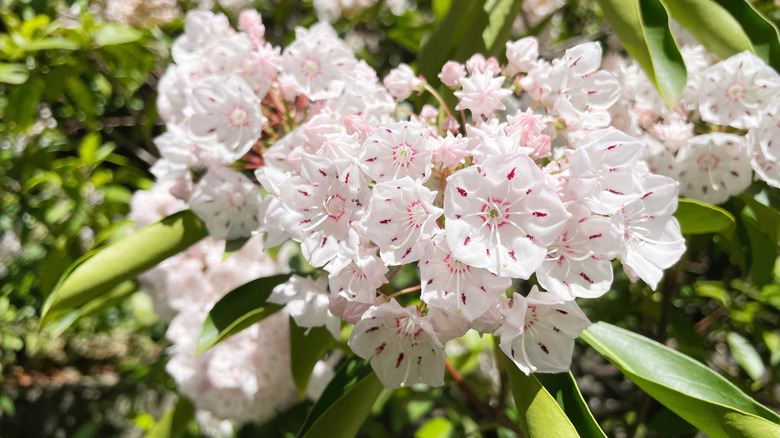
Mountain laurel or calico bush (Kalmia latifolia) is a beautiful evergreen shrub that attracts diverse pollinators with its purple-streaked, rose-pink, or white flowers in late spring. Although slow-growing, its canopy can become congested and unwieldy over time, which may reduce plant performance. Besides, its foliage is highly flammable, so light pruning keeps it within bounds, especially if it's growing closer to home. To avoid removing next year's buds, prune immediately after flowering by removing dead stems from the center to improve air circulation and deadheading spent blooms. You may also remove any non-flowering water sprouts.
Japanese andromeda
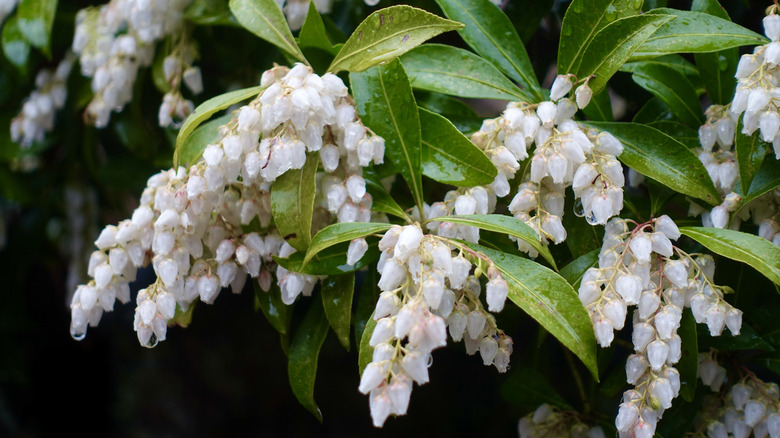
Those on a hunt for bushes with fragrant flowers may find Japanese andromeda (Pieris japonica) perfect for their yards — those bell-shaped pink or white flowers flailing about before other plants wake up in the spring truly make an eye-catching display. To bring them back into shape, consider pruning them lightly after the last flower flush. Delaying it any further may, in addition to removing new buds, stress the plant (especially in summer) or produce new growth that may not successfully harden before winter sets in. Prune leggy or poorly placed stems to the nearest leaf node or the main stem.
Once-blooming rambling roses
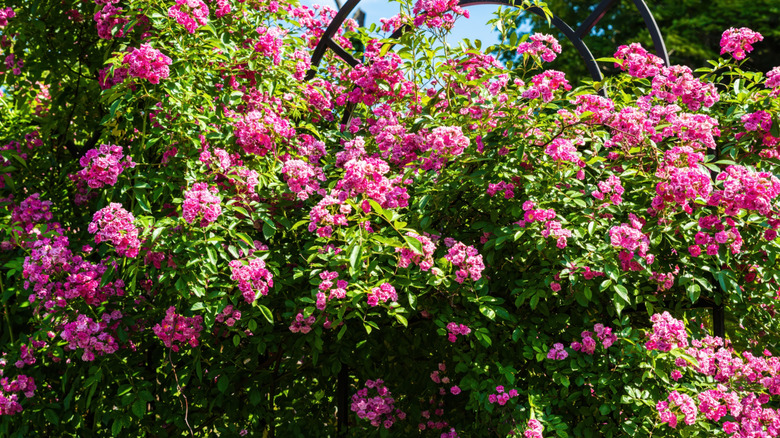
Unlike repeat-flowering ramblers that produce heavily during summer and fall, once-blooming rambling roses (Rosa spp.) put on a spectacular show in spring. While you don't have to take up pruning shears in the beginning, you must after they develop their main canes. Otherwise, they'll grow unruly and wild. To avoid losing next year's buds, give their rubbing, diseased, or dead stems a sharp cut after they're done blooming in summer. You may also reduce budding side canes to about 3 to 6 inches long for better flowering.
Common pearlbush
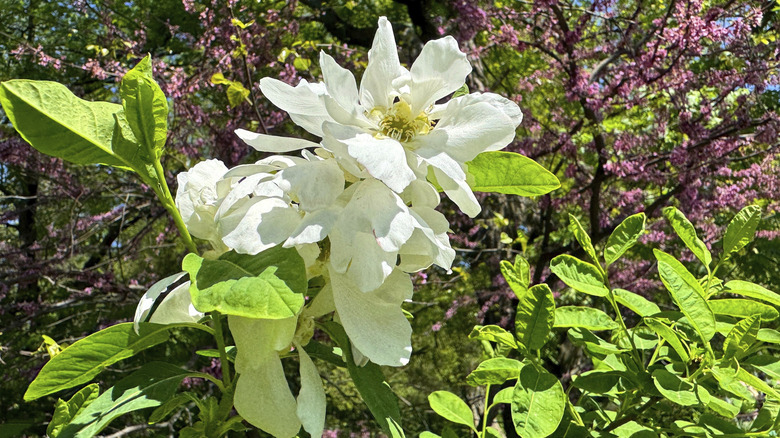
Common pearlbush (Exochorda racemosa), including some hybrids, are known as tough plants that tolerate drought, resist pests, and green up early in spring, helping bees. But when left unpruned, they grow droopy, marring their visual appeal. To tidy up their appearance, prune them right after they end the glorious display of white blooms that, in their budding phase, resemble a string of pearls. Doing so preserves the new buds and avoids the need for hard, corrective, or rejuvenation pruning if the plant becomes severely unkempt. Also, snip any volunteer seedlings to prevent spread.
Forsythia
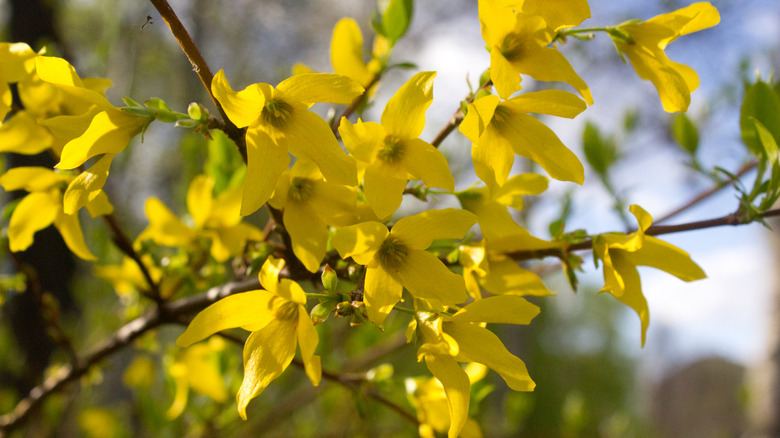
Striking a profuse display of yellow blooms, forsythias (Forsythia spp.) let the gardeners know that spring is here. Sadly, they become quite drab shortly afterward, turning into a mix of awkwardly growing branches that seem to lack direction. Suckers at their base can also be problematic. So, to restore their appearance — without forgoing next year's flowers (for there is little else reason to grow forsythias) — you must prune them immediately after flowering. With hand pruners, take off one-third of the oldest stems to the base, as well as any errant branches and suckers.
Virginia sweetspire
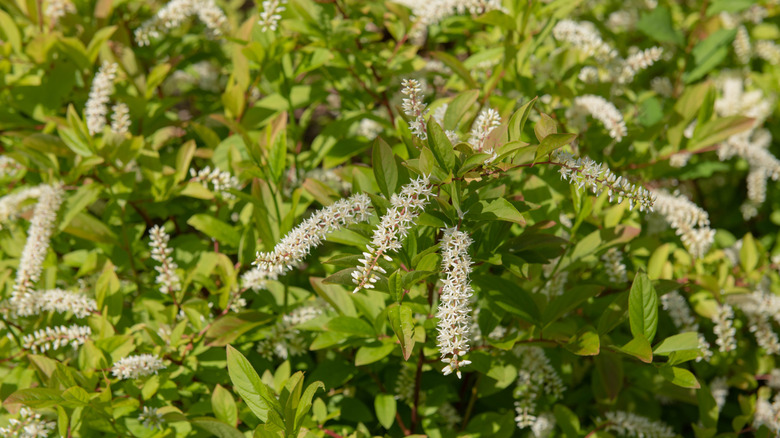
Virginia sweetspire (Itea virginica), and its cultivars (think 'Henry's Garnet') brighten spring landscapes with their clusters of white flowers. But like most shrubs, they become inundated with old, decaying, or splintered wood that needs cleaning. To avoid cutting off next year's buds that develop during summer, carry out maintenance pruning right after the last flowers wither. You may also shape or shorten the plant by cutting the tallest branches back to the nearest bud or side shoot. Unless grown for erosion control, you may also remove the suckers growing at the soil line.
Dwarf flowering almond
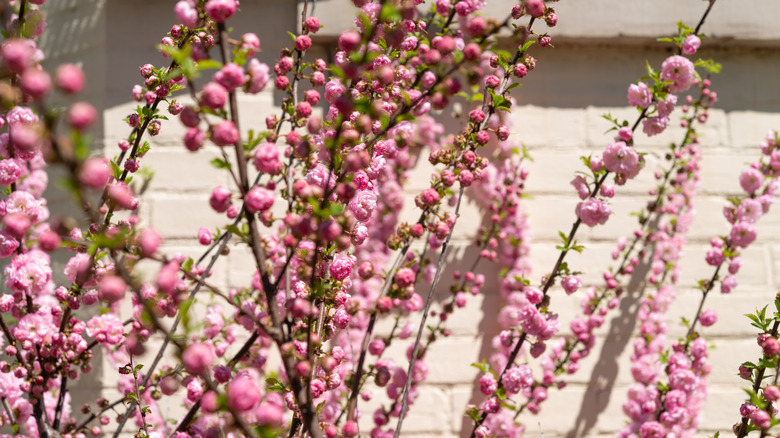
Dwarf flowering almond (Prunus glandulosa) or Chinese plum, looks attractive in spring when its bare branches are swathed in pinkish-white, cherry-like flowers. Pruning it right after this spectacular display can improve its flowering quality for forthcoming seasons. This also addresses the unruly problem plaguing these ornamental almond trees, wherein their canopies open out, assuming an unshapely form. As usual, clip off dead, crossing, and damaged branches, as well as shorten the wayward ones to the shape you desire. Also, take the time to clip off root suckers to redirect resources toward flower production and prevent spreading.
Purple-leaf sand cherry
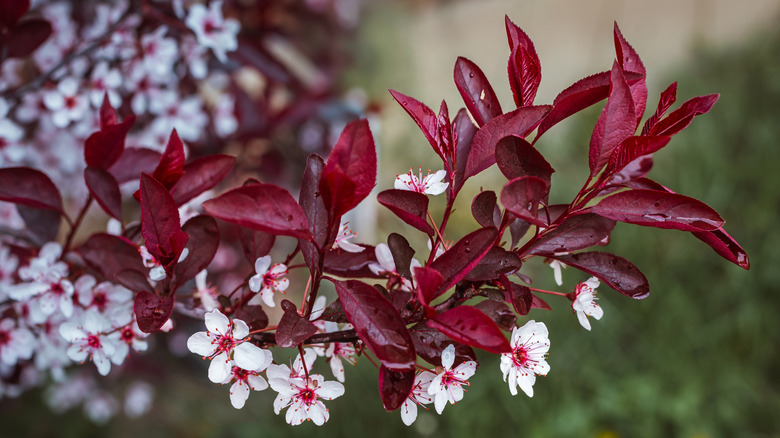
Cold-hardy to Zone 2, purple-leaf sand cherry (Prunus x cistena) beguiles onlookers and pollinators alike with its parade of aromatic, pinkish-white blooms in spring and purplish-black fruits right after. Since it grows quickly, its limbs can become weak and split over time. Damage from Japanese beetles, if present in your area, doesn't help their cause either. To bring them back into shape, it helps to prune them annually. As buds develop on old wood, pruning after flowering keeps them safe. However, to rejuvenate overgrown shrubs, you must wait until they go dormant.
Witch alder
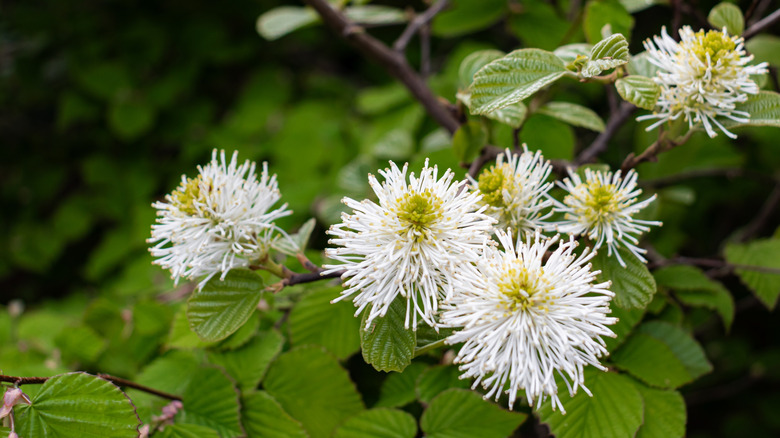
Witch alder, or fothergilla (Fothergilla spp.), is a lovely four-season shrub that explodes into masses of bottlebrush white flowers, infusing the air with a sweet fragrance. Since they grow slowly and have a beautiful natural form, they can typically do without much pruning. However, if you're looking to contain their size, then you should prune them after their blooming season ends, or risk a no-show next year. Simply reduce the branches to the nearest bud that faces away from the center or to the central stem for more lateral branching. Also, get rid of the root suckers.
Bigleaf hydrangea
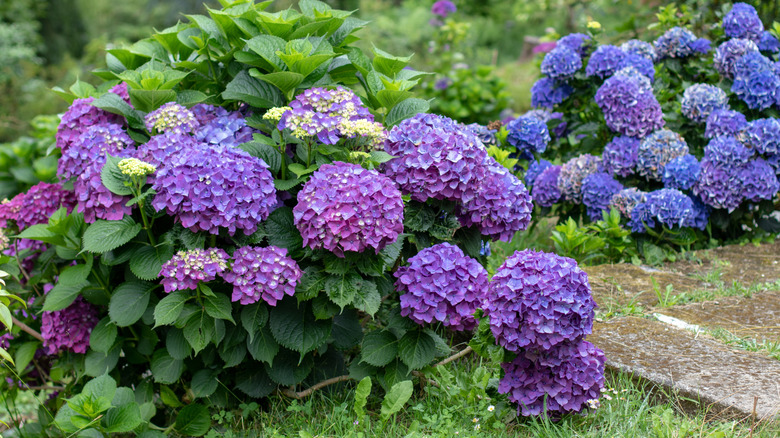
Also known as mophead or lacecap, bigleaf hydrangea (Hydrangea macrophylla) is a spring-flowering shrub popular for its ability to change the color of its blooms based on the soil's pH levels. Unless you're growing an everblooming hybrid, which can flower on both new and old wood, consider pruning standard bigleaf varieties after they finish blooming. This turns leggy hydrangeas back into the garden stunner they are while giving them adequate time in the summer and fall to produce new buds. After removing dead, brown stems flush with the ground, cut the unruly ones to a whorl of healthy leaves for light shaping.
Oakleaf hydrangea
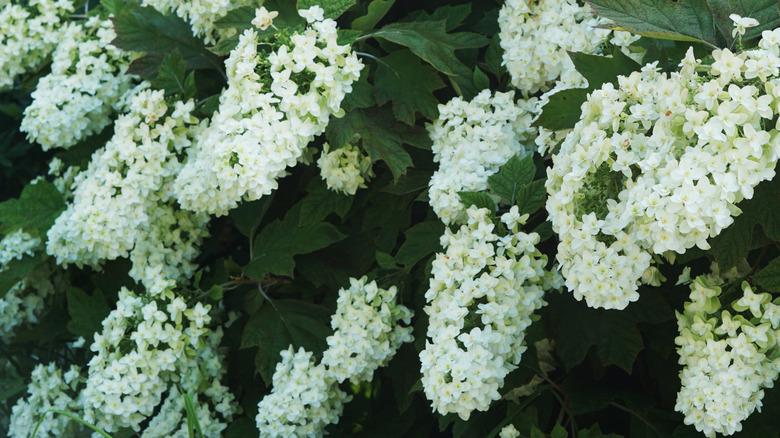
Well-liked for their burgundy-red fall foliage and spring-through-summer flowers, oakleaf hydrangeas (Hydrangea quercifolia) may infrequently require trimming for size containment or shaping – they can grow huge, after all. But since they develop buds on older growth, this must be carried out after the last of their flowers have faded to ensure a floriferous display next year. After removing diseased and crossing stems, fully remove about one-third of the oldest stems, as they're less vigorous, and cut the remaining stems back to the nearest bud. That being said, it's safe to remove winter-damaged branches early in spring because the buds are already lost.
Breath of Spring spiraea
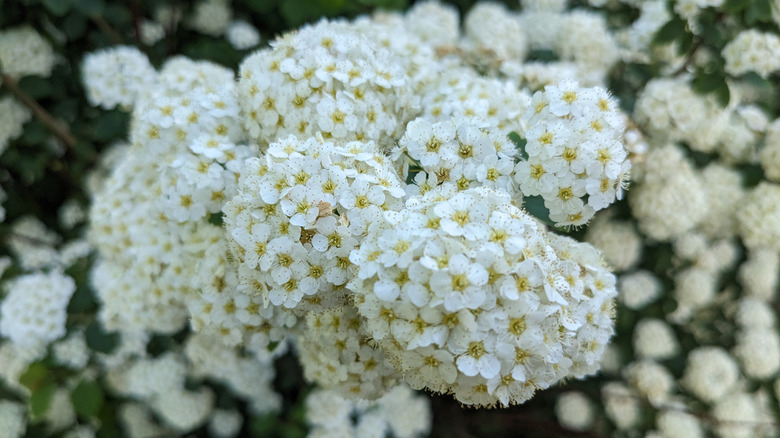
An early bloomer, Breath of Spring spiraea (Spiraea thunbergii) draws attention to itself when it bursts into fragrant, feathery white flowers, heralding spring. Sadly, without proper shaping, its graceful form turns into a loose, twiggy mess with the arching stems opening outward and growing wiry with age. Because pruning later in the growing season can cut out the developing buds — not to mention deprive you of a second flower wave – any pruning for healthy new growth and proper form is best done after the plant finishes flowering. Thin out the inner canopy by snipping off old branches at the base.
Enkianthus
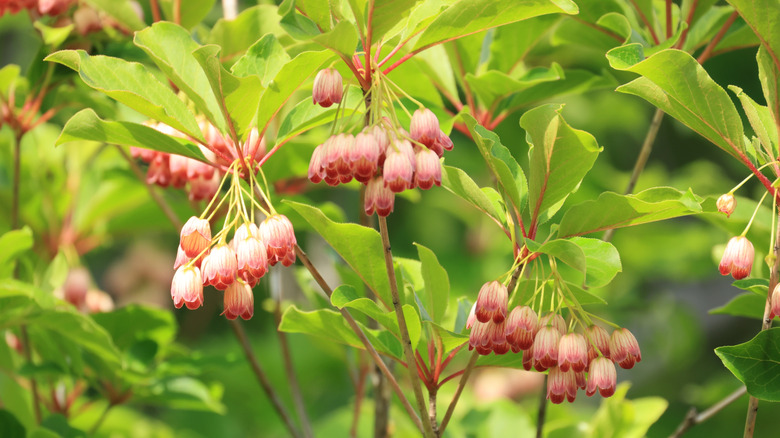
Featuring among the beautiful plants that will thrive in clay soil, enkianthus (Enkianthus campanulatus) is an acid-loving, spring-flowering shrub that creates joy with its clusters of pink-veined, urn-shaped, buttery white blooms. Although it is typically low-maintenance, boasting tiers of healthy foliage that retain their form even as they age, it does require an occasional pruning to eliminate dying or damaged wood. To avoid removing next year's flowers, make cuts immediately after flowering. However, don't go overboard, especially when trying to manage its spread, as this may encourage the growth of water sprouts.
Glaucous willows
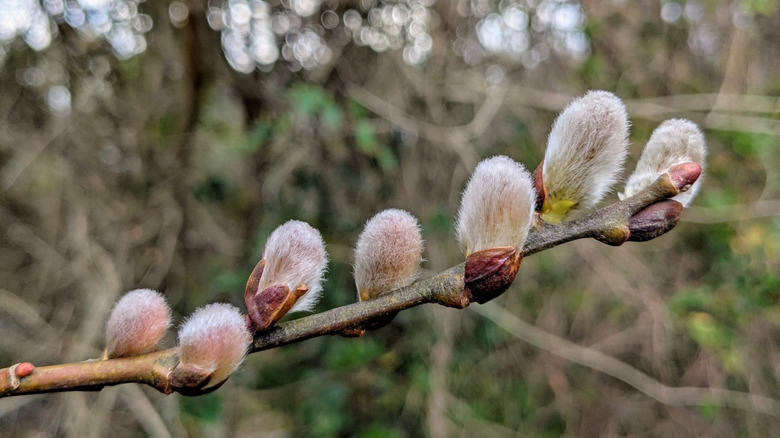
Glaucous willows (Salix discolor) are fast-growing, dry-soil-tolerant shrubs that attract bees and butterflies with their characteristic silvery white catkins in spring. To reverse a decline in flowering or control their size, you may cut about one-third of the oldest stems (often the tallest) to the base each year using pruning shears. This will promote the growth of new flowering shoots. Alternatively, you can cut the whole plant back to 6 inches. Make sure you do so after they're done blooming to avoid removing buds for the following year.
Carolina allspice
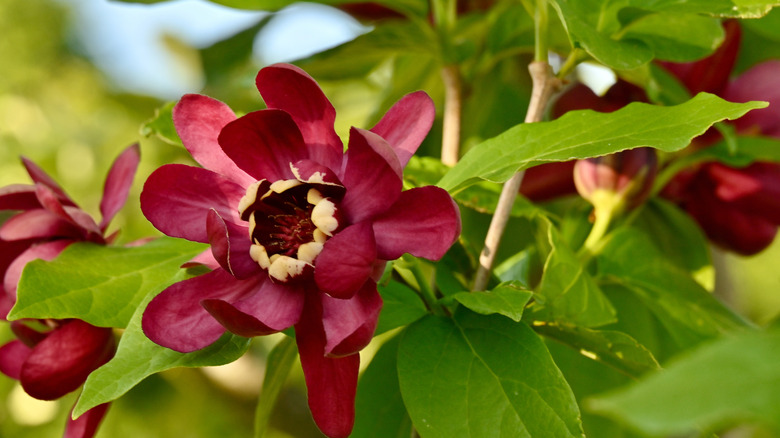
Native to the southeastern United States, Carolina allspice (Calycanthus floridus) is a versatile deciduous shrub that adapts to a range of light conditions, soil textures, and pH levels. In spring, perfumed, brownish-red, saucer-shaped blooms deck its foliage, which may repeat in summer. Over time, the plant may overshoot its boundaries or grow frazzled and leggy. To make it more compact and remove unwanted suckers, you may prune it immediately after flowering, before it sets new buds. Cut off weak or wayward branches until you reach the desired shape and height — it can handle severe pruning.
Flowering currant
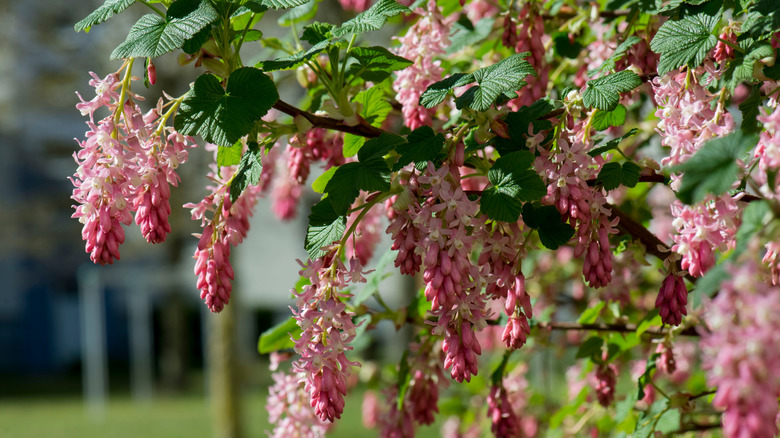
Native to the Pacific Northwest, flowering currant (Ribes sanguineum) is a hummingbird-friendly shrub that produces fragrant masses of red or pink flowers in spring. Although easy to maintain, it does grow lanky with age. Because of this, it benefits from light pruning every few years. To give the plant sufficient time to initiate new buds and growth for next year, it's best to undertake any trimming right after the currants are done blooming. Trim the top one-third of the spent flower stems to the closest pair of buds – any dead or decaying canes may be cut back to the ground.
Japanese quince
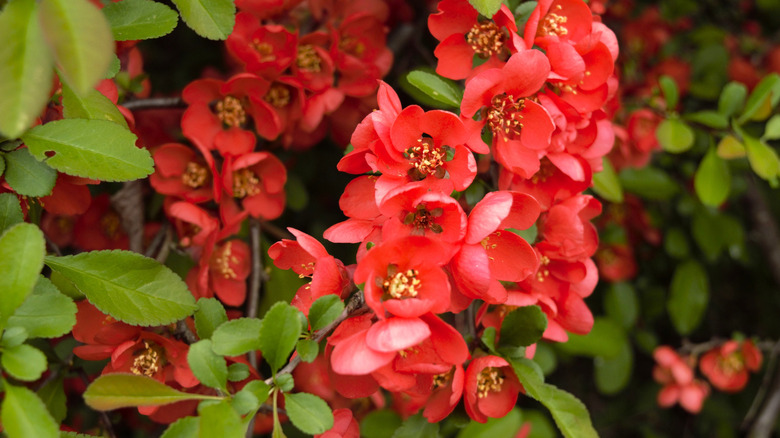
In early spring, Japanese quince (Chaenomeles japonica) attracts attention with its scarlet red or orange blooms gracing twiggy branches. Sadly, its canopy splays open with age, reducing overall appeal. Pruning after flowering can lead to more abundant blooms and better overall shape. Leaving about three buds from the base, shorten new growth and cut back old stems to the ground. Don't cut more than 20% of the overall growth, as it cannot handle severe pruning. Wear gloves to avoid getting nicked by its thorns. Note that the fruit crop will be reduced after you prune.
Saucer magnolia
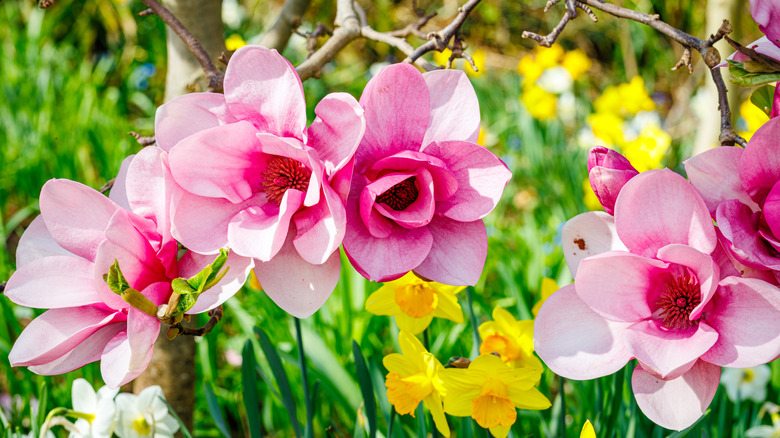
Grown as a multi-trunked shrub (sometimes trained into a tree, which may develop a lean), saucer magnolia (Magnolia × soulangeana) makes a statement in mid-spring, when its cup-shaped pink flowers emerge. Without regular pruning, its canopy may grow dense and lopsided, negatively affecting plant vigor. Since they risk bleeding sap if pruned during the winter-to-spring transition, it's best to delay pruning until after it finishes flowering in mid-summer — this also helps preserve next season's buds. Thin out wayward or weak shoots to rebalance the form, and remove any water sprouts. Don't remove more than 20% of the plant's growth in a year.
Neillia
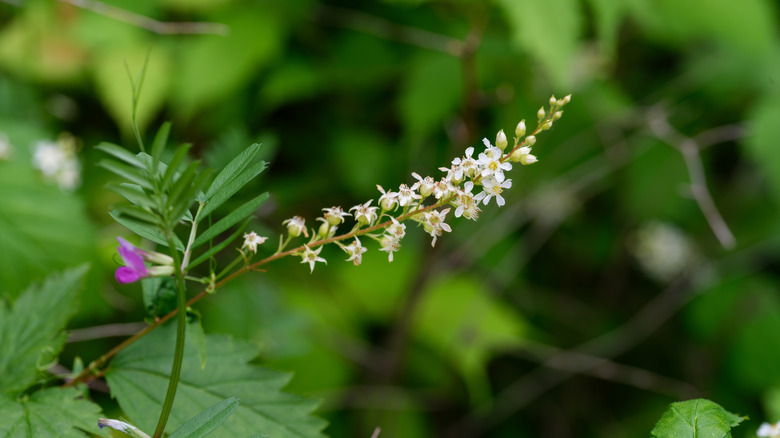
Certain Neillia varieties, such as Korean neillia (N. uekii) and Chinese neillia (N. sinensis), provide a reliable flush of blooms in spring. Since they may lose vigor as they mature in the landscape, you can give them a quick trim, similar to how you would prune a bigleaf hydrangea, to improve performance. Done correctly, it will also help maximize flowering. Remove any stems congesting the interior or crossing each other. Cut back old stems to the ground. Unless you're naturalizing the area, continually remove suckers as they emerge.