

The Easy-To-Grow Perennial Grass That Feeds Birds & Will Thrive In Your Wet Garden

Few things are worse than planning to birdscape your yard just to discover the spot you'd designed for your newest outdoor feature has a tendency to flood. Don't scrap your plan just yet — while it may limit some of your options, a wet garden doesn't immediately mean you'll need to give up your dreams of cultivating plants both you and your local backyard birds can enjoy. Instead, you'll just need to choose flood-hardy options, like this easy-to-grow grass that'll come back year after year.
Bushy bluestem (Anatherum glomeratum, previously genus Andropogon) is a warm-season grass native to much of the United States. While other plants may balk at the sight of a flooded yard, bushy bluestem thrives in these conditions. In fact, out in nature, you will often find these large tufts of grass growing around swamps, bogs, ponds, and wet savannas. As a result, low areas prone to moisture are not a problem for this hardy plant that's also tolerant of pollution, deer, and even black walnut trees. Bushy bluestem blooms in the summer and fall with white or brown flowers, and while the foliage is green throughout the growing season, it transitions to an attractive copper color come winter. And the best part? It's an absolute hit among wildlife, attracting a variety of butterflies and producing seeds, giving birds a wide variety of food options to choose from. As an easy-to-grow perennial, bushy bluestem can be a top plant pick for beginner gardeners. However, it still needs the right care for successful growth.
How to grow bushy bluestem
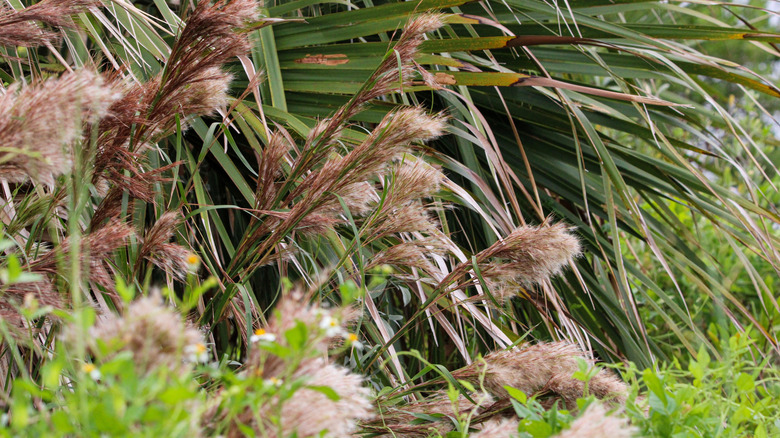
Bushy bluestem holds up well to moist soil and occasional flooding. While it's not too picky about excessive moisture, it does have other specific soil preferences. For example, it grows best when offered sandy soil that's rich in nutrients. It also prefers pH levels tipping toward neutral or acidic rather than alkaline. Outside of this, it holds up well in many conditions, making it perfect for adding color while attracting a variety of bird species. Just keep in mind that it can reseed itself and may spread from where initially planted. If your goal is to elevate the visual appeal of a wet garden space while serving wildlife, however, its self-seeding may be a pro rather than a con.
This grass does require full sun to grow. As a result, while it can handle wet areas in your garden, it won't be able to grow in shady spots. For the best result, choose a location that offers at least six hours of sunlight throughout the day. This may look like a south-facing fence or spot in your yard where there's no worry about lackluster growth as a result of poor lighting. Giving your bushy bluestem ample light to grow also ensures that it produces the flowers and seeds that wildlife adore so much, keeping your garden lively. Bushy bluestem is a perennial, but it's important to double-check your USDA growing zone to be sure it can survive the winter. This grass is winter hardy in Zones 7 through 9.