

Not Fertilizer Or Compost: The Potting Material That Extends Hanging Basket Blooms
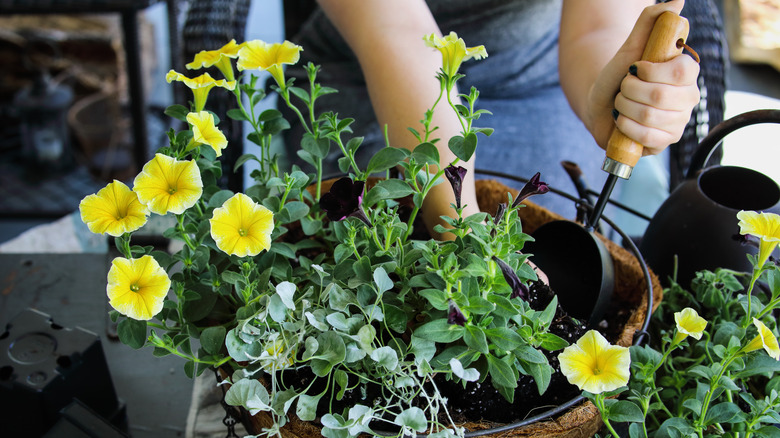
If your hanging baskets aren't looking all that lush lately, and it feels like you're spending all your free time keeping them hydrated, it might be time to rethink your potting mix. Lugging around a heavy watering can all day sucks, but nobody wants to see their delicate petunias or fuchsias wilt by midday from the dry heat, either. And while there are dozens of water-retaining gadgets specifically for potted plants, they may not always hold up their end of the bargain. Fortunately, coconut coir is a natural alternative to these, and is one of the best tricks for keeping your hanging basket plants watered all summer.
But what is coconut coir, and why is it so effective? This fibrous soil amendment comes from the husk of a coconut. It works like a sponge, holding up to 9 times its weight in water, so it can easily hold onto and slowly release water to your plants. Coconut coir's structure helps provide aeration for potted plant soil, eliminating any potential soil compaction issues. It also offers great drainage, so you won't have to worry about your potted plants just sitting in water and getting root rot.
Coconut coir can help you know when to water seedlings if you're starting a basket from scratch. It's also nice to have on hand if you live somewhere with constant dry and hot air (where these baskets seem to crisp up and die in a matter of hours), since it'll help manage water better. This means you'll no longer have to spend all day watering your baskets, and will actually have time to kick back and enjoy their cascading, eye-catching blooms.
How to mix some coconut coir into your hanging baskets
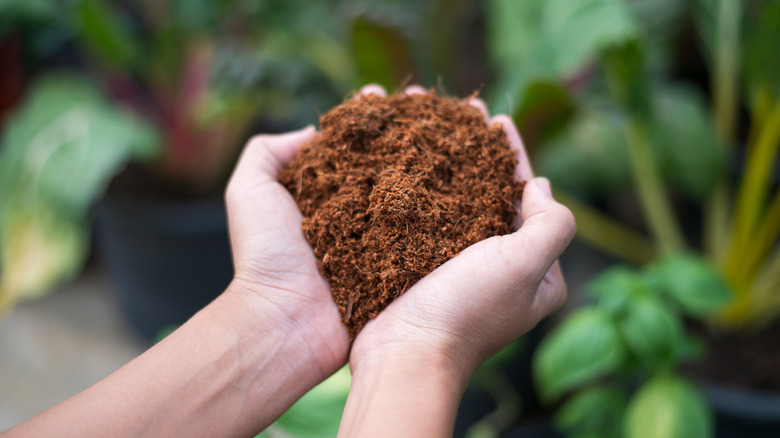
Using coconut coir does require a small bit of quick prep before you start using it. It usually ships in bricks that are compressed and dehydrated, so you'll need to soak it in a bucket of warm water until it fully expands. Most standard hanging baskets measure about 12 inches, so you'll need roughly a quarter to a third of a coir brick for one basket. Once it's rehydrated, fluff it up to create that rich, soil-like texture.
Coconut coir has some hidden drawbacks, most notably that it's sterile and doesn't have any nutrients to offer your potted plants. It's just here for water management, so you'll need to blend it with a potting mix to keep your plants properly fed and happy; a ratio of 3 parts soil to 1 part coir is great for boosting the overall quality of the soil. A water-soluble liquid fertilizer works nicely alongside the coir's moisture-holding abilities.
You can find coir at most gardening stores, and it's fairly affordable at around $10 a brick. That makes it a convenient and low-fuss watering method that allows you to enjoy beautiful, happy hanging baskets without the constant worry of them drying out.