

17 Low-Growing Perennials To Grow For Stunning Borders & Edges
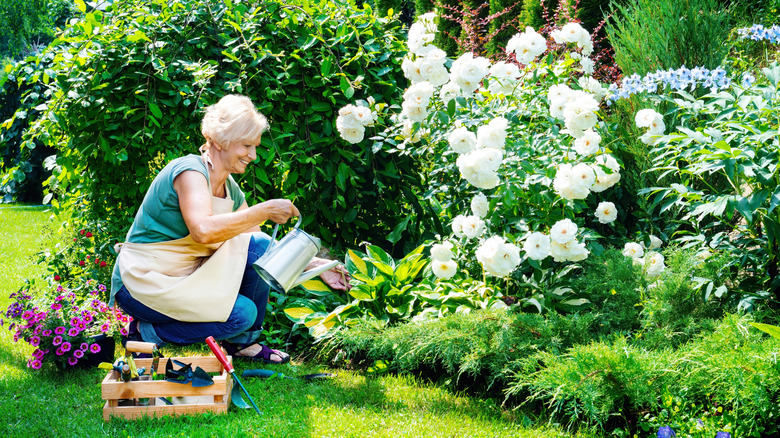
After you've planted voluminous, pretty blooms that make a statement by adding height and pops of color to your landscape, you might be left with borders, edges, and empty spaces that look way less lively. That's because, while you were busy putting all your effort into plants that bring an instant wow factor, the spaces that soften the transition between pathways, lawns, and garden beds were quietly forgotten. Enter low-growing perennials, the reliable plants that pull the whole look together without coming off as overdesigned or pretentious. The perfect low-growing plants keep the design from looking unfinished and chaotic, helping even the most dramatic blooms feel more approachable.
Low-growing perennials are often the unsung heroes of gardens, yards, and landscapes. Perennials are low-maintenance superstars that can thrive in raised garden beds or fill in those gaps you don't know what to do with. They're like your best friend who shows up right when you need them. Many spread out gradually into dense mats or clumps, like kinnikinnick, which will continue to add color to your space even after other summer flowers have ended their show. Then, there are others that can withstand even the toughest of conditions, like the low-maintenance sea thrift. Once they're established, most perennials don't need your constant attention anymore, which means more time to have fun in your space.
Cheddar pink
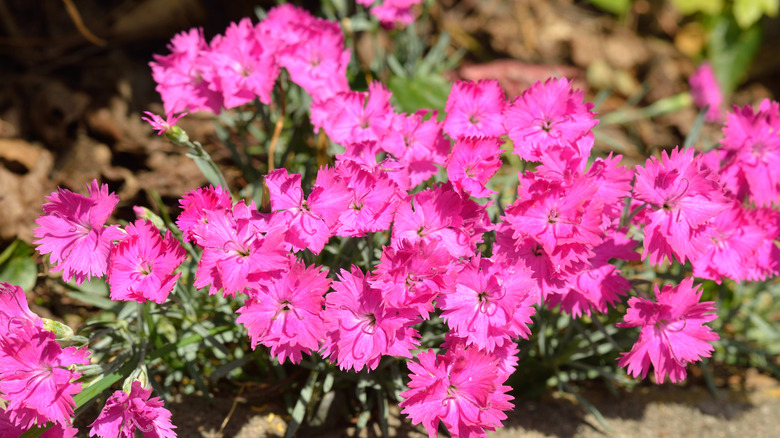
Cheddar pink (Dianthus gratianopolitanus) perennials are compact with fringed blooms that will line your edges with vibrant color and a cottage-style vibe. Thriving in USDA Hardiness Zones 3 through 8, these early-summer-blooming plants attract pollinators such as bees and butterflies. Cheddar pink grows from 6 to 12 inches tall, forms clumps, and has a strong, clove-like fragrance. It needs at least six hours of full sun to bring structure and saturation to your borders.
Blue phlox
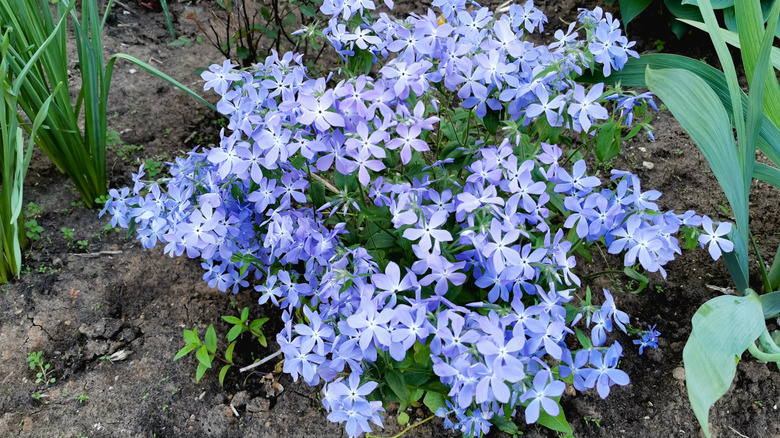
For a carpet of color, blue phlox (Phlox divaricata) makes an ideal perennial for lining edges, accenting rock gardens, and spilling gracefully over walls. Its star-shaped blooms range from bluish to lavender and thrive in Zones 3 through 8. Once blue phlox is established, it's fairly drought-tolerant and prefers dappled sunlight. It attracts plenty of pollinators and helps reduce weeds, keeping it a practical and pretty low-growing option.
Bunchberry dogwood
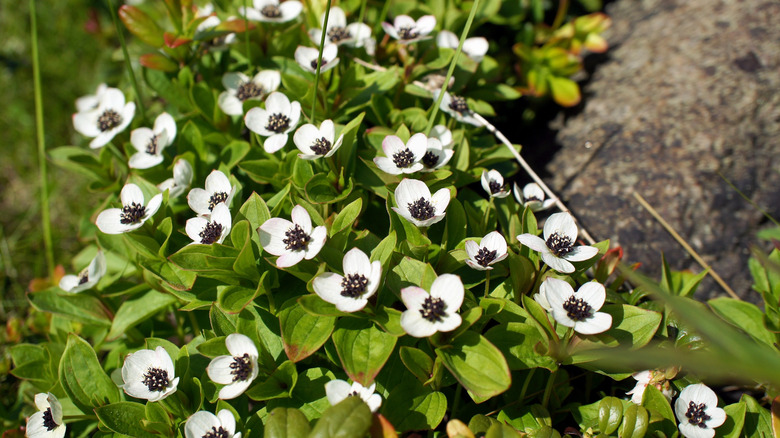
For those looking for a woodland aesthetic, the low-growing bunchberry dogwood (Cornus canadensis) is the perfect perennial for adding an almost storybook-like touch. It prefers the colder climates of Zones 2 through 6 and doesn't do well in the hot summers south of these zones. Bunchwood dogwoods grow between 6 and 12 inches tall and spread about the same width. In late spring, they produce showy flowers that give way to bright red berries in late summer and fall.
Begonias
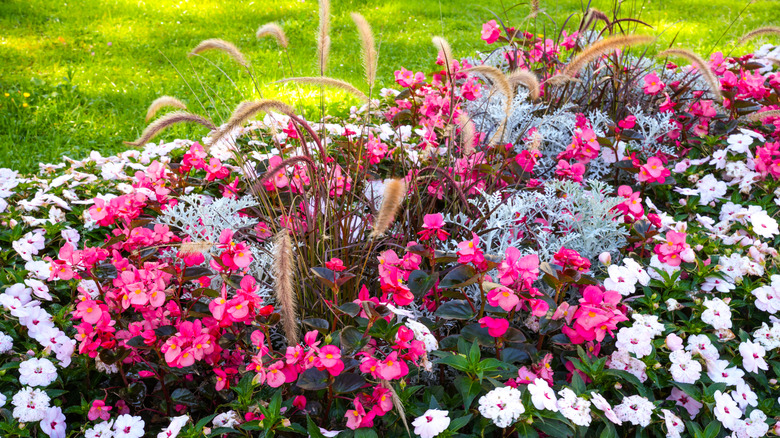
Begonias (Begonia) come in several varieties, and while you can turn a simple indoor strawberry begonia plant into a beautiful statement piece, that's not the only kind. This low grower typically doesn't exceed 12 inches tall but forms pretty mounds, making it perfect for edges and borders. Begonias thrive in the warmer climates of Zones 10 through 11 and only need direct sunlight for a few hours, making them perfect for adding brightness to shadier spots.
Blue-eyed grass
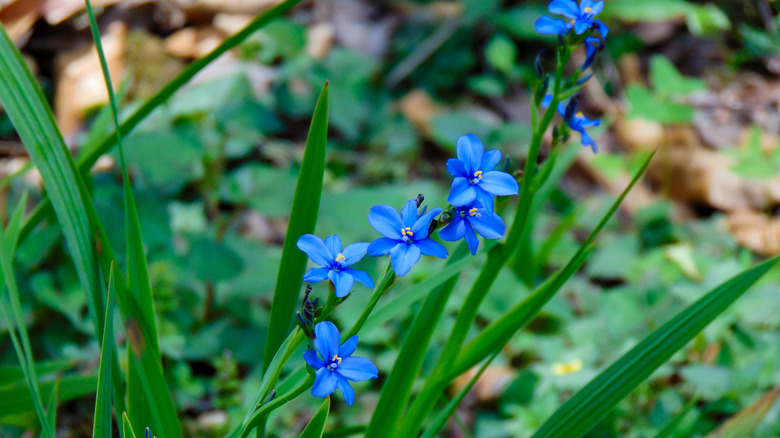
For a whimsical, meadow-like border, consider blue-eyed grass (Sisyrinchium angustifolium) with its grassy foliage and star-shaped, violet-blue blooms that will encourage birds and bees to stop by your yard. Blooming from March to June and hardy in Zones 4 through 9, this easy-going perennial can grow up to 2 feet tall for a bold display of color. It thrives in full sun for at least six hours, preferring to spend the rest of the day in partial shade.
Sea thrift
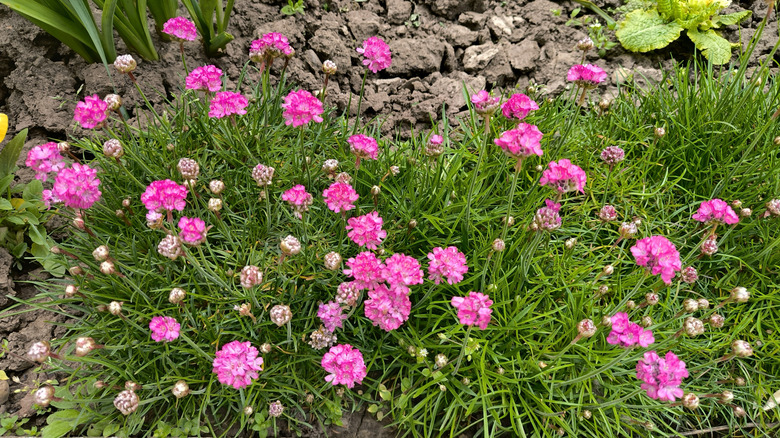
Sea thrift (Armeria maritima) can give your garden borders and edges a tidier look with its cheery globe-shaped blooms and grassy foliage. It's hardy in Zones 3 through 9 and is relatively low maintenance as long as you give it well-draining soil and full to partial sun during the day. It can grow up to 12 inches but spreads out slowly. Sea thrift is a resilient, drought-tolerant perennial once it's established, and it can attract plenty of bees and butterflies to your yard.
Pinks
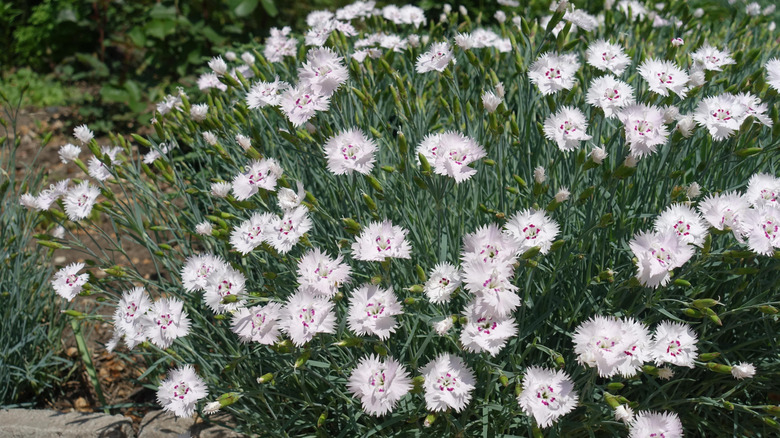
You're in luck if you live in Zones 4 through 9. That's because the fragrant pinks (Dianthus) perennials will thrive in your climate. Despite their name, pinks come in several colors: red, purple, pink, and white blooms. They need plenty of airflow, lots of sunshine, and don't like it when they're overwatered. If you keep these things in mind, pinks will reward you year after year with vibrant color.
Kinnikinnick
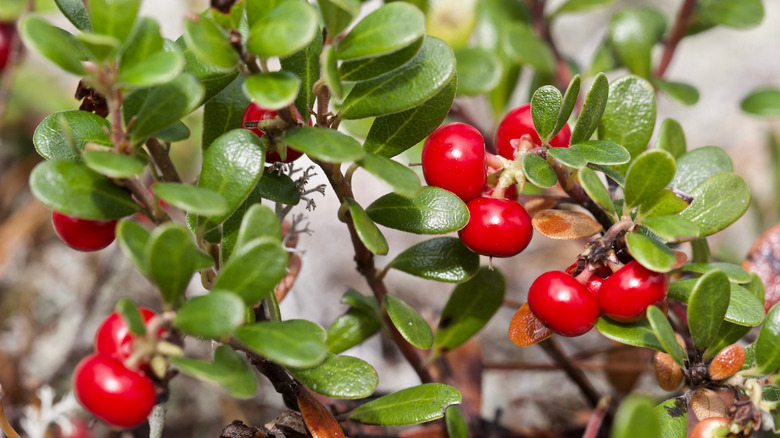
Kinnikinnick (Arctostaphylos uva-ursi), also called bearberry, is a tough, low-growing evergreen that forms a dense, trailing ground cover. It produces leathery leaves and urn-shaped white or pink blooms from March to June. Red berries pick up where blooms leave off in the fall and continue into the winter season. Kinnikinnick shrubs are hardy in Zones 3 through 7 and will be tempting to birds, butterflies, and hummingbirds.
Rose verbena
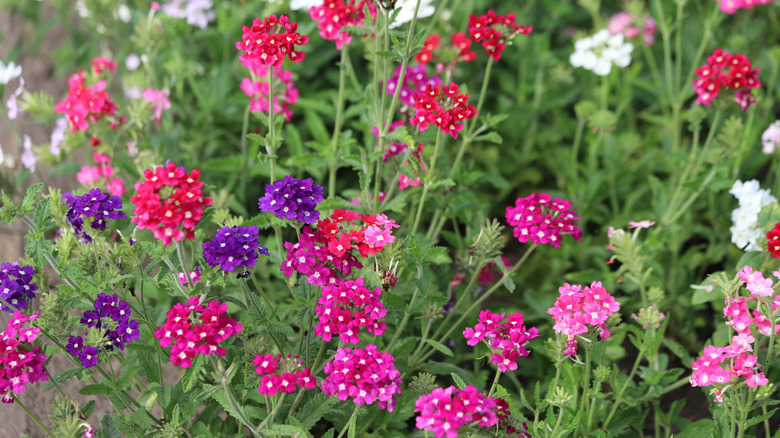
Rose verbena (Verbena canadensis) plants will line your borders with long-lasting, showy floral color in pink or purple shades. The deer-resistant perennial blooms from March until November and can spread out up to 24 inches to give you oodles of airy ground cover. Rose verbena thrives in Zones 6 through 10 and is a serious magnet for butterflies, hummingbirds, and other pollinators. It needs at least six hours of full sun
Foamflower
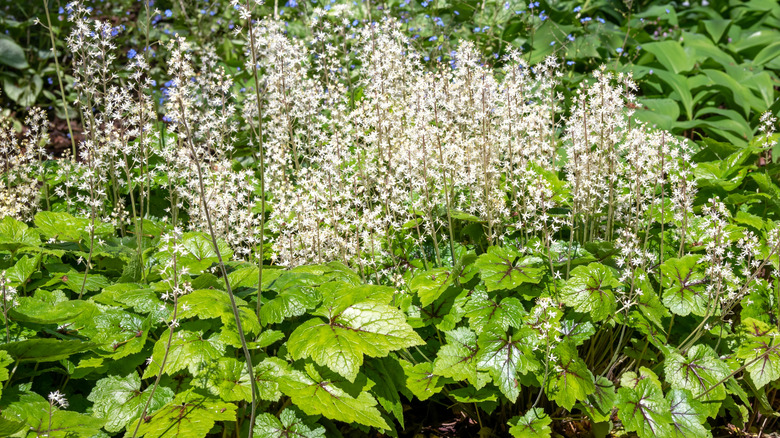
Foamflower (Tiarella cordifolia) makes the perfect groundcover for those shadier areas in Zones 3 through 8. They bring oodles of texture with airy spikes of dainty white or pink-colored flowers. To make sure foamflowers are living their best lives, give them at least 12 inches of space between plants and keep the soil damp. Their vertical blooms will attract bees, butterflies, and other fluttery pollinators.
Ice plants
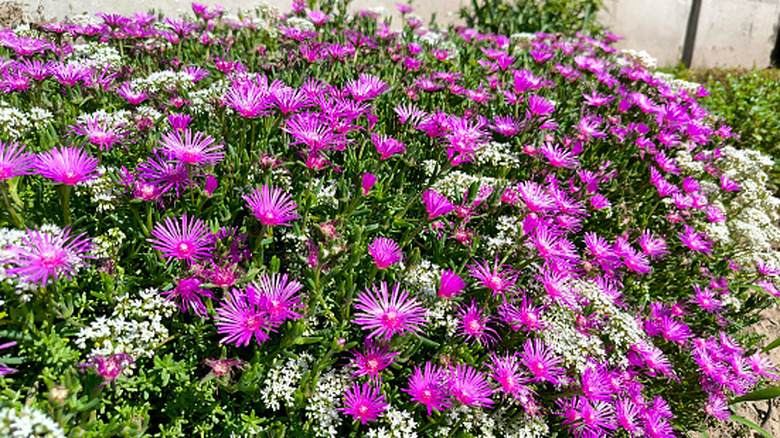
Low-growing ice plants (Delosperma) are sun-loving perennials that add vibrant color to your borders and edges. Their daisy-like blooms and succulent foliage form dense groundcovers. Ice plants thrive in Zones 4 through 11, growing up to 6 inches tall and as wide as 24 inches to fill in those empty garden areas. There are also plenty of stunning companions that pair flawlessly with ice plants if you're looking for some variety.
English daisy
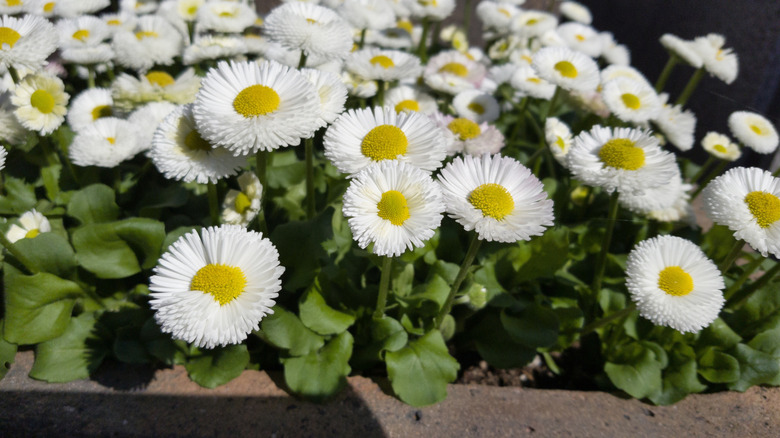
English daisies (Bellis perennis), also called lawn daisies, prefer cooler temperatures, like those found in Zones 4 through 8. Growing just 3 to 6 inches tall, these perennials are a cheery way to pull your cottage-style garden together. English daisies bloom in spring and summer and prefer full sun to partial shade throughout the day. Butterflies and other pollinators love English daisy nectar, but is poisonous to humans if eaten.
Creeping thyme
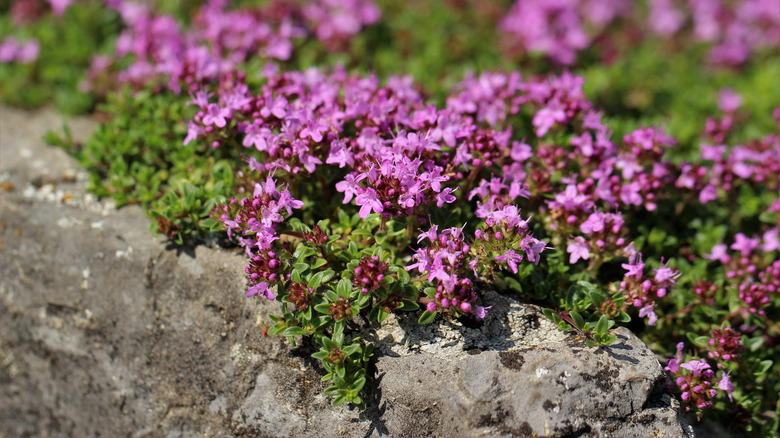
Creeping thyme (Thymus praecox) is a fragrant perennial that spreads dense mat-like foliage along your borders, pathways, and between stepping stones. It has pretty pink or purple flowers that bloom from late spring into early fall and attract bees, butterflies, and other beneficial pollinators. Creeping thyme prefers drier conditions in Zones 5 through 8, thriving in full sun and well-drained soil. This heat- and drought-tolerant sub-shrub can bring a sensory vibe to your garden as you tiptoe across it.
Sweet woodruff
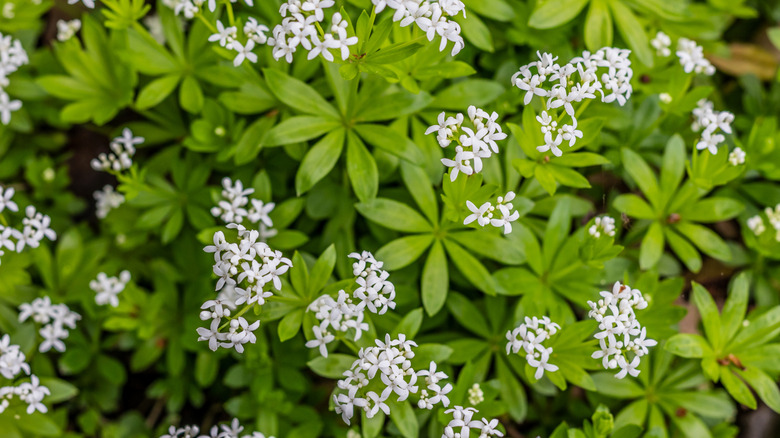
Sweet woodruff (Galium odoratum), also called sweetscented bedstraw, is a shade-loving perennial that creates pretty ground cover with a carpet-like effect. Thriving in Zones 4 through 8, sweet woodruff prefers to be planted under trees and shaded pathways where it won't get too much sunshine. While it only blooms from April to May, its leaves make it a fragrant option when crushed or dried.
Bellflower
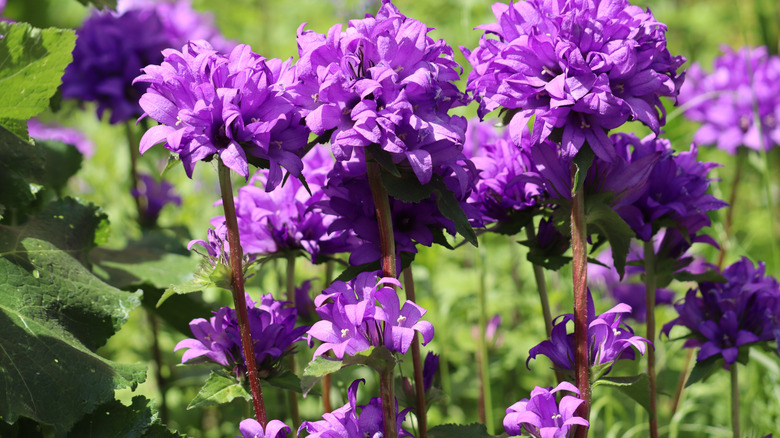
The versatile bellflower (Campanula glomerata) can bring a storybook feel to your landscape. The low-growing perennial is hardiest in Zones 3 through 8 and will attract hummingbirds, butterflies, songbirds, and plasterer bees, which are non-aggressive ground nesters. Bellflowers grow best when they spend at least six hours a day in full sun with consistent moisture. They bloom from May to July in blue or purple shades and grow from 1 to 1 ⅗ feet tall.
Wild strawberry
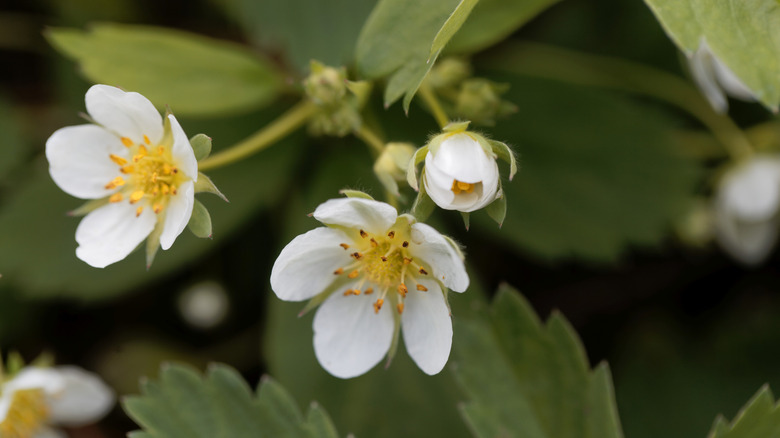
If you want your landscape to look more like the beautiful meadow garden trend, one of the best ways to achieve that is with wild strawberry (Fragaria virginiana) perennials lining your edges and borders. Typically growing less than a foot tall, wild strawberry blooms with small white flowers in spring and produces tiny strawberries by early summer that are beloved by birds. This low grower thrives in Zones 5 through 9 in full sun to partial shade.