

Ditch The Chemicals For An All-Natural Pest Control Solution That's Been Around For Centuries
We may receive a commission on purchases made from links.
Whether you have a container box hanging outside a window in the city or a several-acre spread, cultivating a beautiful garden takes time, effort, and love. Perhaps that's why it's so annoying when you discover that pests have been munching through your prized plants. We've been told that synthetic pesticides are the solution, but their tendency to kill all of the insects in the garden (including the good kind) and ability to spread dangerous containments in the dirt, water, and even the air has many gardeners looking for another answer. The good news is there is an all-natural solution that repels bugs: botanical pest control.
Botanical pest control harnesses plants' natural bug-repelling powers to repel and even eliminate pests with limited impact on the environment. Similar to their synthetic counterparts, botanical pesticides use poisons that, upon contact or ingestion, disrupt pests' hormones, nervous systems, and other crucial functions, often being used to treat the same bugs as the synthetic versions. But their toxins work differently than synthetics, particularly in that they don't eliminate bugs immediately. In fact, it may take anywhere from a full day to a week to see results. Thanks for their plant-based natures, these all-natural pest solutions tend to disintegrate faster around sunlight, water, and heat — in other words, outside. While this is quite a departure from the immediate effect of synthetic pesticides, the trade-off — fewer toxins and more environmentally-friendly products — is often worth it.
What ingredients are commonly found in botanical pest control?

These all-natural pest solutions tend to fall into one of two categories: ingestion or contact. Solutions that use ingestion poisons are typically made with pyrethrum or neem. Collected from the pyrethrum daisy, pyrethrum is one of the most common botanical pest control ingredients, used to drive out insects from the hidden nooks and crannies in a plant. You don't need much to make an impact. Plus, pyrethrum holds little danger to humans and pets, cementing its place in the botanical pest control hall of fame. Neem is another ingestion poison. Created from a neem tree's seeds, this poison disrupts pests' hormones, eliminating them before they can hatch. It can also deter the caterpillars and beetles that love chowing down on your plants' leaves while posing little risk to humans.
Rotenone is both a contact and ingestion pesticide that's been commonly used since the mid-1800s. While it is effective on a wide variety of pests, it is also considered the most poisonous botanical pest control on the market right now. It is unsafe to use around pets, humans, even fish, so apply it carefully.
Which leads us to a word of caution: there is a common misconception that organic pest control is perfectly safe. While botanical pest controls are natural, they are by no means all non-toxic. Certain botanical pesticides, like rotenone, are as dangerous as their synthetic counterparts, while others pose little threat to humans.
How to use all-natural pest control in your garden
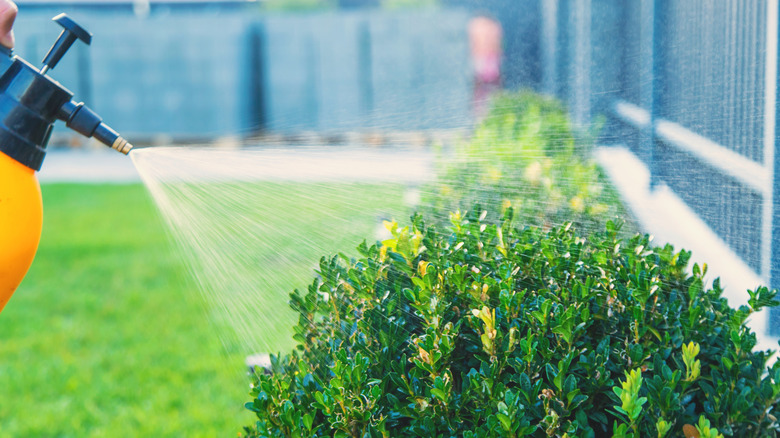
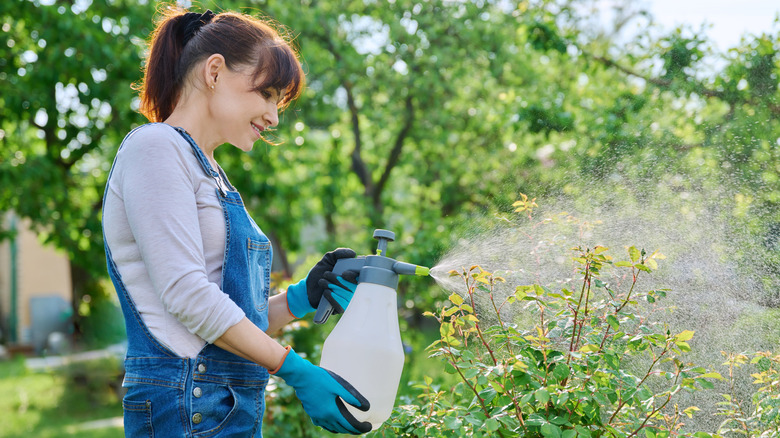
As with using any pesticide, it's crucial to take all the recommended safety precautions, even if the product is on the natural side of the spectrum. Check your product's label for full instructions, but we recommend using protective gear (clothing, glasses, and gloves) and washing thoroughly afterward, just in case. Move all your kids' toys, pet gear, and outside furniture outside of spray range until the product has dissipated (again, check your label).
How do you know which botanical pest control to use? The best gauge to find the right solution is by the pest you want to remove. For example, if centipedes are munching through your plants, reach for a neem oil-based product, like Bonide Captain Jack's Neem Oil. To eliminate roaches, reach for an eucalyptus oil-based spray or make one of your own by mixing some eucalyptus oil and water in a spray bottle.
Because botanical pest control degrades with exposure to the elements, it needs to be applied more often to be effective. It depends on the product itself and the pest you're trying to repel, but check your label for exact instructions, especially if you're spraying right before harvest. As a general rule of thumb, expect to reapply at least once a month to keep pests at bay until they've moved on.