

How To Give A Lilac Bush A Spring Boost For More Flowers
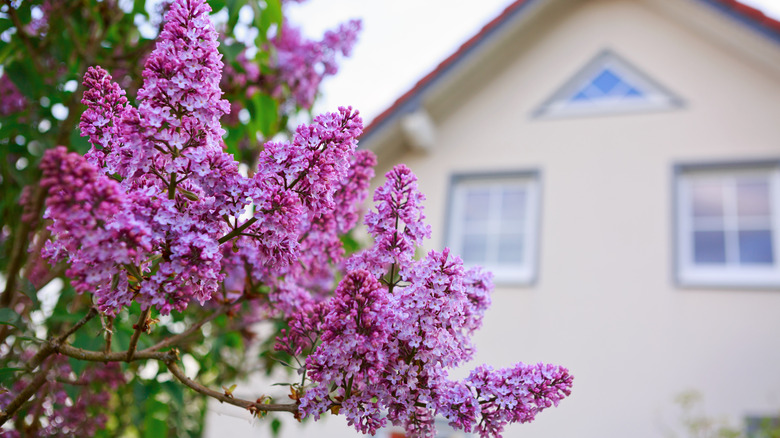
Lilacs (Syringa spp.) are a popular landscaping bush prized for their clustered flowers and pleasant fragrance. While these plants are best known for their signature light purple blooms, they can also produce white, pink, blue, yellow, or burgundy flowers. They offer an enchanting touch to your outdoor space. Understandably, it can be supremely disappointing if your plant's bloom window comes and goes with little to no flowers to show for it. It's a confusing and frustrating issue to grapple with if you feel like you're doing everything right but still aren't seeing blooms. However, if your plant isn't blooming, it's a telltale sign that something is amiss in its care. The one major culprit many gardeners overlook is not providing enough sunlight.
To give your lilac bush the boost it needs this spring, it helps to understand its basic care requirements. Lilacs are suitable to grow perennially in USDA Hardiness Zones 2 to 7. They need at least 6 hours of direct sunlight a day. If your lilac is surrounded by tall trees or structures, you may need to intervene, removing obstructions if possible, to gain more flowers. Failing to provide your plant with enough sun is a mistake many people make when growing lilacs.
How to help your lilac get enough sunshine

If you have yet to plant your lilac bush, you're in luck — you can start fresh. Plant it during spring or fall in rich, well-drained soil. Remember, it's crucial to choose a spot with full sun, or the plant may struggle to bloom.
You're going to have to get a bit more creative if you have an established lilac bush that's not getting enough sunlight. There isn't always a simple solution to this issue. If possible, remove whatever is obstructing the sun from your lilac. For instance, you can shorten neighboring fences or perhaps trim nearby trees. As a last-ditch effort, you may be able to move your lilac bush. This isn't easy, but it is possible. Plan to move your plant in early spring or late fall. Water it generously 2 to 3 days before moving day. Now is a good time to clean up dead branches before you move your plant. When you're ready to transplant, use a garden fork to gently lift the roots. Once the plant is lifted, wrap it in burlap and carefully move it to its new, sunny location.
Take this opportunity to mix in compost to enrich the soil. You can also give your lilacs a nutrient boost by incorporating Epsom salt or wood ash. Dig a hole about twice the size of your root ball. Carefully place it into the hole and then fill the space around it with soil. If you're transplanting more than one lilac, space them out roughly 5 to 15 feet apart. Factor in the specific cultivars' size at maturity to determine precisely how much room they need. Once your plant is in the ground, water it deeply. Place mulch around the bottom.
Growing and caring tips for lilacs to get the best blooms
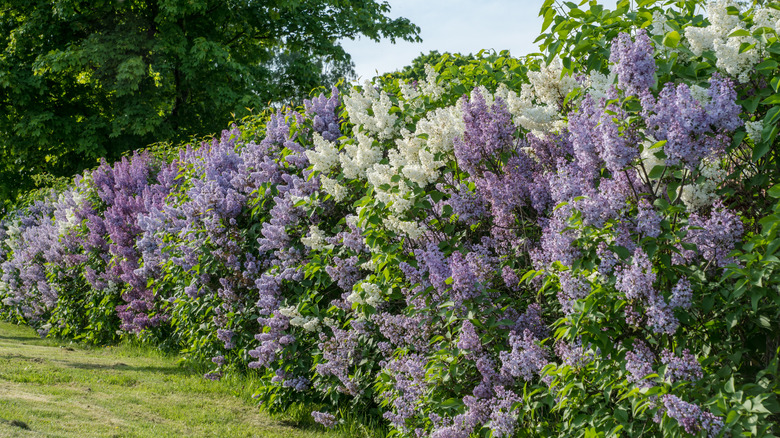
If you just planted your lilac bush, water it regularly as its roots establish themselves. Once mature, lilacs typically only need supplemental watering during dry spells. Your lilac bush should bloom for about two weeks in the spring. To enjoy lilacs for longer, you can plant early-, mid-, and late-blooming cultivars to extend this season to six weeks.
Another common mistake people make with lilacs is improper pruning. Only prune this plant right after its blooms fade. If you wait too long, you risk jeopardizing the next bloom cycle. Lilacs form the buds for next year's flowers in summer. If you trim these branches, your plant won't bloom. Aim to remove and replant any suckers that sprout up anytime between mid to late summer.
If your plant is properly pruned and receiving enough sun but still isn't blooming, it may be low in magnesium. If you conduct a soil test and that turns out to be the case, consider mixing Epsom salt in the soil to get your lilac bush blooming. You can also apply a granular fertilizer in the late winter or early spring to promote healthy growth. Just be careful not to use high-nitrogen fertilizer because it can also stunt flower growth.