

Martha Stewart's Choice Of Flower For A Beautiful Spring Garden

Iconic home and garden expert Martha Stewart is always chock-full off tips for growing flowers. She's a great resource to look to for gardening knowledge and inspiration. In a recent Instagram post, she shared snapshots of her lush garden filled with her preferred choice of spring flowers — the beloved tulip (Tulipa spp). "So much is growing and blooming around my farm, including the showy, bright-colored tulips," Stewart shared in a post on Martha Up Close and Personal, "It's so exciting to see the swaths of color in the garden beds after a gray, dreary, cold winter." Her farm is overflowing with an array of stunning tulip varieties from traditional to frilled and fanciful.
While many people may assume tulips are from Holland, they were actually originally cultivated in Turkey. They gained popularity in Europe in the 17th century and have been a cherished favorite ever since. As the years have gone on, showy double blooms and hybrid tulips in every color short of blue have emerged. Some beauties Stewart has in her garden include the 'Verona Sunrise,' 'Rosy Diamond,' and 'Sanne,' among many others.
Tulips can be anywhere from 6 inches to 2 feet tall. Each single stem is crowned by a cup-shaped bloom and typically features two to six long, blue-green leaves.While they're considered perennials, some tulip varieties don't reliably pop up each year. Gardeners will often treat tulips as annuals and plant new bulbs every fall. However, if you live in USDA Hardiness Zones 3 to 8, you may be more likely to see your tulips come back each spring. Mountainous western regions with cold, wet winters are even more primed to see tulips return perennially.
How to cultivate a Martha Stewart-inspired garden filled with tulips
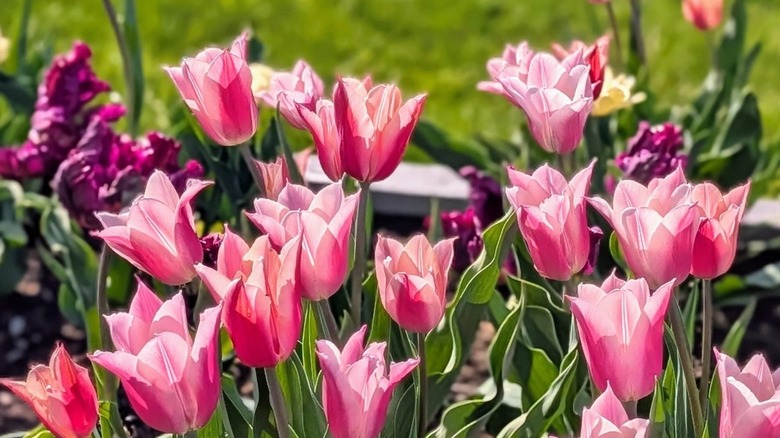
Just like Stewart's gardeners, you should aim to have your tulip bulbs in the ground about 6 to 8 weeks before the ground freezes over in fall. If you didn't get around to planting tulips in the fall, you might be wondering if you can plant tulips in the spring. While technically you can, there's no guarantee that your plants will bloom. Tulips need a period of cold conditions to grow successfully. If you find tulip bulbs in the spring and they aren't mushy, you can certainly plant them — just be prepared they might not bloom.
Choose a place where your tulips can receive full to partial sun. These flowers also prefer well-drained, fertile soil. For the strongest plants, mix in 2 to 4 inches of compost into your soil before planting. Bury bulbs with the pointed end facing up, about 8 inches deep. Cover firmly with soil and water immediately after planting. If you're growing them perennially, there are a few things you can do to help tulips in your garden grow strong. Apply compost every year and give them a healthy dose of bone meal when they pop up in the spring.
Once your blooms are spent, deadhead them immediately but save the leaves for about 6 weeks so they can continue gathering the energy they need to make it through the winter. If you keep all of these tips in mind while planting and tending to your tulips, you'll be left with a garden Martha Stewart would be proud of!