

The Shrub With Red Berries That Is Highly Attractive To Birds And Pollinators
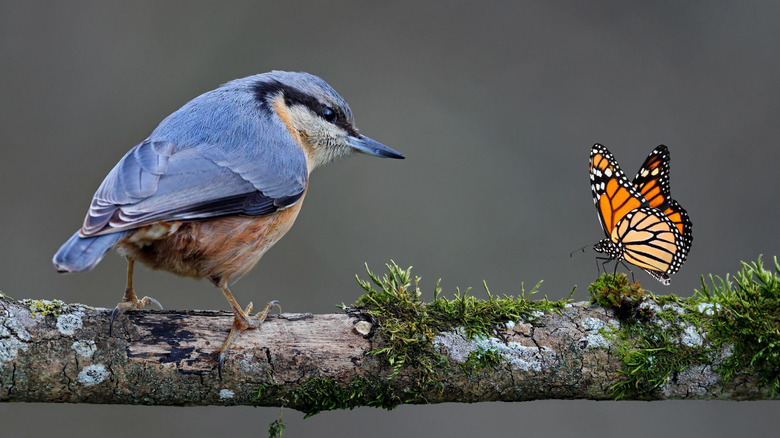
Not all shrubs pull their weight equally. Some put on a spectacular show in one season — think forsythias — and are then quickly forgotten until the next spring. But when you plant Autumn Inferno cotoneaster (Cotoneaster 'Bronfire'), this berry-producing shrub will let you enjoy multi-season interest along with birds and pollinators.
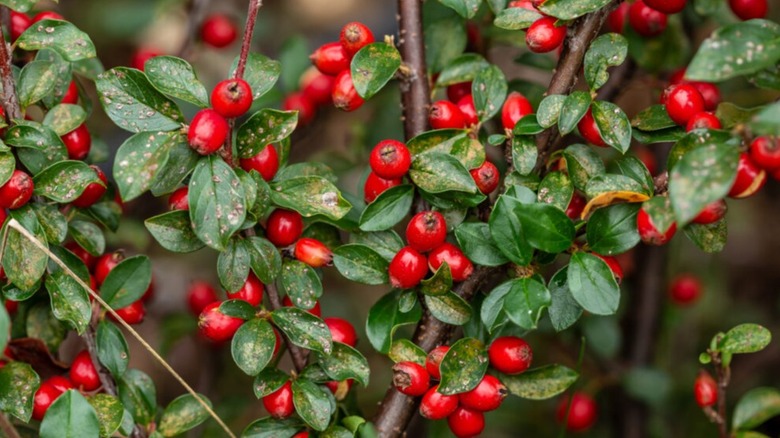
By late spring, this cotoneaster's glossy leaves host pretty, shell-pink blooms. Since many butterflies are attracted to pink flowers — especially when planted in mass — they're drawn to these shrubs. As blooms fade in the summer, they make way for gorgeous, vivid red berries. Unless stripped off, these persist on the branches throughout fall and winter, offering ornate interest. This also reduces the need for garden clean-up, for there is little clutter. The best part, though, is that cotoneasters make gardens come alive with bird songs. Several migrating and resident birds that are likely to eat garden berries, including cedar waxwings and robins, visit them when food sources dwindle in the cold.
Another reason you may grow to like Autumn Inferno cotoneaster is its fall foliage. Like an inferno, the green leaves turn a fiery mix of orange, auburn, and bronze when temperatures cool during autumn. Among the monotonous mass of green (or brown if your plants are already dormant), this cotoneaster is sure to stand out.
Can you grow Autumn Inferno cotoneaster in your yard?
Luckily, Autumn Inferno cotoneaster is fairly adaptable. It performs great in acidic as well as alkaline soils and cares little about soil texture. It also isn't particular about the soil keeping consistently moist, though it draws the line at standing water. In other words, it requires good drainage. Since it can handle urban pollution and salt, it can be an excellent addition even in city gardens and busy neighborhoods.
If deer or rabbits are frequent visitors to your yard, you may mass this shrub to dissuade them, as they seem to dislike it. As for cold hardiness, its range runs from zones 5 through 7. For the best performance, you must plant it in a full-sun site. But if you're out of such spots, you may grow it in a semi-shaded area, where it receives about four hours of direct sunlight. Do keep in mind that planting this beautiful berry bush to attract birds could be a big mistake if you have young kids or pets who aren't too careful about their food. Consumed in large quantities, cotoneaster's berries can be poisonous, causing seizures and breathing issues. Moreover, because birds are known to disperse the seeds from cotoneasters in natural areas, they may be subjected to planting restrictions in some areas. So consult your local state extension before making any purchase.
Caring for Autumn Inferno cotoneaster in your yard
Autumn Inferno doesn't require a whole lot in upkeep. In the initial planting year, you must water it diligently so the roots can establish themselves. After that, its drought tolerance will kick in, enabling the shrub to handle short dry spells. Though if they last longer, you must offer supplemental irrigation. You may also spread 3-inch-thick mulch (keeping away from the stems) to improve moisture retention. Additionally, feed it a balanced fertilizer every spring before it resumes growth.
It, to much relief, doesn't require much in the way of pruning. Autumn Inferno cotoneaster has a naturally graceful form, where its stems grow in an upright position. So, you only need to remove dead, decaying, diseased, damaged, or crossing branches to tidy up its appearance and open up the canopy to stave off diseases. Ideally, you should carry it out in summer after the last flowers fade, so as not to cut off next year's buds.
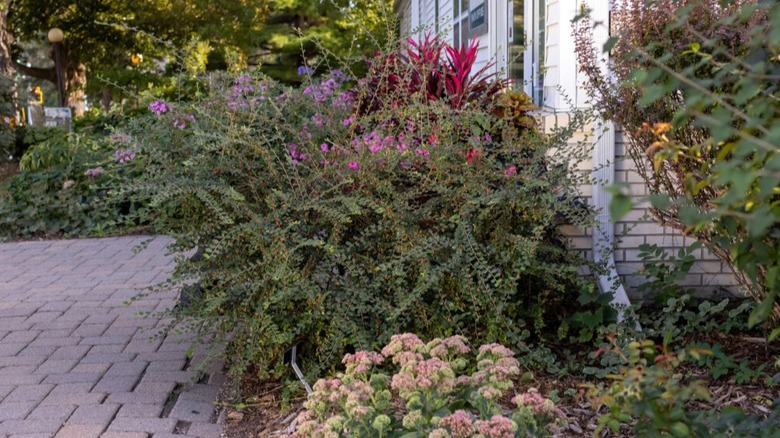
That being said, Autumn Inferno grows about 5 to 6 feet tall and about 4 to 5 feet in width. So, you can give it a home in mixed borders, wildlife, rock, or butterfly gardens, or grow under utility lines. Since its foliage fills out nicely, you don't have to bother with perennials or groundcover to mask its base. This also makes it an excellent option for a formal mini hedge for privacy in your yard. For that, space the shrubs about 3 feet center-to-center.