

What That Dark Slimy Patch On Your Lawn Actually Means
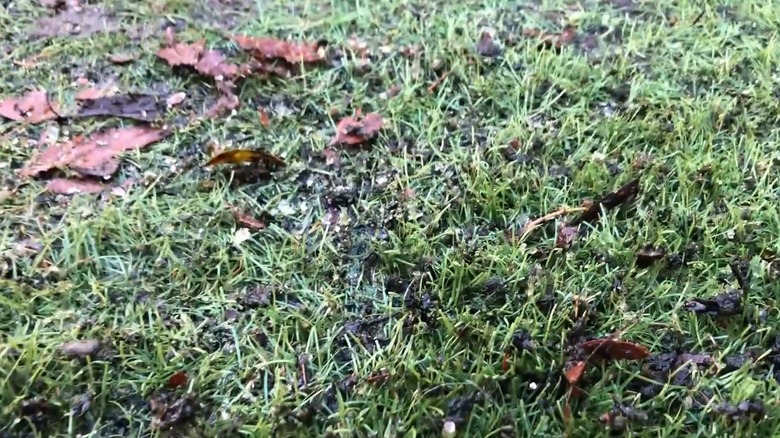
If you've stepped onto your lawn only to find a slick, dark patch that could pass for an oil spill, you may be dealing with algae. Most common in the Pacific Northwest — but not limited to it — algae are small plants that form a greenish-black carpet on stressed lawns. They usually take over low-lying, thinning, bare, and damp spots that drain poorly, are overwatered, compacted, or lack adequate sun exposure. But when they dry out, the slimy layer turns into a brittle, powdery crust that cracks over time.
A viscous layer atop turf sounds like trouble, and surely is. It limits water and air movement into the soil. When the area stays wet for long periods, roots struggle to access oxygen while trapped gases can't escape, reducing growth. The result is turf that looks suffocated, stressed, and chlorotic (aka yellowing). The longer this remains unaddressed, the greater the chances that the turf may eventually die.
That said, a crusted greenish-black scum can also mean nostoc, a weird thing that can happen to lawns. Formerly classified as blue-green algae, nostoc is now understood to be a type of cyanobacteria. When wet (after a bout of rain or irrigation), it has a bulbous, jelly-like texture, which makes it super slippery and a slip hazard. While it thrives in similar conditions, it doesn't kill turf — it simply occupies areas where grass has already struggled to grow.
How to fix algae patches on your lawn
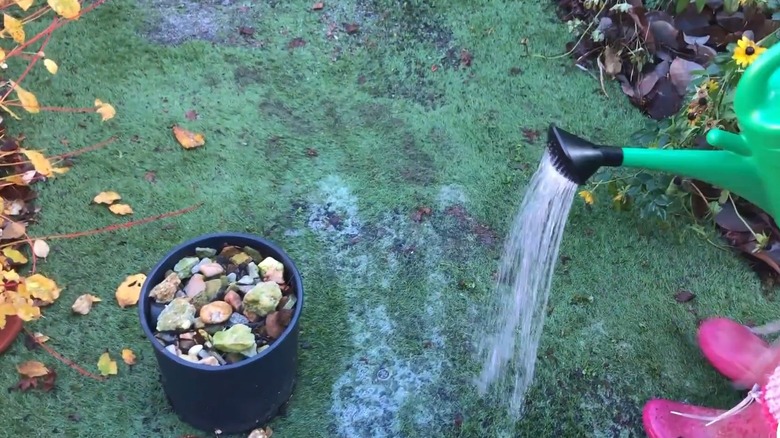
To transform a lackluster lawn into a stunning green oasis, sans any algae, you can take two approaches. If it's a small patch, you can physically remove the crusty mat with a shovel. Since algae roots shallowly, it should come off easily. You can later add it to your compost bin if you maintain one, or send it to a landfill. After removing the crust, you may reseed your lawn with a high-quality grass blend suited for your region. However, if the bare patch is in heavy shade, consider going the sodding route instead, as it establishes faster.
Another way to knock back algal growth is to treat it with fungicides or algaecides. Look for copper-based formulations approved for home lawn use in your area — your local state extension can help with recommendations. Alternatively, you may apply copper sulfate after diluting it with water to destroy algae scum. However, you may have to follow up with an application of ground limestone to make the zone amenable for reseeding. This is because seedlings can react to copper sulfate if it isn't deactivated. Remember, the label is law for the safest application of chemical treatments. Moreover, keep in mind that breaking apart algal clumps before any chemical application can improve results.
Long-term solutions for that dark slimy patch
While chemical treatments can offer immediate relief, their results won't last if you don't address the underlying causes that invited algae in the first place. Most often, algae appear in areas that remain wet for long, highlighting an issue with drainage. Resolving this could be as simple as repositioning a downspout that's causing standing water or installing better drainage. You may have to regrade your yard if it's a low-lying area. Poor sunlight can also be at play, as the collected moisture may struggle to evaporate. See if there are any overgrown trees that may be shading the area and prune them to improve lighting. If not, look for more shade-tolerant grass species or groundcovers. Mowing the grass at a greater height can give it a competitive advantage over algae.
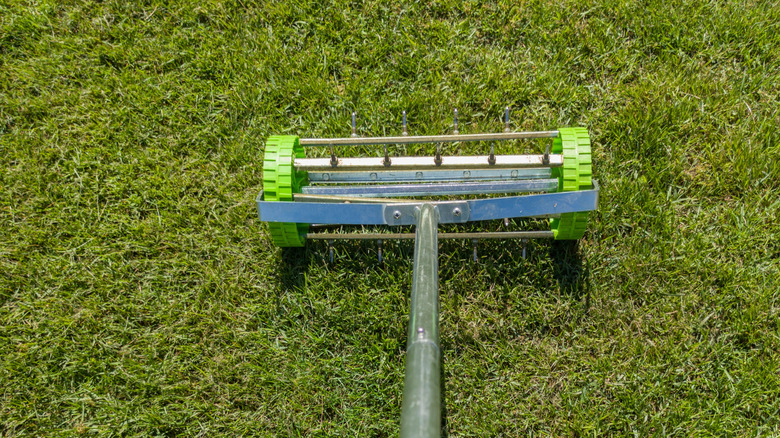
Algae can also be a symptom of compacted soil. To redress that, you must core aerate the soil. Apart from improving air circulation and drainage, it will create space for the grass to root and recover. Don't forget to topdress it with organic matter afterwards. Also, avoid walking on the lawn when it's wet to prevent compaction. Sometimes, algae (including nostoc) may form if the soil has high phosphorus levels. Get a soil test to confirm if that's the case, and accordingly rejig your fertilizer application to control its future release. Ultimately, maintaining your healthy, green lawn will help discourage algae from returning.