

Do The Drawbacks Of Using Milky Spore Outweigh The Benefits? What To Know
We may receive a commission on purchases made from links.
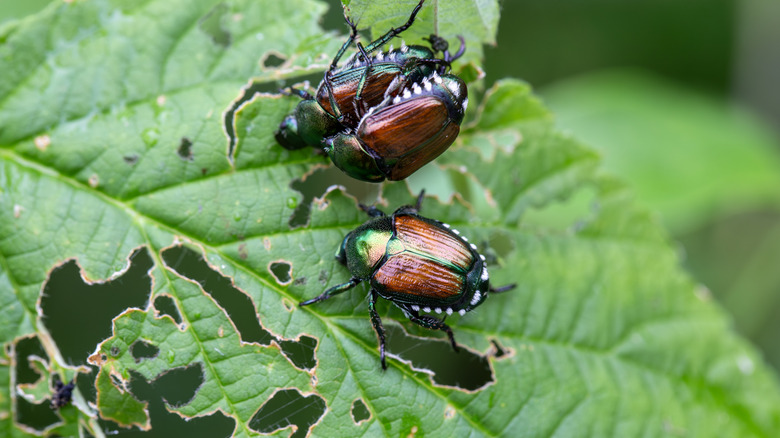
Milky spore is a useful soil additive developed specifically for eliminating Japanese beetle infestations. It's all natural and non-toxic. In my work as a professional gardener for over a decade who specializes in designing and maintaining organic flower gardens, I try to utilize natural solutions to repel harmful bugs, so I often add milky spore to the soil around rose bushes to prevent infestations of Japanese beetles (who love to snack on rose leaves). Some landscapers and gardeners also use milky spore to fight these same larval grubs in lawns, but this approach can have drawbacks.
Milky spore works by decreasing Japanese beetle populations over time, not by killing them all outright. Milky spore enriches the soil with a naturally occurring bacterium, Paenibacillus popilliae. Grubs live in the soil during their feeding stages. If a grub ingests enough of the milky spore, it will grow within its body and eventually kill it, spilling more milky spore bacteria into the soil where it dies. At nearly $50 for a 15-lb bag of St. Gabriel Organics Milky Spore, this solution is not cost-effective for treating a whole lawn. There are other reasons why milky spore isn't an ideal solution for everyone. In colder zones, the soil temperature may not get consistently warm enough for the bacterial action of milky spore to kill grubs.
However, Japanese beetles are especially destructive in the flower garden and on berry bushes, where strong chemical pesticides aren't a desirable option. That's why, in my professional opinion, milky spore is useful for protecting specific shrubs and plants from Japanese beetles. Using milky spore every spring can effectively keep Japanese beetles off your roses, and it has other benefits, too, including being an indirect deterrent to moles, armadillos, and other mammals that dig in the garden looking for grubs.
Milky spore is good for controlling Japanese beetles in small areas
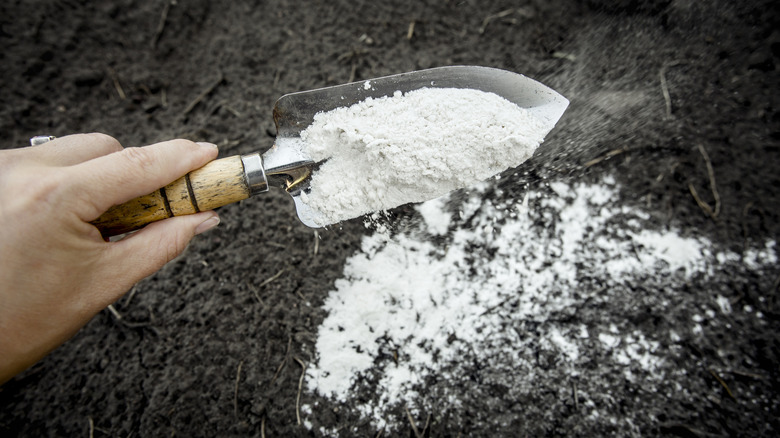
Although it may not be practical to use milky spore for grubs over a large lawn, you can't beat it for Japanese beetle control in smaller areas. After it's applied, milky spore may take a while to work its magic. Some product labels claim it works within one to three weeks, and that is about how long it takes to kill a single grub, if soil temperatures are warm enough. But some experts say it can take months to years for milky spore to really decimate the local Japanese beetle population, as the microbes spread slowly through the soil.
This waiting period might be a drawback for some, but it's worthwhile if you consider how using chemical pesticides in your garden can harm your soil and the ecosystem. Gardeners who use organic methods accept that their effectiveness works on a different timeline. For added effectiveness, however, you can also try using nematodes as another natural method for controlling the spread of Japanese beetle larvae that feed on flowers and berries. Manufacturers of milky spore even suggest using it along with nematodes to rid your lawn and garden of Japanese beetles. Nematodes will hunt the grubs and spread the milky spore, and this layered approach can ensure better success at eliminating this problem naturally over time. In my experience, using milky spore consistently every spring has resulted in an almost complete elimination of the Japanese beetle population in my clients' flower gardens. This consistency is important, and some gardeners make it a regular task on their spring to-do list to add milky spore around their roses, raspberry bushes, and vulnerable shrubs.